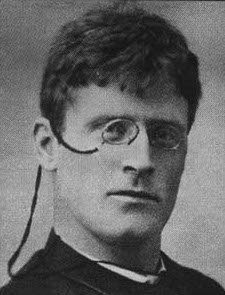
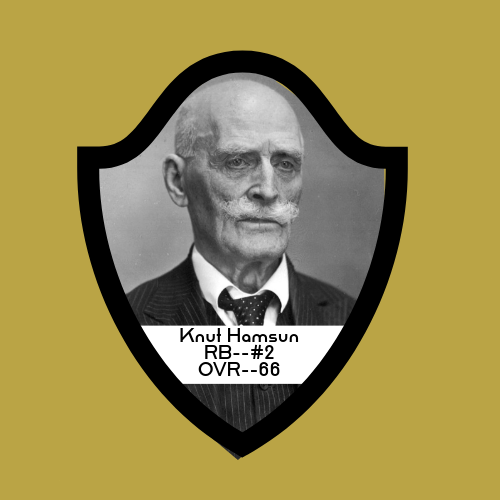
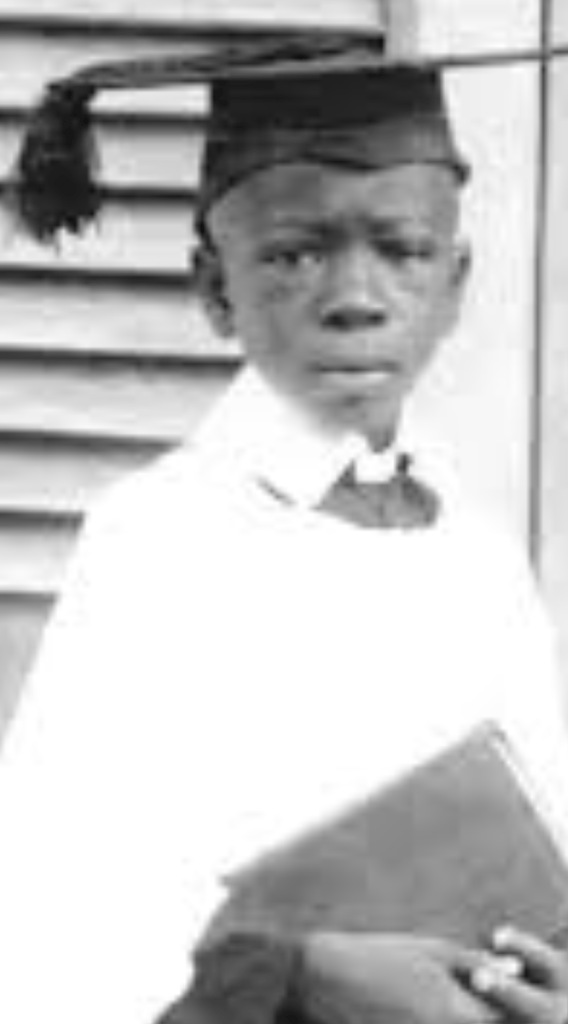
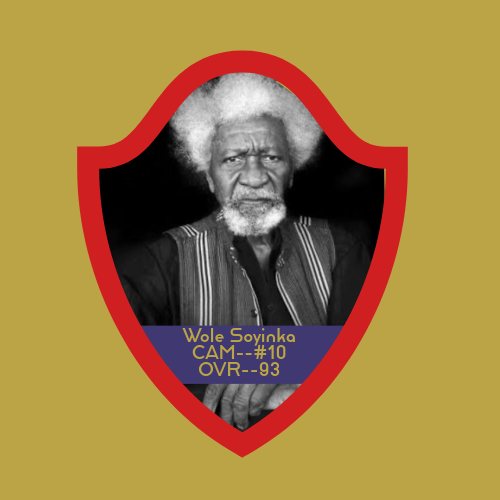
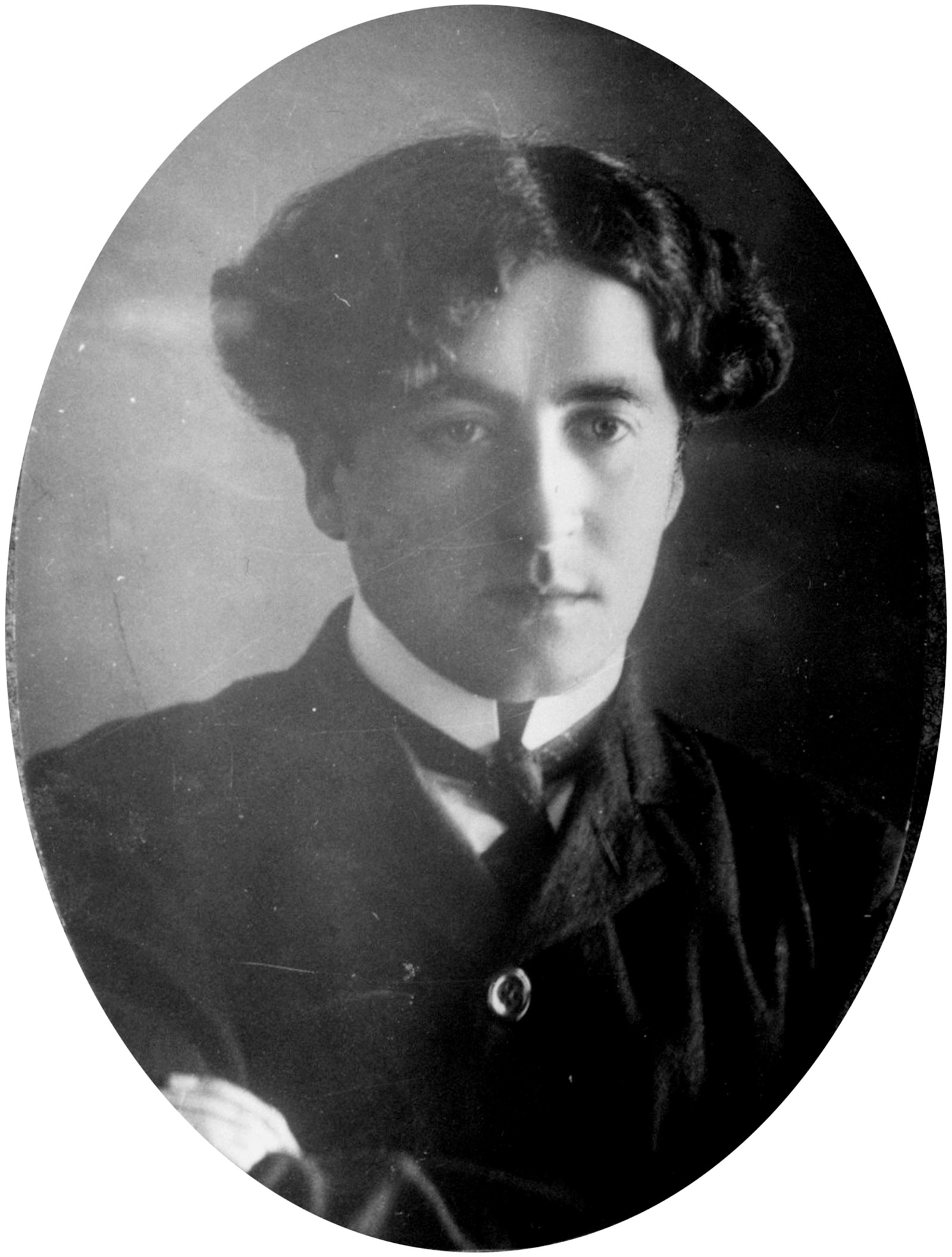
There’s a lot to be said about a poor kid, rising to a level of international renown for his writing ability and novel style. That’s the first part of Knut Hamsun’s story. During a poor childhood in rural Norway, his loftiest position seemed to be an apprentice shoemaker. After a move to Oslo, he struggled to get by and moved to America for a stint as a roaming worker before his return home. That’s when he put his struggles to live as a writer in to the first modern Norwegian novel Hunger. A book whose style, depth of personal feeling and internal monologue served to inspire writers from Franz Kafka and Ernest Hemingway to Herman Hesse and William Faulkner.
So far, pretty good right? If you stop reading there, I wouldn’t blame you. But I ought to let you know the other side of the coin.
As his writing gained more success and he developed a greater fame, he pushed more and more for people to appreciate their inner life and abandon the modern trappings and distractions. For Hamsun the modern world was such a rip off that he longed to return to the land as a farmer and developed a whole sense of literature broadly called “Blut und Boden” (Or “Blood and Soil”) in the novel that was cited as the primary driver of his Nobel Prize: Growth of the Soil.
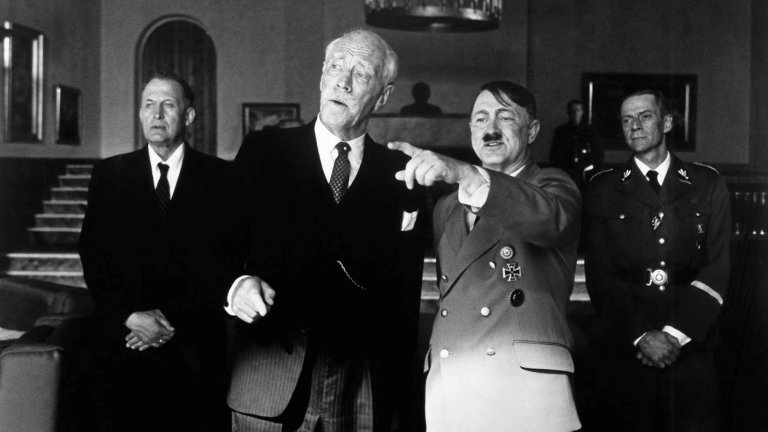
That might not seem too bad, until you recognize that “Blut und Boden” became a rallying cry of a little fringe political party in Germany. And when that fringe party went mainstream under their leader–Adolf Hitler–Hamsun’s works took on a much more aggressive tone. And while that might be bad…it got worse. When the Nazis took over Norway with the Quisling Regime, Hamsun was honored. (Some claim he was senile, others that he simply tried to get in good with powerful people to help his homeland, but giving away your Nobel prize to the propagandist villainizing an entire religion and justifying genocide…well…that’s problematic disgusting. So…congrats, I guess?
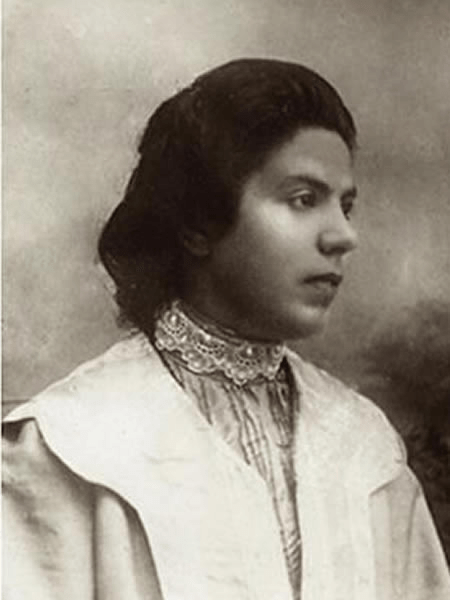
Hamsun with his buddies…sorry…I’m not joking…
Works
I chose to follow the literary influential work of Hunger rather than subject myself to more pseudo-facsist posturing than I already endure as an American citizen. While you can see the seeds of grossness already in the offing, you also see a painful portrayal of mental illness and alienation that would make Sartre proud. The stream of consciousness game is strong with Hamsun, and the frequency with which his unnamed protagonist veers wildly between “I am a legend about to ascend to the firmament!” and “I am the most disgusting filth ever to creep upon the earth!” felt uncomfortably familiar to my BPD addled psyche.
“Hope flames up again in me. As yet, nothing is lost. On the contrary, I might, for that matter, yet win all. And my brain began to spin a romance about a great council in heaven where it had just been resolved that I should win. Aye, win ten shillings for a story!”
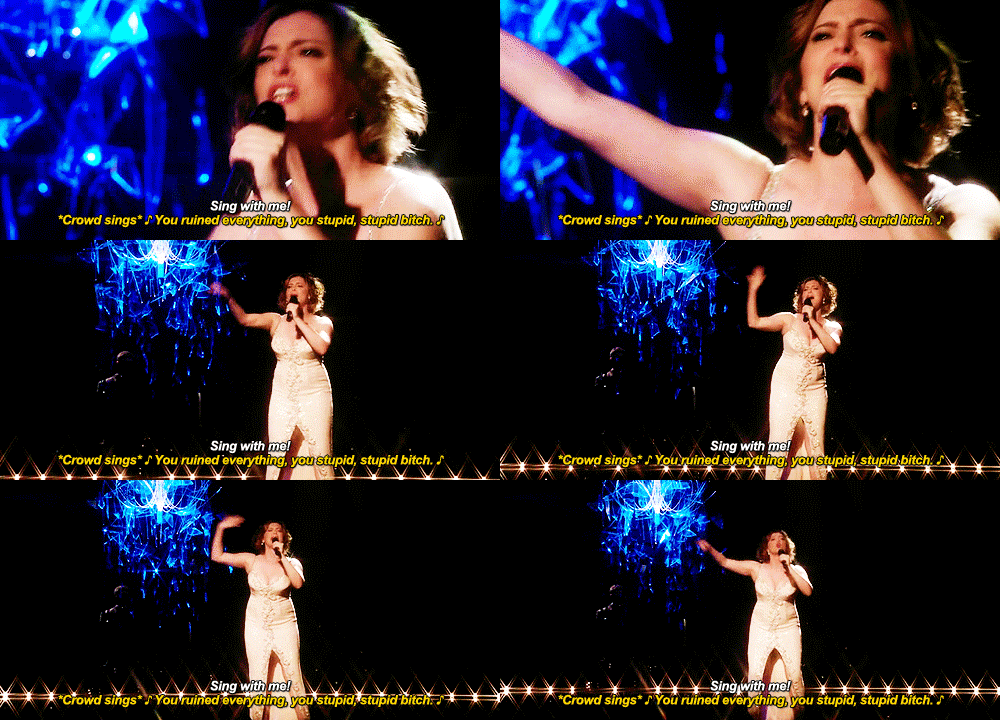
Proof that Crazy Ex-Girlfriend deserves a Nobel
“The farther away I got, the more gladsome, aye, delighted I became, that I had conquered this strong temptation. The consciousness that I was yet pure and honorable rose to my head–filled me with a splendid sense of having principle, character, of being a shining white beacon in a muddy, human sea amidst floating wreck…. Brand one’s soul with the first little scar? Set the first black mark against one’s honor? Call one’s self a blaguard to one’s on face and needs must cast one’s eyes down before one’s self? NEVER!”
“I railed at myself for my poverty; called myself abusive names; invented furious designations, rich, rough nuggets in a vein of abuse with which I overwhelmed myself.”
Message
In an effort to capture a bit of those early years that influenced the wider world and those later years that ended up enabling pretty hideous stuff, I’m going to go for one of the stupidest messages in all of my reading: Modern life is hard and painful. (Way to go Knut…I never would have recognized that part of life without your help)
Position: #2 Right Back
Hamsun might be the hardest person to label in this entire exercise. After all, there were parts I really liked and parts that were so repetitive I was frustrated.. Add into that the whole Nazi apologist part of it…how much do I need to account for that?
The stream of consciousness makes me feel like he’s a midfielder. The wild runs make me think of a winger. The grumpy responses to minor inconveniences evokes a brutal center back. For the first time I got input on the situation from my brothers who said they thought it sounded like a pioneer in total football…who then went off the deep end after retiring.
I think that does a pretty good job of capturing it. So in looking for a positional fit I opted for Right Back where he can (in a total football style) make wild runs AND be grumpy and physical. At times the play will run through him and owe a lot to him…but he’s not so essential that you HAVE to make him the star. To add on to my brothers’ point, I decided to imagine him at the end of his career, having clearly lost several steps into, ya know, fascist apologizing and declining from what I might give as a neutral rating (79) to a severe decline (the worst in FIFA games tends to be between 10-15 points…so I dropped him to 66).
PHEW That was a lot to process for what is ultimately a silly vanity project that no one cares about but me…but that’s vanity for you.
If you disagree join the conversation and call me out (unless you’re defending the prize hand off to Goebbles which…no).
Next Time: The Rapid Fire Evaluation of 2026’s winner
In just a few days, the Nobel committee will announce the winner of the 2026 Nobel Prize for Literature. Just like last year, they will join an elite group of writers from around the world, and a small selection of those writers who we have read, reviewed, and classified as members of Nobel FC: The only Fantasy Football team where the Fantasy is that literary merit would translate into soccer skill.
I’ll try to read the author in question as soon as I can (I’ve actually spent a fair amount of time reading possible nominees to be better prepared). I’ll write a post analyzing their skills by the beginning of November, but I wanted to take a moment for the fourth year in a row to consider who will be joining this august group. If you need an explainer on “sports drafts” (book nerds) or “who decides the Nobel Prize for Literature” (sports nerds) take a look at my posts from years gone by and you should be better informed.
So Who Could be “Drafted” This Year?
While about 2 million people published books in the last year alone, the field probably isn’t quite that big: instead eagle-eyed sleuths and prognosticators have developed a system for scrupulously combing the Swedish Academy’s Library databases to find some likely candidates. After reviewing both betting odds and the message boards at worldliteratureforum.com, I am ready to toss out the following 11 candidates based on my own gut instincts.
Last year’s 11 now off the list:
While they never made the top 11, I think we should take a moment to recognize some of the talents who passed away this year. Foremost among them in fancy pants literary circles: David Malouf (of Australia) and Antonio Lobo Antunes (of Portugal–who was actually on my “honorable mention roll call last year). Malouf was actually on my syllabus for great works of Western civilization where I met my wife in college, but never claimed the prize (frankly, I don’t think that course required any Nobelists…so maybe this is all moot). [There was one other death that influenced this list (see Chaos Pick) below.]
While death is an automatic disqualifier, there are other areas that are a little more subjective and that has lead to one of the biggest shakeups of my First XI in years.
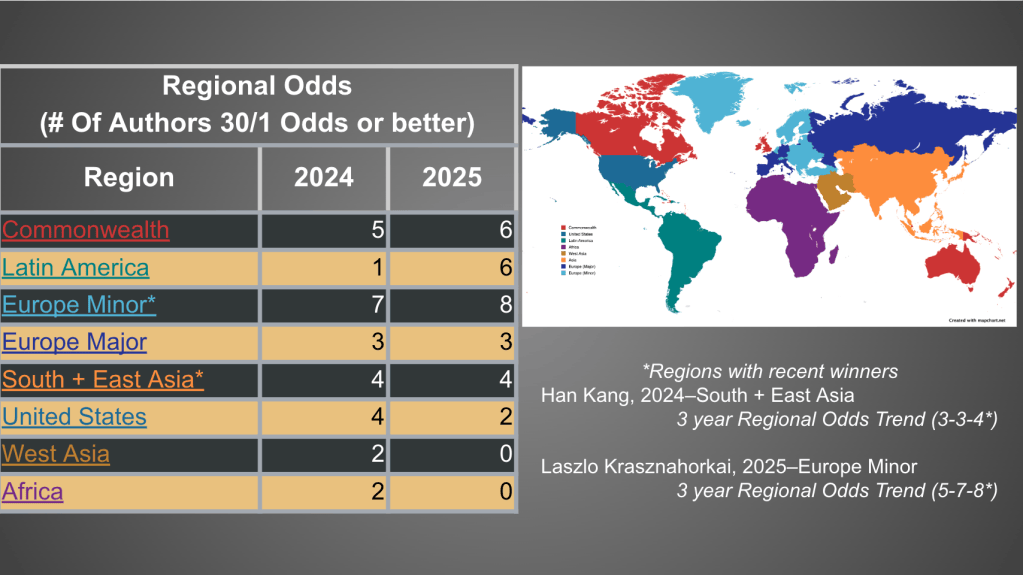
First is the regional rotation that has long been a hallmark of the Swedish academy. The same country has never won twice in a row, and the same region has rarely pulled down dual honors in recent years (the 2016-17 Bob Dylan/Kazuo Ishiguro double whammy was a rare back to back winner for dominant western powers). With that in mind Lazlo Krazhnahorkai’s win also knocks Mircea Cartecescu down the pecking order (don’t worry, he’ll probably be back next year).
Second, after some exhaustive computations (done by my computer…not me…I’m an English teacher), I also decided to consider age as a factor especially as most laureates are between 50-80. So, I’m letting go of Adonis (96), Thomas Pynchon (88),the favorite among bookies last year Gerald Murnane (86), and Ludmilla Ulitskaya (82). Sorry AARP, I’ll trust you to accuse me of ageism as you need to.
Finally, given my predicted gender balances I dropped a couple of men who I think don’t meet the current moment as well as some other candidates with a little more heat to their campaigns (and more estrogen in their bodies). So, Salman Rushdie and Caryl Phillips drop off my list while the wildly popular Haruki Murakami stays off for the second year running.
Leading Candidates:
With the Boy/Girl/Boy/Girl pattern firmly established, I’m going to let those odds keep running by making sure my options skew towards the fairer gender construct. Let’s break them down by regions which have been trending up in betting pools (with the caveat that odds may change still further in the last week before the announcement)
Canadian Corner: Two of the most popular names on prediction markets are the Canucks: Margaret Atwood (she of Handmaid’s Tale fame), and Anne Carson (Autobiography of Red). Atwood comes with massive name recognition, but an advanced age that challenges one of my criteria. Carson is less well known but her style of poetic storytelling jibes well with recent winners Annie Ernaux and Han Kang, playing well into the preferred style of the committee under chairman Anders Olson.
Commonwealth Cousin: Continuing on the legacy of the British Empire in North America we can take a look at writers who share some linguistic and cultural conflict themes with Atwood and Carson. That’s where I’m slotting Jamaica Kincaid and Louise Erdrich. Kincaid is Antiguan by birth and evokes the same reverie style as her Canadian cousins, with a clearer grounding of both race and gender. The same style points apply to Erdrich, one of my long time favorites whose Ojibwe ancestry would make her a first indigenous winner in this category (even though her writing is much more linear than the others on the list so far).
Spanish-Language Section: It’s been 16 years since the last Spanish language author was awarded the prize, and given the surge in names on the betting lists, things seem to be trending towards the Spanish Language. The biggest riser last year was Christina Rivera Garza of Mexico, who has had some big literary circle hits lately with some of the same reverie writing style that has been so popular under Olson. She would be on the younger side, but certainly shouldn’t be discounted. Nor should the better known (and slightly over 80) author Isabel Allende. I’m also going to include Cesar Aira (Mr. I’m So Stream of Conscious-I Never Write a Second Draft) and Homero Aridjis (who slips under my self imposed age cut off because I want him to).
Han Kang’s Cronies: The final area to consider are some wildly popular Asian writers. Despite Han Kang’s 2024 win and the plausible regional rotation, there’s some serious mojo behind another award for a part of the world that has 60% of the world’s population and 5% of the Nobel Literature Laureates (including dual citizens: Gao Xinjiang [China/France] and Kazuo Ishiguro [Japan/England]).
Back with a vengeance is the author who seems tailor made for Olson’s committee: Can Xue who has been among the betting favorites for five years. Her style meshes very well with Jon Fosse and Lazlo Krasznahorkai (though I thought it was less like other female winners…is it possible the committee wants gender conformity in writing?) and another big surge belongs to India’s Amitav Gosh who has been a darling of the Kalshi prediction markets throughout the summer to become a favorite (the prediction market puts him at about 3:1…which would make him a favorite in traditional bookie markets). My favorite newly read author on this list is probably Yoko Tawada whose dual citizen bonafides (Japan and Germany) clearly influence her trilogy of novels capturing the existence of people beyond place and space in an ecologically ravaged dystopia with many positive partnerships–and yes, allows me to squeeze one “European” on to this list.
Left Out of the Line up (no points to me if they win)
Injured–have been in the 11, but aren’t there now: Haruki Murakami, Pierre Michon, Helene Cisoux, Adonis, Thomas Pynchon, Gerald Murnane, Salman Rushdie, Caryl Phillips, Ludmilla Ulitskaya.
On Bench: Good writers widely recognized that I haven’t included yet Michael Oondjaate, Rachel Cusk, Vladimir Sorokin, Botho Strauss, David Grossman, Javier Cercas, Ibrahim Al Koni, and Tahar Ben Jelloun
On Loan: Names that might make big noise soon, but aren’t breaking into the betting pools: Linton Kwesi Johnson, Percival Everett, Yan Lianke, Mohamed Mbougar Sarr, Chimamande Adichie, Bushra al-Maqtari, Marlon James, Colson Whitehead, .
Analysis: Who will it be? Who should it be?
In articles analysing a team’s draft-day decisions, writers look at two things. What they think the team leaders will do, and what the author themselves would do if they had a chance.
I have read something by all of the writers on my list, and full works from all of my Will/Would pick lists and here now: my “expert” analysis.
The Academy Will Pick
The last three years I’ve done this, I think it’s become clear that the Swedish Academy under Anders Olson has prioritized authors with a well structured stream of conscious/fluid prose poetry style. They are also increasingly mindful of increasing representation in the list of honorees, both in terms of gender, nationality and primary language.
So I think they will pick: Jamaica Kincaid. Going through her novels See Now Then and Mr. Potter I kept thinking: oh, this is absolutely in the Nobel comittee’s wheel house. Add to that her history of working across cultures, addressing women’s experiences of the modern world (very much in keeping with other female winners like Ernaux and Kang), and the fact that she would be the first black woman awarded since Toni Morrison and I think she’s primed for taking the title despite not appearing (yet) in the odds lists. Others have noted that the committee will likely have cheered Kincaid’s honrs at the Gothenborg Book Festival just a few weeks before the Nobel announcement.
Honorable mentions: Anne Carson, Christina Rivera Garza
I Would Pick
I will continue to maintain that you can find artistry in all kinds of writing, so if you’re going to award someone who has “conferred the greatest benefit to humankind” clarity is a more valuable asset than pure “literary skill. (Which in the committee’s opinion is self-reflection in extremely complex sentence structures.)
For the first time in this project, I’m not going for the clarity of Homero Aridjis’ poetry, but rather for a woman whose style is similar, mastery of subject unrivaled, and whose voice is a vital addition to the hall of honorees: Louise Erdrich. Yes, I’m biased by our shared hometown. No, I don’t care.
Honorable Mentions: Homero Aridjis, Yoko Tawada. (Sidebar: none of these three are on the odds lists…so…I’m on my own limb again)
Chaos Pick
Sometimes, it’s fun to pick authors that would make the literature snobs’ heads explode (see Dylan, Bob). I was all set to pick Marjane Satrapi, the Iranian graphic novelist, but she sadly passed this May. (Sidenote: If you haven’t yet, read Perepolis, 100% worth it.) So instead, I’ll make a suggestion that the committee opt instead for that most shocking choice: a genre writer (cue dramatic music). And in the spirit of “go big or go home” let’s go with another Black woman in NK Jemisen (she of the three Hugo awards)
Who would you pick?
Leave a comment below with your pick so you can show off in comparison to me! Otherwise I’ll keep assuming I’m a misunderstood genius.
Next Time…we’ll take a quick detour to Knut Hamsen before I rush to judgement on whomever our winner is ANNE CARSON!!
Given the repetition of 11s in this site, I wanted to see how soon I can hit 11 points with
5 points if I correctly predict either on the *will win*, should win, or chaos pick
2 points if they’re on either “honorable mentions” list—Carson was a back up on the “will pick” list so victory dance for me!
1 if they’re in my 11 top candidates
Nonsense Point total: 5/11
For an added Challenge, I’m also going to award points to the Universe for the other side of the coin
1 point if the winner is in one of my “left out of the line up” lists
2 points if they aren’t on that list but are within 25/1 on the odds
5 points if they are outside of 25/1 odds
Nonsense Point total: 5/11 (Han Kang is a big advantage for the Universe)
You can join in this too! I will keep pleading for comments until I get them
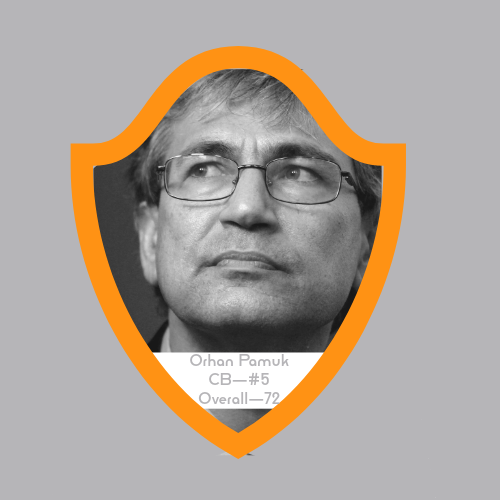
Finally, I see myself represented in a Nobel-winner (Pamuk at Right)
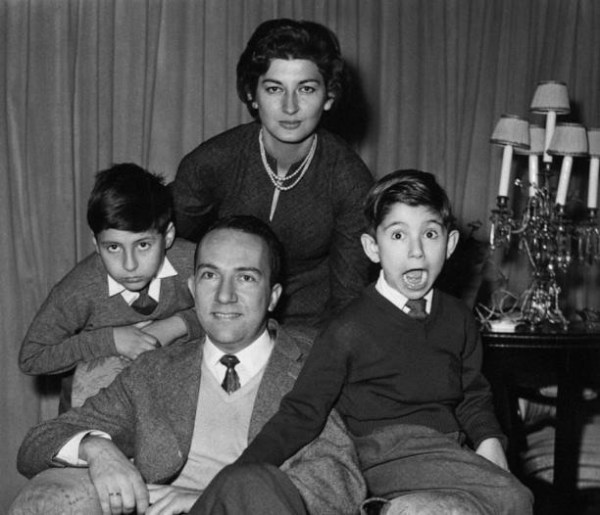
Orhan Pamuk was raised in Istanbul and continues to revel in the city to this day. It is for him what New York is for Woody Allen or Dublin is for James Joyce This makes sense as his family has long standing ties to the city and the mixture of aunts, uncles, cousins and neighbors influenced his life from early childhood and deeply inform his choices as a writer. Also…it probably made it easier for him to be a goof as the picture of young Orhan suggests.
Though he spent some time in the United States and elsewhere, Istanbul has long remained his base of operations and his muse. As Turkey modernized, struggled with modernization, questioned its place and reiterated itself, Pamuk has felt the same tumultuous relationships himself. When he won the Nobel Prize in 2006 it was with clear consideration for his unique view of local melancholy (huzun), challenges to identity, parallel lives, and alienation. Or to put it in the more succinct words of the Swedish Academy: in the quest for the melancholic soul of his native city[, Pamuk] has discovered new symbols for the clash and interlacing of cultures”.
Works
The germs of this project started twenty years ago, when Pamuk won the Nobel Prize and I picked up Snow from the high school library the same day. While I didn’t fully understand the fluid and digressive writing at the time, I couldn’t help but be impressed by the conflict between and within people trapped in a blizzard and a world outside of their control. This summer, I read Silent House: a much earlier novel with a more blunt style that again captured rival political views within people struggling against their perceived confinement.
“In a brutal country like ours, where human life is ‘cheap’, it’s stupid to destroy yourself for the sake of your beliefs. Beliefs? High ideas? Only people in rich countries can enjoy such luxuries.” —Snow
“We’re not stupid! We’re just poor! And we have a right to insist on this distinction” —Snow
Pamuk’s Silent House is fictional, but this feels about right
““You can’t start out again in life, that’s a carriage ride you only take once, but with a book in your hand, no matter how confusing and perplexing it might be, once you’ve finished it, you can always go back to the beginning; if you like, you can read it through again, in order to figure out what you couldn’t understand before, in order to understand life.” —Silent House
“That passion for listening to stories leads us astray every time, dragging us off to a world of fantasy, even as we continue to live in one of flesh and blood”. —Silent House
Message
While Pamuk’s writing style is in keeping with other 21st century winners (to wit: long complex sentences that reflect consciousness), the content of those sentences feels less dreamlike and more defensive. Things never go very deep, and only memory and history pull us away from reacting to what’s in front of us. Be ready, any moment could challenge your very soul.
Position: #5 Center Back
I often put more aggressive writers up in the attack, but the role of memory, personal history, and the stolid steadiness of Pamuk’s Istanbul existence makes me think of him much more as someone in the defensive line. It also fits with the style I sense, constant vigilance and regular preparation to leap into action. Also given that Pamuk is someone who, by his own admission, imagined his childhood glory as being an 89th minute substitute, I like the idea that, after spending most of the game clearing the ball away, he would join a final box crash in the hope of heading in a goal.
(Sidenote: I drew that idea of his fantasy from a fabulous interview Pamuk gave to Der Speigel in 2008 talking about how soccer also matches these battles for the game and the supporters. It’s an excellent read and clearly indicates how firmly his fandom resides in his mind.)
Next Time–October means DOUBLE NOBEL FC!
First–I’ll post my Pre-Announcement Predictions
Then–Half-way through the month I’ll post thoughts on Knut Hamsen (while rapidly reading the work of this year’s laureate)
Soyinka was the first African writer to win the Nobel Prize in Literature, which is both awesome for him and fairly embarrassing for an award 85 years into its history. He was born in Abeokuta, a smaller community in Nigeria’s delta region that has an impressive reputation for churning out influential figures in Nigeria’s history (including politicians and the culturally emphatic Afrobeat Icon Fela Kuti). But he chose to turn his attention to literature, studying it first in Nigeria, then in England, and becoming a part of the staff at the Royal Court Theater in London.
Soyinka’s own literary career exploded when he returned to Nigeria as he found ways to use familiar western theatrical structures to tell stories that captured the native lived experience, and used native culture to amplify the western theatrical structures that many expected. While his plays were the most eye catching work and built him an audience around the world, he also wrote poetry and prose. In 1986 he was cited by the Nobel committee as someone “who in a wide cultural perspective and with poetic overtones fashions the drama of existence.” Since he was awarded the prize at age 52, he has gone on to a long and impressive career after the citation with more great plays and other works to go along with widely being seen as a grand old man of African Literature.
Works
I went a bit down a rabbit hole with Soyinka. I already had read and discussed his play Death and the King’s Horseman. But, I listened to the audiobook of his most recent output Chronicles from the Land of the Happiest People on Earth, I reviewed a poem I had taught before (“Your Logic Frightens Me, Mandela”), and I enjoyed a YouTubed copy of Guyana’s national theater’s version of Lion and the Jewel…with all that in mind you probably won’t be surprised to hear that I liked his work.
“Doves metamorphosed in milk-white talons? Not for you the olive branch that sprouts Gun muzzles, barbed-wire garlands, tangled thorns To wreathe the brows of black, unwilling Christs… Are you now the crossword puzzle expert? Chess? Ah, no! Subversion lurks among Chess pieces. Structured clash of black and white, Equal ranged and paced? An equal board? No! Not on Robben Island.”
–“Your Logic Frightens Me Mandela”
Sidi shoves her sparkling Jewel self past Lakunle
Lakunle: You could wear something. Most modest women do. But you, no. You must run around naked in the streets. Does it not worry you… the bad names, The lewd jokes, the tongue-licking noises Which girls, uncovered like you, Draw after them?
Sidi: …Is it Sidi who makes the men choke In their cups, or you, with your big loud words And no meaning?
–The Lion and the Jewel
Dr. Menka: “The hypocrisy we all live. And the nightmares. No, no, no, this is not an accusation flung at anyone here, no. I have no grounds for that. But you see, this club is not the entire world. It is not even the real world. … Narrator: “All was not lost. What these colleagues—and strangers—were admitting, despite their discomfort, resentment, and even outrage, indeed on that very account, was that, [Manners Makyth the Man] notwithstanding, some deeds stood outside even moral outrage.”
–Chronicles from the Land of the Happiest People on Earth
Message
Soyinka could be a global institution, if he didn’t so clearly dislike institutions of all kinds He often writes with the authority of an empowered traditional Nigerian (male, prosperous, educated) and a marginalized westerner (Black, foreign, politically radical). With such a wide and expansive view of the world he is in an ideal position to satirize the flaws and failings of both the dominant West and the dominant local communities within his native Nigeria. My big takeaway: The power people wield would be terrifying…if they weren’t so stupid.
Position: #10 Attacking Midfield
I found an interview with Soyinka where he explains that he was the last choice left winger of his University team in England, and took stock at half time to realize he wasn’t going to be a player. I respect that self-awareness, but if he played football like he wrote, the wing would be too far afield for him.
Like many playwrights, I think he fits more naturally in the center of the field, and his energy, pace, drive, and attacking mentality put him in an altogether different class of player. He’s not as mecurial or obtuse as John-Paul Sartre (who I said would be creative, inventive and always in the moment–if perhaps impossible to coach), he has a singular focus, obsessive, brutal and at times charming and funny. To me, Soyinka is the closest thing we have to a Diego Maradona in this project.
Louise Gluck is (as of this writing) the most recent American Nobel Laureate (U-S-A! U-S-A!). She spent her childhood as a second generation American from Jewish immigrant families on Long Island in New York City. The more suburban life reflected her family’s comfort and education (and the now famous factoid that her uncle invented the Xacto Knife, and her dad helped sell it). While she was a gifted student, her own struggles with mental health and anorexia led her to pursue only the classes she wanted (rather than a formal degree program) at Sarah Lawrence and Columbia University.
Those courses clearly worked for her as she soon saw her work published in a host of popular American magazines throughout the 70s and 80s before starting to release poetry collections. Much of her work reflected the darkness of her experiences and mental health needs, but always in ways that amplified some connections to universal questions and experiences. The Swedish Academy felt the same way giving her the 2020 Nobel Prize “for her unmistakable poetic voice that with austere beauty makes individual existence universal.”
Works
I set up a Fable Book club to read one of Gluck’s more recent collections with 2014’s Faithful and Virtuous Night (a play on words with those noble k-nights…get it?), and while it was mostly me shouting into the void (you know, for a change of pace), there were some solid pieces I took away with me.
Midnight
Speak to me, aching heart: what Ridiculous errand are you inventing for yourself Weeping in the dark garage With your sack of garbage: it is not your job To take out the garbage, it is your job To empty the dishwasher. You are showing off Again, Exactly as you did in childhood–where Is your sporting side, your famous Ironic detachment? A little moonlight hits The broken window, a little summer moonlight, Tender Murmurs from the earth with its ready Sweetnesses– Is this the way you communicate With your husband, not answering When he calls, or is this the way the heart Behaves when it grieves: it wants to be Alone with the garbage? If I were you, I’d think ahead. After fifteen years, His voice could be getting tired; some night If you don’t answer, someone else will answer.
A Work of Fiction
As I turned over the last page, after many nights, a wave of sorrow envel- oped me. Where had they all gone, these people who had seemed so real? To distract myself, I walked out into the night; instinctively, I lit a cigarette. In the dark, the cigarette glowed, like a fire lit by a survivor. But who would see this light, this small dot among the infinite stars? I stood a while in the dark, the cigarette glowing and growing small, each breath patiently de- stroying me. How small it was, how brief. Brief, brief, but inside me now, which the stars could never be.
Message
Gluck’s work is often grounded in slice of life observations, little banal moments that might otherwise pass you by but contain within them the kernel or nugget of deeper understanding. Her tendency is not to simply say it, but instead to present it, consider it, question it and leave it to the reader to ponder further. You can find meaning through reflection during life’s little moments.
Position: #2 Right Back
Like Hermann Hesse (who I read around the same time), I felt pretty nonplussed about Gluck’s work. There were moments sure, but nothing that really grabbed me or stood out. She seemed to constantly be asking questions that sometimes connected, but most of the time…didn’t.
This all reminds me of nothing so much as a wing player who makes frequent hopeful crosses and attempts only to find nobody at home on the other end (I had tickets to watch Adrian Heath era Minnesota United…if you know, you know). By asking the questions again and again, there’s a little hope that maybe, just maybe, one will connect and hit home…but it’s much more of a law of large numbers issue than supreme talent. I decided to put Gluck back in the formation because her style strikes me as far more traditional than innovative, and I’m not sure she would have the mentality to cut in like an attacker might. So like Romaine Metanire of old…I’m putting her in at Right Back.
Maybe this is too harsh, as ever I’m open to other interpretations.
Next Time: 1986 Honoree–Wole Soyinka (the first–and so far only–west African winner)
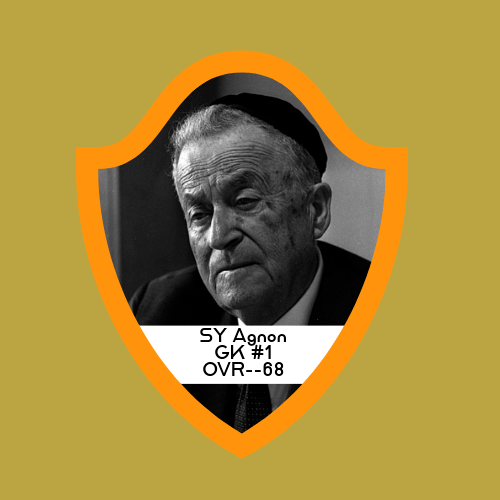
Born Shmuel Yosef Halevi Czaczkes, the other half of the 1966 Laureate duo started out in a religious family in what was then the Austro-Hungarian empire (and now is Ukraine). With a rabbinically trained (but non-clerical) father, and a home-schooled mindset, Shmuel was surrounded by images and lessons of faith and folktales that clearly drove his writing.
His writing career kicked off in what was then Palestine (where he changed his last name to “Agnon” to match his first published story), and his family began in Germany. After a fire forced him to move with his wife and kids back to Jerusalem, another fire (this one a result of anti-Jewish riots) cost him his library. Given these challenges, the anti-semitic attitudes that pervaded the Europe of his youth, and the Holocaust to come, it’s impressive that Agnon held on to his faith and optimism.
Works:
I read a few of the stories in the 1970 collection 21 Stories (though not all 21, so feel free to come at me Agnon scholars). In all of them I was impressed by the breezy folktale style structure that made it feel very much like the kind of thing your grandparents might sit you down and tell you at bed time. “Tale of the Scribe” touched on a scribe of the Torah coping with loss; “The Fable of the Goat” handled a father and son’s separation; “Ferenheim” followed a soldier who returns from war to discover that the world moved on without him; and “The Lady and the Peddler” set the stage for pretty much all the psycho-sexual thrillers of modern airport literature (didn’t see that last one coming did ya?).
“[The scribe who copies the Torah but omits the name of God] may thus be likened to a crafstman making a crown for a king; does he not first make the crown and then set into it the diamonds and other precious stones”
–Tale of the Scribe
“At first he shuddered, when he saw her wring the head of a bird, then he ate and even sucked the bones, in the manner of frivilous people who in the beginning do not intend to commit any offense and then commit every offense in the world with pleasure.”…
“while she spoke, she embraced him with all her might and put her lips on his lips and sucked and said, “I never imagined that the flesh of a Jew is so sweet. Kiss me my raven. Kiss me, my eagle, your kisses are sweeter than all the kisses in the World.”
–Lady and the Peddler
“Happiness is a wonderful thing: even when it is not intended for you, you bask in its light”…
Not only the happy ones stand beyond time, but the unfortunate too. All times are ripe for misfortune
–Ferenheim
Message
Agnon is a master of combining folklore with modernism and the result is a whole heap of parables. As is often the case there’s a brief moral warning in parables and fables of all types and Agnon’s no different. The stories I found all seemed to tie into the simple belief that faith in the face of horror and tragedy nurtures the soul.
Position: #1 Goalkeeper
Agnon’s penchant for the parable made me think of a lonely goalkeeper watching the world pass by and considering what exactly it all means. When the pressure rises and they have to step up, that keeper believes in their skill to see them through, and if not…well, just let it go and bring your best effort to the next outing. He may not be the most dominant or exciting keeper you can imagine, but he has his days, and more importantly, he has the right perspective.
Where would you put a parable loving player? The wing? Midfield? Somewhere where he can surreptitiously punch anti-semite Wladyslaw Reymont?
Next Time (Let’s wrap up our recent winners) 2020 Honoree–Louise Gluck
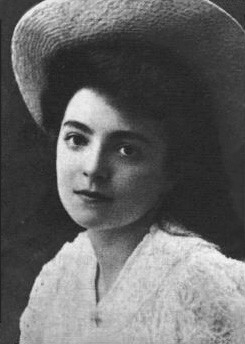
Nelly Sachs started out as the daughter of a prosperous family in Berlin, Germany. Then perhaps the greatest shroud of the 20th century, Nazi power, stretched out and covered her world with darkness.
Fortunately, poetry saved her…literally actually. Having developed an appreciation for and then correspondence with the first female Nobel Literature Laureate (Selma Lagerlof, 1909), she was able to emigrate to Sweden with her mother and avoid the reign of terror imposed by Hitler and the Nazi regime. Once there she continued to grow her skills as a writer, translating a tonnage of Swedish correspondence and poetry, while still making room for her own work processing the traumatic reality of seeing your homeland attack you and your family.
Though Sachs’ mental health was permanently affected by her trauma, the writing that she said captured the “tragedy of the Jewish people” was integral in winning the Nobel in 1966 “for her outstanding lyrical and dramatic writing, which interprets Israel’s destiny with touching strength”
Works
O the chimneys
“O the chimneys Oh the ingeniously devised habitations of death When Israel’s body drifted as smoke Through the air We welcomed by a star, a chimney sweep, A star that turned black Or was it the a ray of sun.”
Someone will take the ball
Someone will take the ball from the hands that play the game of terror.
Please note that the image that partners “Someone Will Take the Ball” is intentionally the dumbest possible illustration for a very serious subject…because humor is a defense mechanism.
from Eli “the murderers sowed my people in the earth. O may its seed be full of stars …. I was only half sown, lying already in the grave, knew already how warmth leaves the flesh– how motion leaves the bones– heard already the language of the bones when corruption sets in– language of the blood when it congeals– language of the dust striving anew after love.”
Message
Sachs greatest challenges and greatest successes were born out of the tragedy she and her fellow jewish German citizens endured: the Holocaust and the associated displacement of all involved. Unsurprisingly this difficult experience anchors everything she writes, and while it is strange, unnerving, and sometimes absurd, it is also a call to action and an act of defiance. You find strength through pain.
Position: #5 Center Back
With a theme like that, there’s really no doubt in my mind: Sachs is an enforcer of the first order. She would be the kind of player who would cut you in half and dare you to get up again. She’s so focused on these skills that she’s not about to threaten to score herself. But the defensive intensity is enough that any goals scored against her would be coupled with shoves and elbows from then on (just imagining her battling Hermann Hesse makes me smile). With an attitude that fierce and a temprament to boot, she very clearly lines up in my mind with the “‘the hell you lookin’ at?!?” defensiveness of Montanans I grew up with.
Honestly, part of me is feeling a little awkward taking Sachs pain and running it through this bizarre exercise, so if you feel like I should apologize, let me know.
Next Time–Time for the other half of the ’66 Winners: Shmuel Yosef Agnon whose writing Sachs said offered a more hopeful counterpoint to the tragedy in her work.
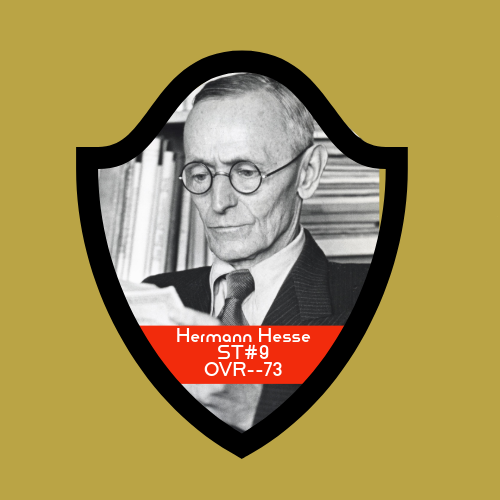
Hermann Hesse was born to a devout family in a small village nestled near Germany’s Black Forest. Thanks to his family emphasizing the role of art, literature, and music in nurturing strong discussions and faith, Hesse remained deeply immersed in intellectual pursuits. From an early age he was open to new ideas and different cultures. Ever the iconoclast, he celebrated becoming a father by leaving his young children to explore Sri Lanka and Indonesia. On his return, he enlisted to support for the German side in the First World War, by overtly encouraging understanding and compassion for the prisoners of war he served. He did all this through a carefully developed detachment from personal feelings in dealings with the world that drove others to strong emotional reactions. It might make him aloof and aggravating, but it was certainly a fixture in his view of the right way to live.
While he received the Nobel Prize shortly after the end of the Second World War, he really rose to prominence from the free spirited movement of the 1960s. The countercultural spirit and seeking of truth while releasing attachment spoke deeply to many, and soon young students came to agree with the old fuddy-duddies at the Swedish academy about “his inspired writings, which while growing in boldness and penetration, exemplify the classical humanitarian ideals and high qualities of style”
Works
“Nothing on earth is more disgusting, more contemptible than borders. They’re like cannons, like generals: as long as peace, loving kindness and peace go on, nobody pays any attention to them–but as soon as war and insanity appear, they become urgent and sacred”
“You should not take old people who are already dead so seriously. It does them injustice. We immortals do not like things to be taken seriously. We like joking. Seriousness young man is an accident of time. It consists, I don’t mind telling you in putting too high a value on time. I too, once put too high a value on time. For that reason, I wished to be 100 years old. In eternity however, there is no time you see. Eternity is a mere moment, just long enough for a joke.”
“What is called history at school, and all we learn by heart there about heroes and geniuses and great deeds and fine emotions, is all nothing but a swindle invented by the school masters for educational reasons to keep children occupied for a given number of years. It has always been so, and always will be. Time and the world, money and power belong to the small people and shallow people. To the rest, to real men belongs nothing, nothing but death.
–Steppenwolf (trans. Basil Creighton)
Message
Obviously, there’s a clear link between what Hesse would call radical detachment and what appealed so much to the counter-cultural cohort that adopted him as one of their own. But there’s never just one message, and from what I read, I think there’s one thing that Hesse is attached to: himself and being the fullest version of himself regardless of what others thought. So I would posit his primary theme as a belief that: the road to personal fulfillment is arduous and alienating, but also man’s highest calling.
Position: #9 Striker…with a caveat…
Hesse has some moments of staggering brilliance, individual quotes that can linger for a long time afterward, rather like a goal poacher who strikes and creates a memorable thrill in the crowd. BUT, most of the time people approach him as a genius, and I don’t. I see a rather self-important navel-gazer who has a better rep than he deserves.
To put this in soccer terms, I think of Hermann Hesse as a low budget Ruud van Nistlerooy. But, given the idolization of him, I think he’d probably end up miscast in the #10 role like Leo Messi–someone everyone expects to be a threat to score who can ALSO create amazing goals and support a team towards greatness…only…he never does.
I don’t think I’m a man for “Hot takes” either in sports or in literature, but this might be my hottest one. So let this fire up the comment section (please)
Next Time 1966 was a split prize year! So we’ll do a double in June! First we’ll look at Nelly Sachs!
The 16th and most recent (for now) French Nobelist is one of the oldest winners for the Nobel, which makes sense as a she plumbs the depths of her personal experience for her writing. Her works frequently cover her own lived experiences as auto-socio-biographical or memoir-style composition. Her childhood in Normandy was marked by a young girl’s stressful and shameful agonies of post-war trauma in a misogynist patriarchy. Her adulthood, as a teacher and author, has been marked by stressful and shameful agonies of a modernizing world that retains many old power structures.
Why Ernaux’s work stays fresh…
As the patriarchy remains dominant (if a little more discrete) she has had plenty of fodder for her writing. Covering everything from traditional families and romance to assault and marginalization, her works were specially marked “for the courage and clinical acuity with which she uncovers the roots, estrangements and collective restraints of personal memory”.
Works
With as short and direct as Ernaux’s prose is, I’ve been able to listen to a couple of her works Happening, and Shame. Her writing is often blunt plain, one of her books includes the explanation: “my writing is still confined to the language of the past. I shall never experience the pleasure of juggling with metaphor or indulging in stylistic play.” Still, her writing has an honest beauty.
“I realize this account may exasperate or repel some readers. It may also be branded as distasteful. I believe that any experience, whatever its nature, has the inalienable right to be chronicled. There is no such thing as a ‘lesser truth.'”
“Among all the social and psychological reasons that may account for my past, of one I am certain: these things happened to me so that I might recount them. Maybe the true purpose of my life is for my body, my sensations, and my thoughts to become writing. In other words: something intelligible and universal causing my existence to merge into the lives and heads of other people.”
–Happening
“I almost feel I am committing a sacrilege replacing the sweet landscape of memory…by a far harsher one that strips it of all magic but whose truth cannot be questioned.”
“The worst thing about shame is that we imagine we are the only ones to experience it.”
—Shame
(Side bar–that last line about shame might need to be my personal mantra)
Message
There are a lot of assumptions that Ernaux’s work and message is limited to women and others who suffer directly from misogyny. But one thing that stands out on reading her works is how the pain and difficulty she faces stems from revisiting and reviewing her life and how, despite the pain, there is power and meaning there. We all face those moments, and they can cut us to our core, but if we can find some of the strength that Ernaux does we’ll be well-served. Memory is informative and inescapable.
Position: #7–Left Wing
I was torn on where to put Ernaux. Her plain Marxist leanings put her on the left for sure. She’s short in her prose, direct, and a little blunt, which feels defensive.
But her bluntness is confrontational, challenging, and uncomfortable. Much more like an attacker. She questions and challenges tradition more than I think would be appreciated by the other French winners (looking at you Prudhomme and Simon)–so let’s call her a winger with some wingback tendencies.
What do you think? Given that Ernaux scrupulously avoids rooms with soccer matches on, I figure she doesn’t care…but feel free to prove me wrong Madame Ernaux (or literally anyone else).
Next Time (back to our 80th anniversary winner!) 1946 Honoree–Herman Hesse
BONUS!
I started making videos about these posts, feel free to watch it here, or on the YouTubes
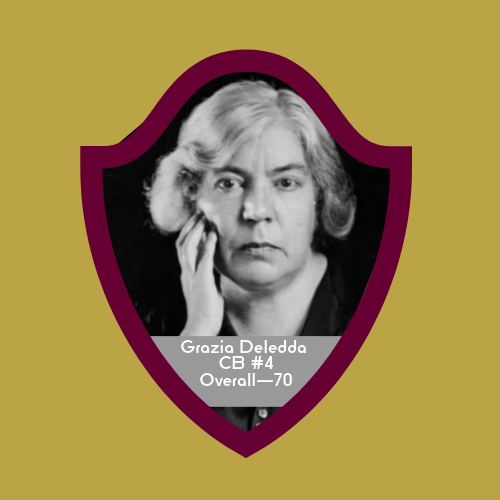
Like her fellow Italian winner Giossue Carducci, Grazia Deledda was fierecely proud of her local community. Unlike Carducci, who spread his wings to write about the whole world around him, Deledda was stayed on Sardinia and write about the world around her and the people in it. That specificity was critical to both inviting the world into the (often inhospitable) island and appreciating the same for everyone’s appreciation and awareness.
She received her award in 1926 for her ability to picture the life on her native island with depth and sympathy, defying easy categorization and assumptions among visitors. That PR Blitz full of hometown pride is not uncommon (and, was in Deledda’s case supported by world class twit Benito Mussollini).
Works
I read Deledda’s short but truly beautiful story The Mother in which the titular mom fights for her son’s (the local priest) soul. There is a lot of quiet desperation, but also aching love both parental and romantic (between the son and his illicit paramour).
Man is a hunter and Woman his prey.
Little by little, desire crept into that love of theirs, chaste and pure as a pool of spring water beneath a wall that suddenly crumbles and falls into ruins.
He was unhappy because he was a man and was forbidden to lead a man’s natural life of love…. Then he reflected that pleasure enjoyed leaves only horror and anguish behind it.
—The Mother
Message
Deledda relished everything about Sardinia and captured the essence of the spaces that are both protected from danger and deeply insulated to the point of endangering themselves. That definitely reminded me of Montana, where the mountains, and scrub brush make people both leery of and loving to outsiders. To me Deledda’s message sounds more like this: “we can all appreciate each other more and judge each other less.”
Position: #4 Center Back
Try as she might to be inclusive and appreciative, Deledda was born a home with a hearty distrust of others. That combined with her solid (though unremarkable) writing suggests the career of a true center back. Her writing doesn’t push many boundaries or reinvent the wheel, but it is prepared to do what it takes to protect her kith and kin.
Monthly plea for interaction goes here!
Next Time: We dart back to the present to honor one of 3 women honored by the Nobel within the last 6 years. Annie Ernaux (2022), c’mon down!!