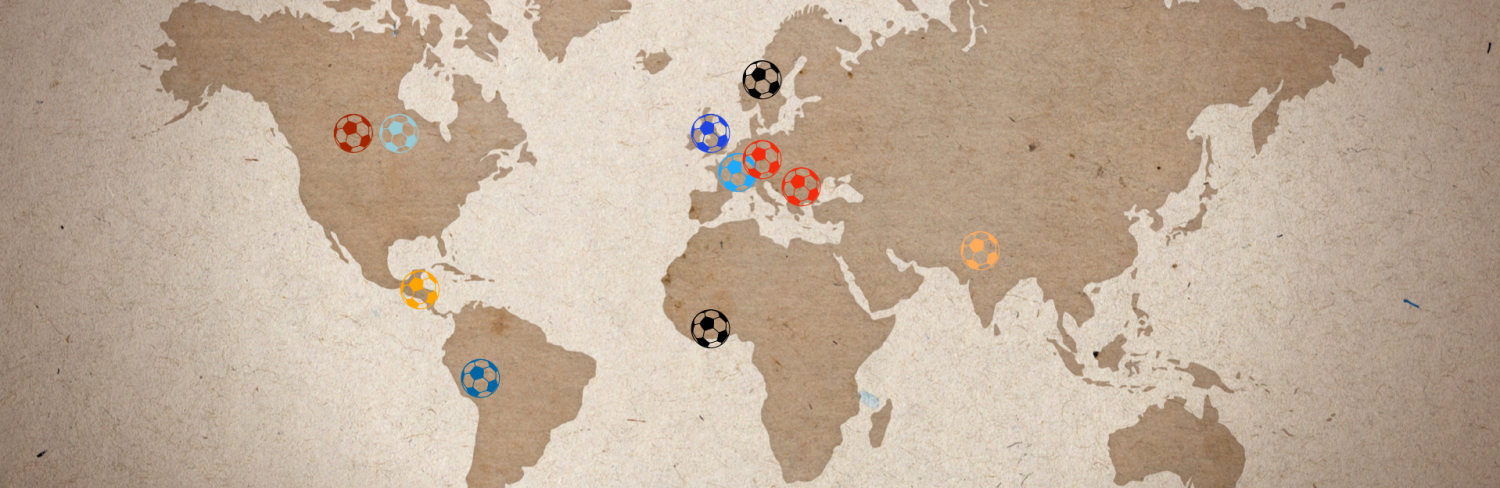

In just a few days, the Nobel committee will announce the winner of the 2026 Nobel Prize for Literature. Just like last year, they will join an elite group of writers from around the world, and a small selection of those writers who we have read, reviewed, and classified as members of Nobel FC: The only Fantasy Football team where the Fantasy is that literary merit would translate into soccer skill.
I’ll try to read the author in question as soon as I can (I’ve actually spent a fair amount of time reading possible nominees to be better prepared). I’ll write a post analyzing their skills by the beginning of November, but I wanted to take a moment for the fourth year in a row to consider who will be joining this august group. If you need an explainer on “sports drafts” (book nerds) or “who decides the Nobel Prize for Literature” (sports nerds) take a look at my posts from years gone by and you should be better informed.
So Who Could be “Drafted” This Year?
While about 2 million people published books in the last year alone, the field probably isn’t quite that big: instead eagle-eyed sleuths and prognosticators have developed a system for scrupulously combing the Swedish Academy’s Library databases to find some likely candidates. After reviewing both betting odds and the message boards at worldliteratureforum.com, I am ready to toss out the following 11 candidates based on my own gut instincts.
Last year’s 11 now off the list:
While they never made the top 11, I think we should take a moment to recognize some of the talents who passed away this year. Foremost among them in fancy pants literary circles: David Malouf (of Australia) and Antonio Lobo Antunes (of Portugal–who was actually on my “honorable mention roll call last year). Malouf was actually on my syllabus for great works of Western civilization where I met my wife in college, but never claimed the prize (frankly, I don’t think that course required any Nobelists…so maybe this is all moot). [There was one other death that influenced this list (see Chaos Pick) below.]
While death is an automatic disqualifier, there are other areas that are a little more subjective and that has lead to one of the biggest shakeups of my First XI in years.
First is the regional rotation that has long been a hallmark of the Swedish academy. The same country has never won twice in a row, and the same region has rarely pulled down dual honors in recent years (the 2016-17 Bob Dylan/Kazuo Ishiguro double whammy was a rare back to back winner for dominant western powers). With that in mind Lazlo Krazhnahorkai’s win also knocks Mircea Cartecescu down the pecking order (don’t worry, he’ll probably be back next year).
Second, after some exhaustive computations (done by my computer…not me…I’m an English teacher), I also decided to consider age as a factor especially as most laureates are between 50-80. So, I’m letting go of Adonis (96), Thomas Pynchon (88), the favorite among bookies last year Gerald Murnane (86), and Ludmilla Ulitskaya (82). Sorry AARP, I’ll trust you to accuse me of ageism as you need to.
Finally, given my predicted gender balances I dropped a couple of men who I think don’t meet the current moment as well as some other candidates with a little more heat to their campaigns (and more estrogen in their bodies). So, Salman Rushdie and Caryl Phillips drop off my list while the wildly popular Haruki Murakami stays off for the second year running.
Leading Candidates:
With the Boy/Girl/Boy/Girl pattern firmly established, I’m going to let those odds keep running by making sure my options skew towards the fairer gender construct. Let’s break them down by regions which have been trending up in betting pools (with the caveat that odds may change still further in the last week before the announcement)
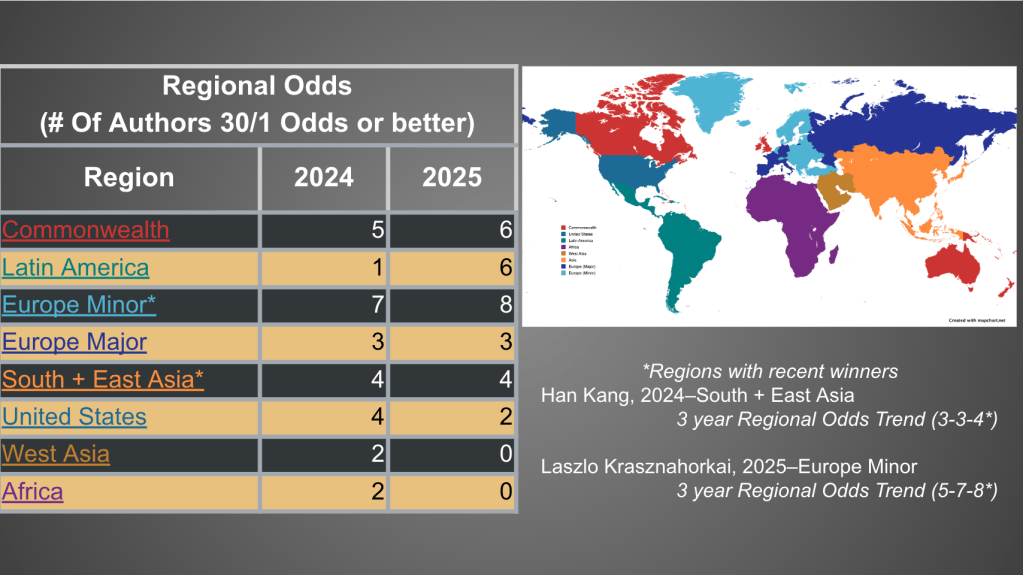
Canadian Corner: Two of the most popular names on prediction markets are the Canucks: Margaret Atwood (she of Handmaid’s Tale fame), and Anne Carson (Autobiography of Red). Atwood comes with massive name recognition, but an advanced age that challenges one of my criteria. Carson is less well known but her style of poetic storytelling jibes well with recent winners Annie Ernaux and Han Kang, playing well into the preferred style of the committee under chairman Anders Olson.
Commonwealth Cousin: Continuing on the legacy of the British Empire in North America we can take a look at writers who share some linguistic and cultural conflict themes with Atwood and Carson. That’s where I’m slotting Jamaica Kincaid and Louise Erdrich. Kincaid is Antiguan by birth and evokes the same reverie style as her Canadian cousins, with a clearer grounding of both race and gender. The same style points apply to Erdrich, one of my long time favorites whose Ojibwe ancestry would make her a first indigenous winner in this category (even though her writing is much more linear than the others on the list so far).
Spanish-Language Section: It’s been 16 years since the last Spanish language author was awarded the prize, and given the surge in names on the betting lists, things seem to be trending towards the Spanish Language. The biggest riser last year was Christina Rivera Garza of Mexico, who has had some big literary circle hits lately with some of the same reverie writing style that has been so popular under Olson. She would be on the younger side, but certainly shouldn’t be discounted. Nor should the better known (and slightly over 80) author Isabel Allende. I’m also going to include Cesar Aira (Mr. I’m So Stream of Conscious-I Never Write a Second Draft) and Homero Aridjis (who slips under my self imposed age cut off because I want him to).
Han Kang’s Cronies: The final area to consider are some wildly popular Asian writers. Despite Han Kang’s 2024 win and the plausible regional rotation, there’s some serious mojo behind another award for a part of the world that has 60% of the world’s population and 5% of the Nobel Literature Laureates (including dual citizens: Gao Xinjiang [China/France] and Kazuo Ishiguro [Japan/England]).
Back with a vengeance is the author who seems tailor made for Olson’s committee: Can Xue who has been among the betting favorites for five years. Her style meshes very well with Jon Fosse and Lazlo Krasznahorkai (though I thought it was less like other female winners…is it possible the committee wants gender conformity in writing?) and another big surge belongs to India’s Amitav Gosh who has been a darling of the Kalshi prediction markets throughout the summer to become a favorite (the prediction market puts him at about 3:1…which would make him a favorite in traditional bookie markets). My favorite newly read author on this list is probably Yoko Tawada whose dual citizen bonafides (Japan and Germany) clearly influence her trilogy of novels capturing the existence of people beyond place and space in an ecologically ravaged dystopia with many positive partnerships–and yes, allows me to squeeze one “European” on to this list.
Left Out of the Line up (no points to me if they win)
Injured–have been in the 11, but aren’t there now: Haruki Murakami, Pierre Michon, Helene Cisoux, Adonis, Thomas Pynchon, Gerald Murnane, Salman Rushdie, Caryl Phillips, Ludmilla Ulitskaya.
On Bench: Good writers widely recognized that I haven’t included yet Michael Oondjaate, Rachel Cusk, Vladimir Sorokin, Botho Strauss, David Grossman, Javier Cercas, Ibrahim Al Koni, and Tahar Ben Jelloun
On Loan: Names that might make big noise soon, but aren’t breaking into the betting pools: Linton Kwesi Johnson, Percival Everett, Yan Lianke, Mohamed Mbougar Sarr, Chimamande Adichie, Bushra al-Maqtari, Marlon James, Colson Whitehead, .
Analysis: Who will it be? Who should it be?
In articles analysing a team’s draft-day decisions, writers look at two things. What they think the team leaders will do, and what the author themselves would do if they had a chance.
I have read something by all of the writers on my list, and full works from all of my Will/Would pick lists and here now: my “expert” analysis.
The Academy Will Pick
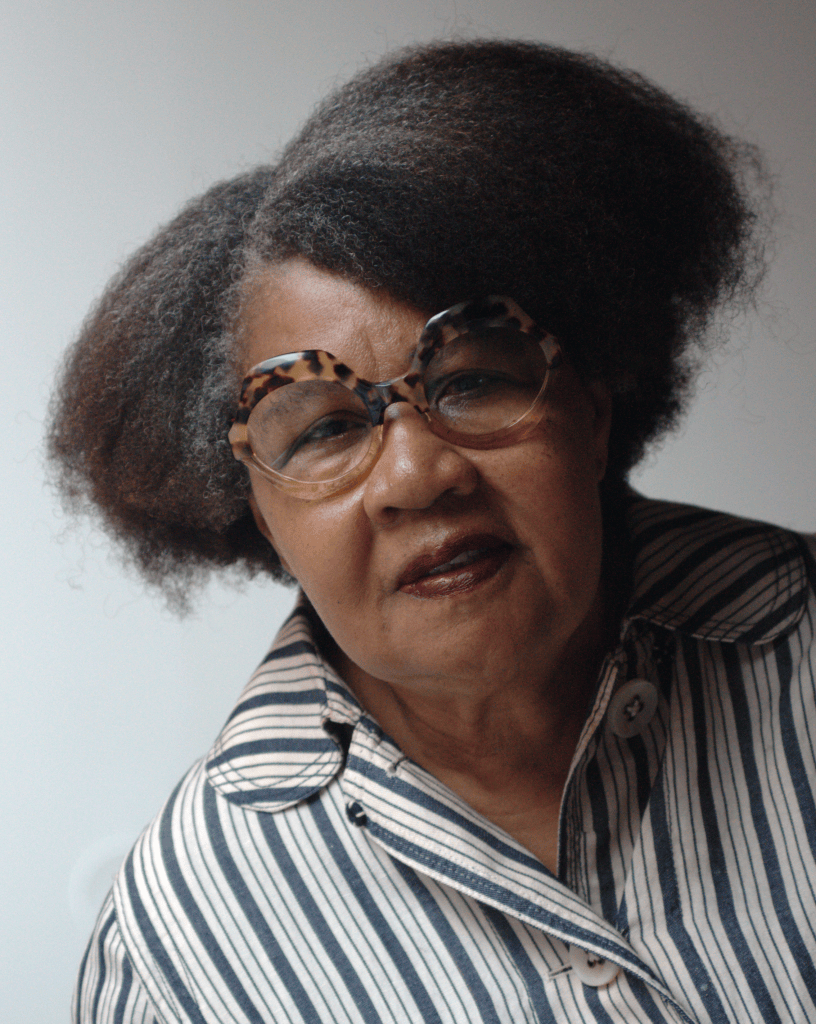
The last three years I’ve done this, I think it’s become clear that the Swedish Academy under Anders Olson has prioritized authors with a well structured stream of conscious/fluid prose poetry style. They are also increasingly mindful of increasing representation in the list of honorees, both in terms of gender, nationality and primary language.
So I think they will pick: Jamaica Kincaid. Going through her novels See Now Then and Mr. Potter I kept thinking: oh, this is absolutely in the Nobel comittee’s wheel house. Add to that her history of working across cultures, addressing women’s experiences of the modern world (very much in keeping with other female winners like Ernaux and Kang), and the fact that she would be the first black woman awarded since Toni Morrison and I think she’s primed for taking the title despite not appearing (yet) in the odds lists. Others have noted that the committee will likely have cheered Kincaid’s honrs at the Gothenborg Book Festival just a few weeks before the Nobel announcement.
Honorable mentions: Anne Carson, Christina Rivera Garza
I Would Pick
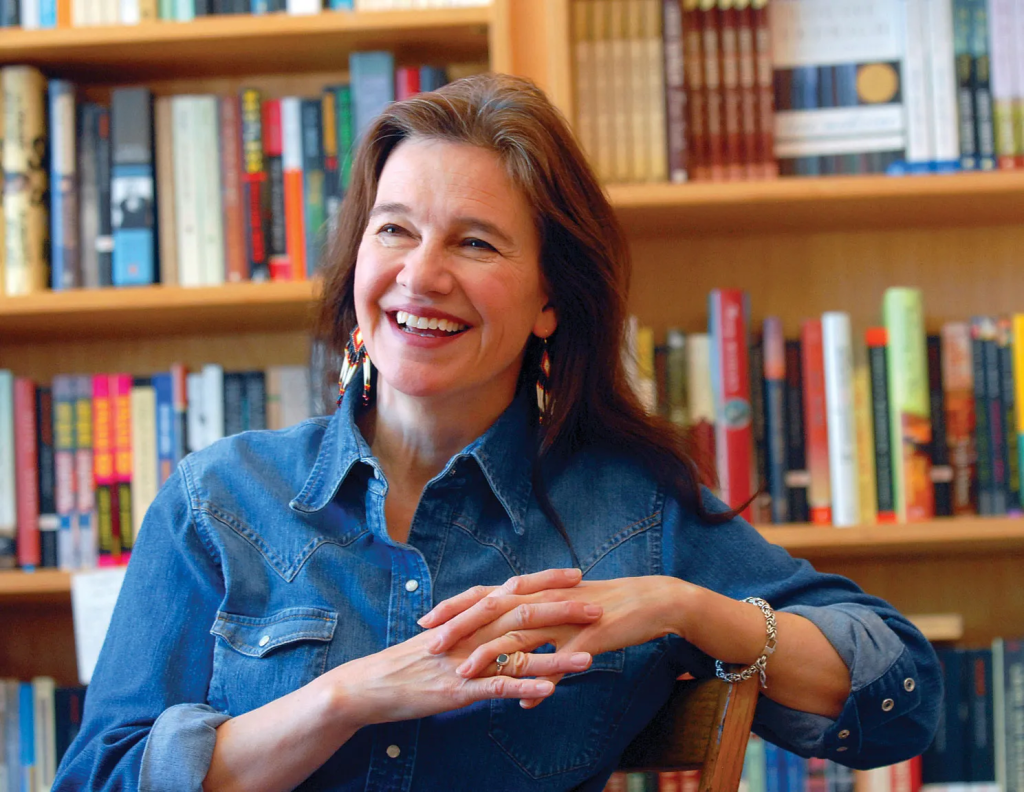
I will continue to maintain that you can find artistry in all kinds of writing, so if you’re going to award someone who has “conferred the greatest benefit to humankind” clarity is a more valuable asset than pure “literary skill. (Which in the committee’s opinion is self-reflection in extremely complex sentence structures.)
For the first time in this project, I’m not going for the clarity of Homero Aridjis’ poetry, but rather for a woman whose style is similar, mastery of subject unrivaled, and whose voice is a vital addition to the hall of honorees: Louise Erdrich. Yes, I’m biased by our shared hometown. No, I don’t care.
Honorable Mentions: Homero Aridjis, Yoko Tawada. (Sidebar: none of these three are on the odds lists…so…I’m on my own limb again)
Chaos Pick
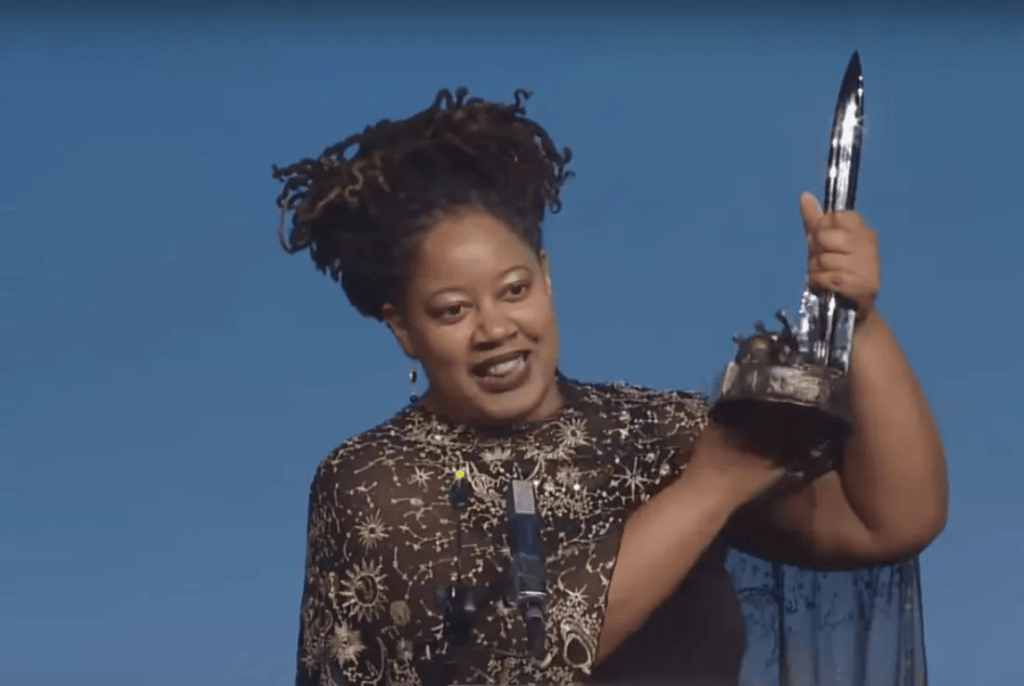
Sometimes, it’s fun to pick authors that would make the literature snobs’ heads explode (see Dylan, Bob). I was all set to pick Marjane Satrapi, the Iranian graphic novelist, but she sadly passed this May. (Sidenote: If you haven’t yet, read Perepolis, 100% worth it.) So instead, I’ll make a suggestion that the committee opt instead for that most shocking choice: a genre writer (cue dramatic music). And in the spirit of “go big or go home” let’s go with another Black woman in NK Jemisen (she of the three Hugo awards)
Who would you pick?
Leave a comment below with your pick so you can show off in comparison to me! Otherwise I’ll keep assuming I’m a misunderstood genius.
Next Time…we’ll take a quick detour to Knut Hamsen before I rush to judgement on whomever our winner is ANNE CARSON!!
Given the repetition of 11s in this site, I wanted to see how soon I can hit 11 points with
- 5 points if I correctly predict either on the *will win*, should win, or chaos pick
- 2 points if they’re on either “honorable mentions” list—Carson was a back up on the “will pick” list so victory dance for me!
- 1 if they’re in my 11 top candidates
Nonsense Point total: 5/11
For an added Challenge, I’m also going to award points to the Universe for the other side of the coin
- 1 point if the winner is in one of my “left out of the line up” lists
- 2 points if they aren’t on that list but are within 25/1 on the odds
- 5 points if they are outside of 25/1 odds
Nonsense Point total: 5/11 (Han Kang is a big advantage for the Universe)
You can join in this too! I will keep pleading for comments until I get them

