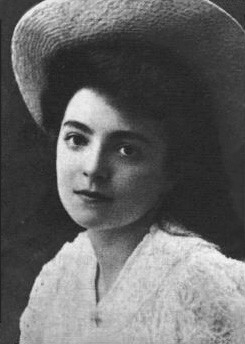
Nelly Sachs started out as the daughter of a prosperous family in Berlin, Germany. Then perhaps the greatest shroud of the 20th century, Nazi power, stretched out and covered her world with darkness.
Fortunately, poetry saved her…literally actually. Having developed an appreciation for and then correspondence with the first female Nobel Literature Laureate (Selma Lagerlof, 1909), she was able to emigrate to Sweden with her mother and avoid the reign of terror imposed by Hitler and the Nazi regime. Once there she continued to grow her skills as a writer, translating a tonnage of Swedish correspondence and poetry, while still making room for her own work processing the traumatic reality of seeing your homeland attack you and your family.
Though Sachs’ mental health was permanently affected by her trauma, the writing that she said captured the “tragedy of the Jewish people” was integral in winning the Nobel in 1966 “for her outstanding lyrical and dramatic writing, which interprets Israel’s destiny with touching strength”
Works
O the chimneys
“O the chimneys Oh the ingeniously devised habitations of death When Israel’s body drifted as smoke Through the air We welcomed by a star, a chimney sweep, A star that turned black Or was it the a ray of sun.”
Someone will take the ball
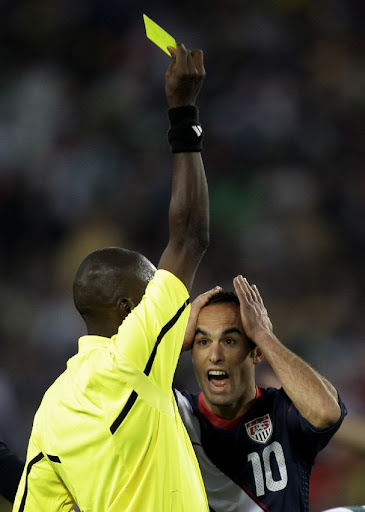
Someone will take the ball from the hands that play the game of terror.
Please note that the image that partners “Someone Will Take the Ball” is intentionally the dumbest possible illustration for a very serious subject…because humor is a defense mechanism.
from Eli “the murderers sowed my people in the earth. O may its seed be full of stars …. I was only half sown, lying already in the grave, knew already how warmth leaves the flesh– how motion leaves the bones– heard already the language of the bones when corruption sets in– language of the blood when it congeals– language of the dust striving anew after love.”
Message
Sachs greatest challenges and greatest successes were born out of the tragedy she and her fellow jewish German citizens endured: the Holocaust and the associated displacement of all involved. Unsurprisingly this difficult experience anchors everything she writes, and while it is strange, unnerving, and sometimes absurd, it is also a call to action and an act of defiance. You find strength through pain.
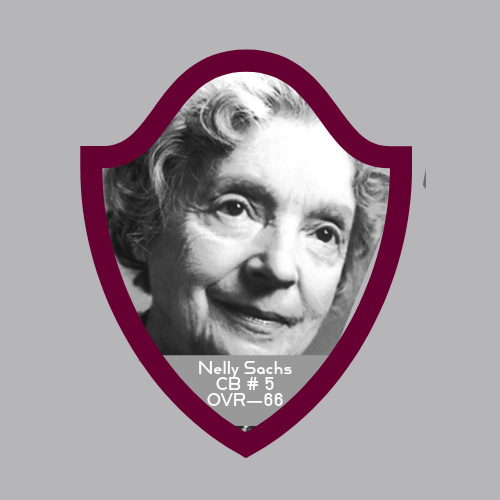
Position: #5 Center Back
With a theme like that, there’s really no doubt in my mind: Sachs is an enforcer of the first order. She would be the kind of player who would cut you in half and dare you to get up again. She’s so focused on these skills that she’s not about to threaten to score herself. But the defensive intensity is enough that any goals scored against her would be coupled with shoves and elbows from then on (just imagining her battling Hermann Hesse makes me smile). With an attitude that fierce and a temprament to boot, she very clearly lines up in my mind with the “‘the hell you lookin’ at?!?” defensiveness of Montanans I grew up with.
Honestly, part of me is feeling a little awkward taking Sachs pain and running it through this bizarre exercise, so if you feel like I should apologize, let me know.
Next Time–Time for the other half of the ’66 Winners: Shmuel Yosef Agnon whose writing Sachs said offered a more hopeful counterpoint to the tragedy in her work.