

Background
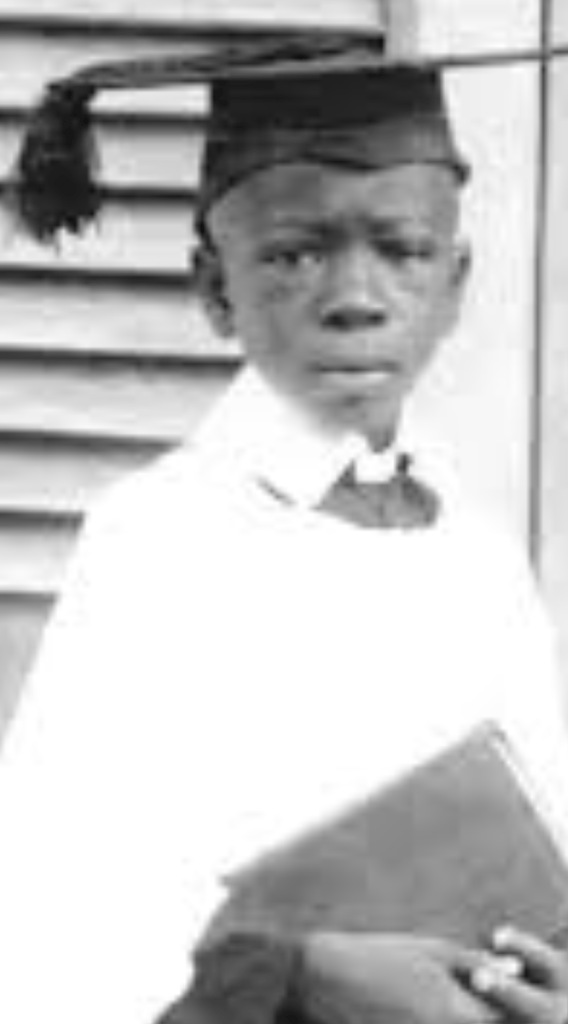
Soyinka was the first African writer to win the Nobel Prize in Literature, which is both awesome for him and fairly embarrassing for an award 85 years into its history. He was born in Abeokuta, a smaller community in Nigeria’s delta region that has an impressive reputation for churning out influential figures in Nigeria’s history (including politicians and the culturally emphatic Afrobeat Icon Fela Kuti). But he chose to turn his attention to literature, studying it first in Nigeria, then in England, and becoming a part of the staff at the Royal Court Theater in London.
Soyinka’s own literary career exploded when he returned to Nigeria as he found ways to use familiar western theatrical structures to tell stories that captured the native lived experience, and used native culture to amplify the western theatrical structures that many expected. While his plays were the most eye catching work and built him an audience around the world, he also wrote poetry and prose. In 1986 he was cited by the Nobel committee as someone “who in a wide cultural perspective and with poetic overtones fashions the drama of existence.” Since he was awarded the prize at age 52, he has gone on to a long and impressive career after the citation with more great plays and other works to go along with widely being seen as a grand old man of African Literature.
Works
I went a bit down a rabbit hole with Soyinka. I already had read and discussed his play Death and the King’s Horseman. But, I listened to the audiobook of his most recent output Chronicles from the Land of the Happiest People on Earth, I reviewed a poem I had taught before (“Your Logic Frightens Me, Mandela”), and I enjoyed a YouTubed copy of Guyana’s national theater’s version of Lion and the Jewel…with all that in mind you probably won’t be surprised to hear that I liked his work.
“Doves metamorphosed in milk-white talons?
Not for you the olive branch that sprouts
Gun muzzles, barbed-wire garlands, tangled thorns
To wreathe the brows of black, unwilling Christs…
Are you now the crossword puzzle expert?
Chess? Ah, no! Subversion lurks among
Chess pieces. Structured clash of black and white,
Equal ranged and paced? An equal board? No!
Not on Robben Island.”–“Your Logic Frightens Me Mandela”

Lakunle: You could wear something.
Most modest women do. But you, no.
You must run around naked in the streets.
Does it not worry you… the bad names,
The lewd jokes, the tongue-licking noises
Which girls, uncovered like you,
Draw after them?
Sidi: …Is it Sidi who makes the men choke
In their cups, or you, with your big loud words
And no meaning?
–The Lion and the Jewel
Dr. Menka: “The hypocrisy we all live. And the nightmares. No, no, no, this is not an accusation flung at anyone here, no. I have no grounds for that. But you see, this club is not the entire world. It is not even the real world.
…
Narrator: “All was not lost. What these colleagues—and strangers—were admitting, despite their discomfort, resentment, and even outrage, indeed on that very account, was that, [Manners Makyth the Man] notwithstanding, some deeds stood outside even moral outrage.”–Chronicles from the Land of the Happiest People on Earth
Message
Soyinka could be a global institution, if he didn’t so clearly dislike institutions of all kinds He often writes with the authority of an empowered traditional Nigerian (male, prosperous, educated) and a marginalized westerner (Black, foreign, politically radical). With such a wide and expansive view of the world he is in an ideal position to satirize the flaws and failings of both the dominant West and the dominant local communities within his native Nigeria. My big takeaway: The power people wield would be terrifying…if they weren’t so stupid.
Position: #10 Attacking Midfield
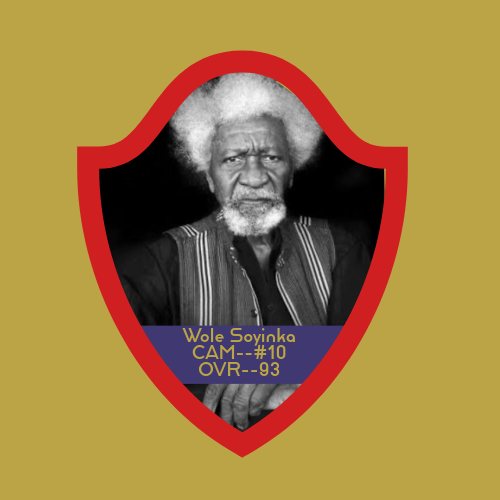
I found an interview with Soyinka where he explains that he was the last choice left winger of his University team in England, and took stock at half time to realize he wasn’t going to be a player. I respect that self-awareness, but if he played football like he wrote, the wing would be too far afield for him.
Like many playwrights, I think he fits more naturally in the center of the field, and his energy, pace, drive, and attacking mentality put him in an altogether different class of player. He’s not as mecurial or obtuse as John-Paul Sartre (who I said would be creative, inventive and always in the moment–if perhaps impossible to coach), he has a singular focus, obsessive, brutal and at times charming and funny. To me, Soyinka is the closest thing we have to a Diego Maradona in this project.

