
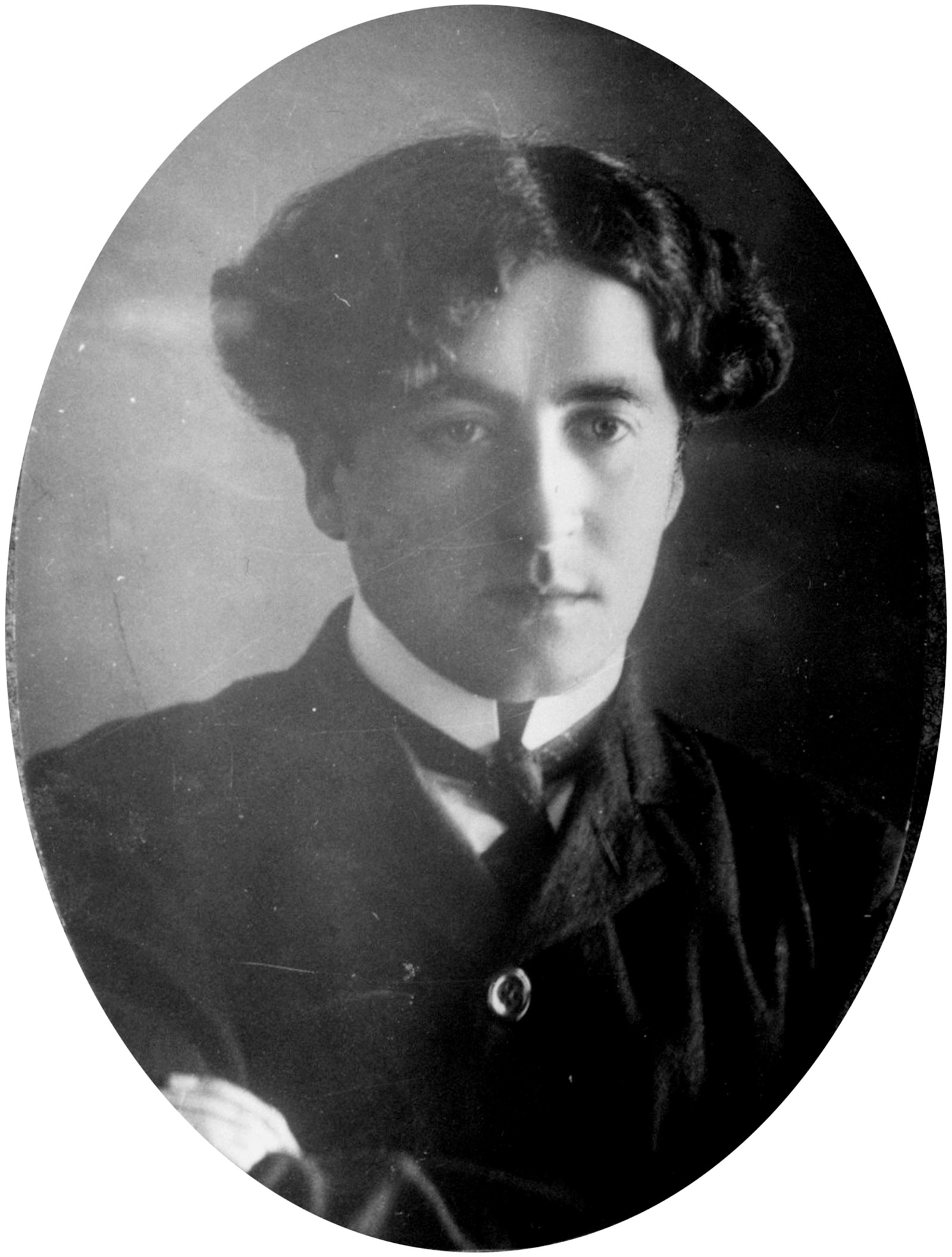
Nobel FC (1966): Shmuel Yosef Agnon

Nobel FC (1966): Shmuel Yosef Agnon

Background

Born Shmuel Yosef Halevi Czaczkes, the other half of the 1966 Laureate duo started out in a religious family in what was then the Austro-Hungarian empire (and now is Ukraine). With a rabbinically trained (but non-clerical) father, and a home-schooled mindset, Shmuel was surrounded by images and lessons of faith and folktales that clearly drove his writing.

His writing career kicked off in what was then Palestine (where he changed his last name to “Agnon” to match his first published story), and his family began in Germany. After a fire forced him to move with his wife and kids back to Jerusalem, another fire (this one a result of anti-Jewish riots) cost him his library. Given these challenges, the anti-semitic attitudes that pervaded the Europe of his youth, and the Holocaust to come, it’s impressive that Agnon held on to his faith and optimism.

Works:

I read a few of the stories in the 1970 collection 21 Stories (though not all 21, so feel free to come at me Agnon scholars). In all of them I was impressed by the breezy folktale style structure that made it feel very much like the kind of thing your grandparents might sit you down and tell you at bed time. “Tale of the Scribe” touched on a scribe of the Torah coping with loss; “The Fable of the Goat” handled a father and son’s separation; “Ferenheim” followed a soldier who returns from war to discover that the world moved on without him; and “The Lady and the Peddler” set the stage for pretty much all the psycho-sexual thrillers of modern airport literature (didn’t see that last one coming did ya?).

“[The scribe who copies the Torah but omits the name of God] may thus be likened to a crafstman making a crown for a king; does he not first make the crown and then set into it the diamonds and other precious stones”

–Tale of the Scribe

“At first he shuddered, when he saw her wring the head of a bird, then he ate and even sucked the bones, in the manner of frivilous people who in the beginning do not intend to commit any offense and then commit every offense in the world with pleasure.”…

“while she spoke, she embraced him with all her might and put her lips on his lips and sucked and said, “I never imagined that the flesh of a Jew is so sweet. Kiss me my raven. Kiss me, my eagle, your kisses are sweeter than all the kisses in the World.”

–Lady and the Peddler

“Happiness is a wonderful thing: even when it is not intended for you, you bask in its light”…

Not only the happy ones stand beyond time, but the unfortunate too. All times are ripe for misfortune

–Ferenheim

Message

Agnon is a master of combining folklore with modernism and the result is a whole heap of parables. As is often the case there’s a brief moral warning in parables and fables of all types and Agnon’s no different. The stories I found all seemed to tie into the simple belief that faith in the face of horror and tragedy nurtures the soul.

Position: #1 Goalkeeper

Agnon’s penchant for the parable made me think of a lonely goalkeeper watching the world pass by and considering what exactly it all means. When the pressure rises and they have to step up, that keeper believes in their skill to see them through, and if not…well, just let it go and bring your best effort to the next outing. He may not be the most dominant or exciting keeper you can imagine, but he has his days, and more importantly, he has the right perspective.

Where would you put a parable loving player? The wing? Midfield? Somewhere where he can surreptitiously punch anti-semite Wladyslaw Reymont?

Next Time (Let’s wrap up our recent winners) 2020 Honoree–Louise Gluck

Nobel FC: Giorgios Seferis

Nobel FC: Giorgios Seferis

Background

The winner of the 1963 Nobel Prize in Literature, Giorgios Seferis was often a stranger in a strange land (not unlike the wandering heroes of Greek legend). From a childhood in Smyrna that was marked by a Greek invasion of the Ottoman empire, Seferis moved to France to study law and poetry, then back to Greece to help the government. When World War II broke out, Seferis helped the government in exile and then continued a long career as a diplomat around Europe. The award gave particular citation to ” his eminent lyrical writing, inspired by a deep feeling for the Hellenic world of culture” (Nobel Prize site)

Works

From: “Erotikos Logos Pt. V”

On the stone of patience we wait for the miracle
that opens the heavens and makes all things possible
we wait for the herald as in the ancient drama
at the moment when the open roses of twilight

disappear…Red rose of the wind and of fate,
you remained in memory only, a heavy rhythm
rose of the night, you passed, undulating purple
undulation of the sea…The world is simple

–1930

From: “The Light”

As the years go by
the judges who condemn you grow in number;
as the years go by and you converse with fewer voices,
you see the sun with different eyes:
you know that those who stayed behind were deceiving you
the delirium of flesh, the lovely dance
that ends in nakedness.

–1946

Message

I had never heard of Seferis before, I found him for this project. So it was kind of amazing when I found a collection of his poems from Edmund Keely and Phillip Sherrard that included this line: “”The distinguishing attribute of Seferis’ genius–one that he shares with Yeats and Eliot–has always been his ability to make out of local politics, out of personal history or mythology, some sort of general statement or metaphor.”

I mean, how amazingly convenient that Seferis shares a stylistic trait with the other two poets I wrote about this year.

Also, how…uh…underwhelming it made this feel.

It’s certainly not bad poetry. Believe me, I write bad poetry, this ain’t it. It’s just very familiar. Reading all these poems gave me a sense that Seferis has a sense of history that justifies the modern sensibility of somber doom. Lots of poets allude to mythology and history, but few of them have the personal and cultural connection that Seferis has. The examples I gave above capture that whatever we feel now, will fade and vanish. He’s able to bring that out in other poems by evoking forgotten Kings in tossed off lines of the Iliad, or empires that crumbled. I didn’t see as much of the “genius [or] personal history” use that Keely and Sherrard did, but the overriding general statement of our present as an echo of our past certainly came through.

Position:

Given that Seferis has some clear comparisons with Yeats and Eliot, it was easy to see him as a defender. The common perception of Greek football as extremely defensive didn’t hurt matters either. But for me, there was something that didn’t quite fit with Seferis being an outfield player. Certainly, outside backs can get a little wild and wander through things (just as Seferis wanders through centuries of Greek history) but to me, he seemed less like an outfield player and more of a goalkeeper. He seems to alternate between letting his mind wander and suddenly feeling an impending sense of doom…as I expect goalkeepers far removed from action often would. And given his fondness for mythology and closeness to the Mediterranean I thought he fit best as part of FK Vozdovac (hence the red and white shield provided here).

What do you think? Greek scholars, I’m looking particularly at you as I’m a little out of my depth here. Do you have a different view of Greek soccer than I do, please bring on the corrections!

Not to give too much away, but after all these defensive writers, I’m excited for the next one to shake things up a bit…

Next Time: 1983 Honoree–William Golding