Finally, I see myself represented in a Nobel-winner (Pamuk at Right)
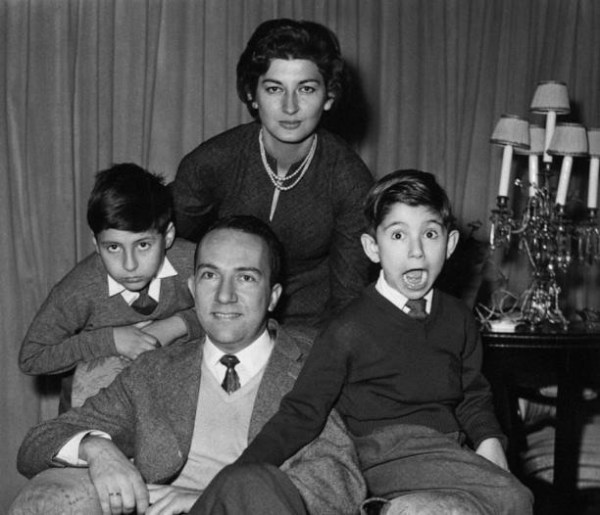
Orhan Pamuk was raised in Istanbul and continues to revel in the city to this day. It is for him what New York is for Woody Allen or Dublin is for James Joyce This makes sense as his family has long standing ties to the city and the mixture of aunts, uncles, cousins and neighbors influenced his life from early childhood and deeply inform his choices as a writer. Also…it probably made it easier for him to be a goof as the picture of young Orhan suggests.
Though he spent some time in the United States and elsewhere, Istanbul has long remained his base of operations and his muse. As Turkey modernized, struggled with modernization, questioned its place and reiterated itself, Pamuk has felt the same tumultuous relationships himself. When he won the Nobel Prize in 2006 it was with clear consideration for his unique view of local melancholy (huzun), challenges to identity, parallel lives, and alienation. Or to put it in the more succinct words of the Swedish Academy: in the quest for the melancholic soul of his native city[, Pamuk] has discovered new symbols for the clash and interlacing of cultures”.
Works
The germs of this project started twenty years ago, when Pamuk won the Nobel Prize and I picked up Snow from the high school library the same day. While I didn’t fully understand the fluid and digressive writing at the time, I couldn’t help but be impressed by the conflict between and within people trapped in a blizzard and a world outside of their control. This summer, I read Silent House: a much earlier novel with a more blunt style that again captured rival political views within people struggling against their perceived confinement.
“In a brutal country like ours, where human life is ‘cheap’, it’s stupid to destroy yourself for the sake of your beliefs. Beliefs? High ideas? Only people in rich countries can enjoy such luxuries.” —Snow
“We’re not stupid! We’re just poor! And we have a right to insist on this distinction” —Snow
Pamuk’s Silent House is fictional, but this feels about right
““You can’t start out again in life, that’s a carriage ride you only take once, but with a book in your hand, no matter how confusing and perplexing it might be, once you’ve finished it, you can always go back to the beginning; if you like, you can read it through again, in order to figure out what you couldn’t understand before, in order to understand life.” —Silent House
“That passion for listening to stories leads us astray every time, dragging us off to a world of fantasy, even as we continue to live in one of flesh and blood”. —Silent House
Message
While Pamuk’s writing style is in keeping with other 21st century winners (to wit: long complex sentences that reflect consciousness), the content of those sentences feels less dreamlike and more defensive. Things never go very deep, and only memory and history pull us away from reacting to what’s in front of us. Be ready, any moment could challenge your very soul.
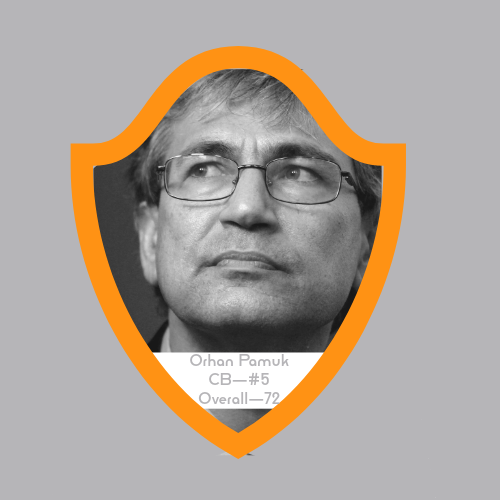
Position: #5 Center Back
I often put more aggressive writers up in the attack, but the role of memory, personal history, and the stolid steadiness of Pamuk’s Istanbul existence makes me think of him much more as someone in the defensive line. It also fits with the style I sense, constant vigilance and regular preparation to leap into action. Also given that Pamuk is someone who, by his own admission, imagined his childhood glory as being an 89th minute substitute, I like the idea that, after spending most of the game clearing the ball away, he would join a final box crash in the hope of heading in a goal.
(Sidenote: I drew that idea of his fantasy from a fabulous interview Pamuk gave to Der Speigel in 2008 talking about how soccer also matches these battles for the game and the supporters. It’s an excellent read and clearly indicates how firmly his fandom resides in his mind.)
Next Time–October means DOUBLE NOBEL FC!
First–I’ll post my Pre-Announcement Predictions
Then–Half-way through the month I’ll post thoughts on Knut Hamsen (while rapidly reading the work of this year’s laureate)

 MacKenzie's Boot Room