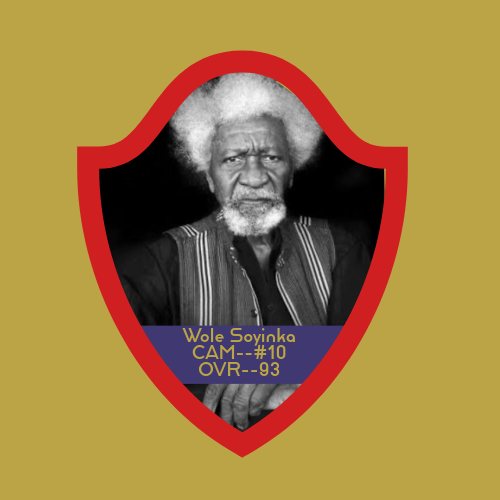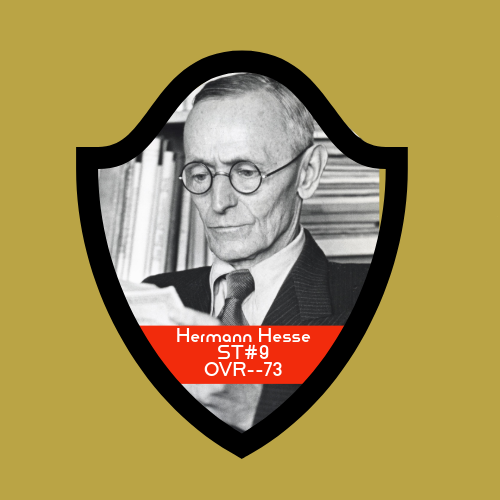

Hermann Hesse was born to a devout family in a small village nestled near Germany’s Black Forest. Thanks to his family emphasizing the role of art, literature, and music in nurturing strong discussions and faith, Hesse remained deeply immersed in intellectual pursuits. From an early age he was open to new ideas and different cultures. Ever the iconoclast, he celebrated becoming a father by leaving his young children to explore Sri Lanka and Indonesia. On his return, he enlisted to support for the German side in the First World War, by overtly encouraging understanding and compassion for the prisoners of war he served. He did all this through a carefully developed detachment from personal feelings in dealings with the world that drove others to strong emotional reactions. It might make him aloof and aggravating, but it was certainly a fixture in his view of the right way to live.
While he received the Nobel Prize shortly after the end of the Second World War, he really rose to prominence from the free spirited movement of the 1960s. The countercultural spirit and seeking of truth while releasing attachment spoke deeply to many, and soon young students came to agree with the old fuddy-duddies at the Swedish academy about “his inspired writings, which while growing in boldness and penetration, exemplify the classical humanitarian ideals and high qualities of style”
Works
“Nothing on earth is more disgusting, more contemptible than borders. They’re like cannons, like generals: as long as peace, loving kindness and peace go on, nobody pays any attention to them–but as soon as war and insanity appear, they become urgent and sacred”
“You should not take old people who are already dead so seriously. It does them injustice. We immortals do not like things to be taken seriously. We like joking. Seriousness young man is an accident of time. It consists, I don’t mind telling you in putting too high a value on time. I too, once put too high a value on time. For that reason, I wished to be 100 years old. In eternity however, there is no time you see. Eternity is a mere moment, just long enough for a joke.”
“What is called history at school, and all we learn by heart there about heroes and geniuses and great deeds and fine emotions, is all nothing but a swindle invented by the school masters for educational reasons to keep children occupied for a given number of years. It has always been so, and always will be. Time and the world, money and power belong to the small people and shallow people. To the rest, to real men belongs nothing, nothing but death.
–Steppenwolf (trans. Basil Creighton)
Message
Obviously, there’s a clear link between what Hesse would call radical detachment and what appealed so much to the counter-cultural cohort that adopted him as one of their own. But there’s never just one message, and from what I read, I think there’s one thing that Hesse is attached to: himself and being the fullest version of himself regardless of what others thought. So I would posit his primary theme as a belief that: the road to personal fulfillment is arduous and alienating, but also man’s highest calling.
Position: #9 Striker…with a caveat…
Hesse has some moments of staggering brilliance, individual quotes that can linger for a long time afterward, rather like a goal poacher who strikes and creates a memorable thrill in the crowd. BUT, most of the time people approach him as a genius, and I don’t. I see a rather self-important navel-gazer who has a better rep than he deserves.
To put this in soccer terms, I think of Hermann Hesse as a low budget Ruud van Nistlerooy. But, given the idolization of him, I think he’d probably end up miscast in the #10 role like Leo Messi–someone everyone expects to be a threat to score who can ALSO create amazing goals and support a team towards greatness…only…he never does.
I don’t think I’m a man for “Hot takes” either in sports or in literature, but this might be my hottest one. So let this fire up the comment section (please)
Next Time 1966 was a split prize year! So we’ll do a double in June! First we’ll look at Nelly Sachs!
The 16th and most recent (for now) French Nobelist is one of the oldest winners for the Nobel, which makes sense as a she plumbs the depths of her personal experience for her writing. Her works frequently cover her own lived experiences as auto-socio-biographical or memoir-style composition. Her childhood in Normandy was marked by a young girl’s stressful and shameful agonies of post-war trauma in a misogynist patriarchy. Her adulthood, as a teacher and author, has been marked by stressful and shameful agonies of a modernizing world that retains many old power structures.
Why Ernaux’s work stays fresh…
As the patriarchy remains dominant (if a little more discrete) she has had plenty of fodder for her writing. Covering everything from traditional families and romance to assault and marginalization, her works were specially marked “for the courage and clinical acuity with which she uncovers the roots, estrangements and collective restraints of personal memory”.
Works
With as short and direct as Ernaux’s prose is, I’ve been able to listen to a couple of her works Happening, and Shame. Her writing is often blunt plain, one of her books includes the explanation: “my writing is still confined to the language of the past. I shall never experience the pleasure of juggling with metaphor or indulging in stylistic play.” Still, her writing has an honest beauty.
“I realize this account may exasperate or repel some readers. It may also be branded as distasteful. I believe that any experience, whatever its nature, has the inalienable right to be chronicled. There is no such thing as a ‘lesser truth.'”
“Among all the social and psychological reasons that may account for my past, of one I am certain: these things happened to me so that I might recount them. Maybe the true purpose of my life is for my body, my sensations, and my thoughts to become writing. In other words: something intelligible and universal causing my existence to merge into the lives and heads of other people.”
–Happening
“I almost feel I am committing a sacrilege replacing the sweet landscape of memory…by a far harsher one that strips it of all magic but whose truth cannot be questioned.”
“The worst thing about shame is that we imagine we are the only ones to experience it.”
—Shame
(Side bar–that last line about shame might need to be my personal mantra)
Message
There are a lot of assumptions that Ernaux’s work and message is limited to women and others who suffer directly from misogyny. But one thing that stands out on reading her works is how the pain and difficulty she faces stems from revisiting and reviewing her life and how, despite the pain, there is power and meaning there. We all face those moments, and they can cut us to our core, but if we can find some of the strength that Ernaux does we’ll be well-served. Memory is informative and inescapable.
Position: #7–Left Wing
I was torn on where to put Ernaux. Her plain Marxist leanings put her on the left for sure. She’s short in her prose, direct, and a little blunt, which feels defensive.
But her bluntness is confrontational, challenging, and uncomfortable. Much more like an attacker. She questions and challenges tradition more than I think would be appreciated by the other French winners (looking at you Prudhomme and Simon)–so let’s call her a winger with some wingback tendencies.
What do you think? Given that Ernaux scrupulously avoids rooms with soccer matches on, I figure she doesn’t care…but feel free to prove me wrong Madame Ernaux (or literally anyone else).
Next Time (back to our 80th anniversary winner!) 1946 Honoree–Herman Hesse
BONUS!
I started making videos about these posts, feel free to watch it here, or on the YouTubes
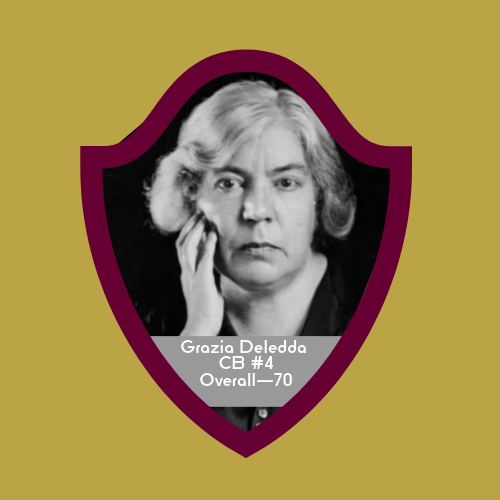
Like her fellow Italian winner Giossue Carducci, Grazia Deledda was fierecely proud of her local community. Unlike Carducci, who spread his wings to write about the whole world around him, Deledda was stayed on Sardinia and write about the world around her and the people in it. That specificity was critical to both inviting the world into the (often inhospitable) island and appreciating the same for everyone’s appreciation and awareness.
She received her award in 1926 for her ability to picture the life on her native island with depth and sympathy, defying easy categorization and assumptions among visitors. That PR Blitz full of hometown pride is not uncommon (and, was in Deledda’s case supported by world class twit Benito Mussollini).
Works
I read Deledda’s short but truly beautiful story The Mother in which the titular mom fights for her son’s (the local priest) soul. There is a lot of quiet desperation, but also aching love both parental and romantic (between the son and his illicit paramour).
Man is a hunter and Woman his prey.
Little by little, desire crept into that love of theirs, chaste and pure as a pool of spring water beneath a wall that suddenly crumbles and falls into ruins.
He was unhappy because he was a man and was forbidden to lead a man’s natural life of love…. Then he reflected that pleasure enjoyed leaves only horror and anguish behind it.
—The Mother
Message
Deledda relished everything about Sardinia and captured the essence of the spaces that are both protected from danger and deeply insulated to the point of endangering themselves. That definitely reminded me of Montana, where the mountains, and scrub brush make people both leery of and loving to outsiders. To me Deledda’s message sounds more like this: “we can all appreciate each other more and judge each other less.”
Position: #4 Center Back
Try as she might to be inclusive and appreciative, Deledda was born a home with a hearty distrust of others. That combined with her solid (though unremarkable) writing suggests the career of a true center back. Her writing doesn’t push many boundaries or reinvent the wheel, but it is prepared to do what it takes to protect her kith and kin.
Monthly plea for interaction goes here!
Next Time: We dart back to the present to honor one of 3 women honored by the Nobel within the last 6 years. Annie Ernaux (2022), c’mon down!!
The most recent honoree for the Nobel Committee has been lauded as one of the best writers in the world for many years now. More than a few scholars have declared it being a matter of when, not if, he was honored (though, given how many “deserving” winners ended up medal-less, I’m more inclined to say that it was some very strident projecting).
But before the universal acclamation, Kraszhnahorkai was born in a small Hungarian village to a family of both Jewish and Transylvanian extraction. He grew up studying Latin and then Law under a repressive Soviet-aligned government. Though his dad was a lawyer, he pursued the law because he sought to emulate his favorite writer: Czech master, Franz Kafka. He witnessed tragedies during military service but still found power in art, both writing and playing in Jazz and Rock groups (apparently, he wanted to write like Franz Kafka, play like Thelonious Monk, and sing like Aretha Franklin…which is as wild a sentence to consider as it is to write).
After leaving the Law, he became a freelance writer, and then literary marvel in Hungary. As the Soviet Union broke apart, he was able to explore the world more widely, including long stays in Germany and New York City. In all of it he witnessed a great deal of suffering (like his Soviet-era youth) but remained optimistic and hopeful which clearly has gone on to influence his writing, so widely appreciated. Eventually, the critics were right and he did take home the laureate for “his compelling and visionary oeuvre that, in the midst of apocalyptic terror, reaffirms the power of art”
Works
Kraszhnahorkai has a wide range of work, most of which fits in the category of “door stops” aka books big enough to keep doors open. As an added bonus, most of those massive tomes are also one sentence that ebbs and flows through any number of phrases and ideas. So reading a whole work in a month was a little beyond my abilities, but I did get through a number of essays/stories/prose poems in the collection The World Goes On, here now, a few select quotes (all translated by John Bakti)
“We are in the midst of a cynical self-reckoning as the not-too-illustirous children of a not-too-illustrious epoch that will consider itself truly fulfilled when every individual writhing in it…will finally attain the sad and temperorarily self evident goal: oblivion.”
–He Wants to Forget
“The most lasting and most profound melancholy springs from love.”
–Universal Theseus (Pt. 1)
“Good can never catch up with evil, because, with the gap between good and evil, there is no hope whatsoever”
–Universal Theseus (Pt. 2)
BONUS QUOTE! (Luckily found this within three random tries to flip pages in one doorstop)
The inspiration of Krasznahorkai’s Dante
[When a conniving schemer asks to be called “Dante” another character challenges him as that is too synonymous with the famous Italian poet, but the schemer defends himself…thusly]
“getting over his surprise in one brief moment interrupted him, saying that the Baron shouldn’t think that he was speaking about a nobody here, Bayern Munchen was one of the world’s greatest teams, if not the greatest, certainly he must of heard of them–well never mind, that’s not important, the self-designated secretary interrupted, the main thing was that he proudly bore the name of Dante, because the Dante who played for Bayern Munchen, you could say, had reached his peak, and for him–he pointed at himself–such a comparison could only be advantageous, nameely it expressed that within his own realm of endeavor (the colorful world of slot machines) he himself was regarded as an expert…[the poet] didn’t matter at all, the secretary quickly replied because according to many, his Dante was the greatest rearguard ever.”
–p. 137 Baron von Weckenheim’s Homecoming (trans. Ottilie Mulzet)
Message
As the committee mentioned in their citation, Kraszhnahorkai is a master of the apocalypse, but it’s not so much about the desolate wasteland of that future, it’s the existential dread that accompanies our quickly evolving, increasingly threatening modern world. He does a fine job of capturing the fear that comes within our modern global society, but (despite the often dire quotes that I selected above) balances it beautifully with artistic sincerity. Even in a time of unprecedented disaster and terror, there is–and always will be–beauty.
Position: #6
I went back and forth on this position for a while. John Fosse and Han Kang fit what I imagine to be literary equivalents of Box-to-Box midfielders, and Kraszhnahorkai has some clear similarities to those recent honorees, running the gamut of emotions through writing that ebbs and flows as well. But the apocalyptic parts of his work led me to position him more defensively (though not as far back as the “Dante” who is now immortalized in the quote I lucked upon).
I’m putting Kraszhnahorkai in as a Defensive Midfielder. He is absolutely able to dwell on defensive destruction, but there’s a silver lining there that suggests that he knows that such destruction has its own value and (here’s that word again) beauty.
I’m definitely not done reading Kraszhnahorkai (just like I’m still working on this literal doorstop I’m having for lunch), and you can jump in the mix too! I have an additional outpost of nerdery over on Fable, and have a book club for people who love high-falutin literature discussed in decidedly non-high falutin’ language: Nobel, No Bull. Come join us and try to read some Kraszhnahorkai.
Next Time (I’m going to finally do it…[deep breath]…monthly posts)-In December, roll back the clocks and let’s talk about Theodor Mommsen (1902’s winner)
Quick Points Update: Han Kang was not on any of my lists for this years Nobel FC Draft. But She still gets the full star treatment here.
Background
Winner Han Kang as a young girl (2nd from left, not making wild face) From Kang’s Father (Han Seung-Wong far Left) and reprinted in the Korean Times
Han Kang was born in a literary family in the Korean city of Gwangju to a family that survived several traumatic childbearing experiences. That difficult experience that marked her context before birth appears throughout her writing.
So too does a love of literature as her father is both a novelist and a professor. Kang has said she grew up thinking of books as though they were “half-living beings” and to read her work is to see the ideas grow and develop and carry with them tragedy and hope in one fell swoop. (Likewise her hometown became the site of a brutal attack by a dictator against pro-democracy activists creating another trauma to grow through.) Growing up with migrane headaches, she was not very physically active, and so she built a long standing love of reading and literature.
Kang’s first work was published as poetry, though she grew into more complex and frequently meditative literature which focused on ideas, feelings, and impressions rather than plot. When she was awarded the Nobel Prize (“for her intense poetic prose that confronts historical traumas and exposes the fragility of human life”) she quickly became one of the youngest people to ever win as well as the first Asian woman.
Works
Swaddling Bands, white as snow are wound around the newborn baby. The womb will have been such a snug fit, so the nurse binds the body tight, to mitigate the shock of its abrupt projection into limitlessness.
Person who begins only now to breathe, a first filling-up of the lungs. Person who does not know who they are, where they are, what has just begun. The most helpless of all young animals, more defenceless even than a newborn chick.
The woman, pale from blood loss, looks at the crying child. Flustered, she takes its swaddled self into her arms. Person to whom the cure of this crying is yet unknown. Who has been, until mere moments ago, in the throes of such astonishing agony. Unexpectedly, the child quiets itself. It will be because of some smell. Or that the two are still connected. Two black unseeing eyes are turned towards the woman’s face – drawn in the direction of her voice. Not knowing what has been set in motion, these two are still connected. In silence shot through with the smell of blood. When what lies between bodies is the white of swaddling bands.
–“Swaddling Bands” The White Book
“The feeling that she had never really lived in this world caught her by surprise. It was a fact. She had never lived. Even as a child, as far back as she could remember, she had done nothing but endure.”
—The Vegetarian
Message
Far be it from me to read two stories and claim to be an expert…except that’s exactly the premise of these posts. If I were to name a theme in Kang’s work it would be that pain has a beauty all its own and pushes us to question what we fear. In both The Vegetarian and The White Book she explores the nature of human endurance and suffering and yet remains open to and appreciative of it in a way that confounds rigid societal expectations around her and her genre of the moment. The Nobel emphasized that trauma and fragility and to me this is very much akin to that notion, but far more appreciative and less dour.
Position: #8 Midfielder
For the second straight year the Swedish Academy opted to go with a stream of conscious adjacent writer. And just like with Jan Fosse last year, I’m declaring that good enough for me to see Han Kang as a box to box midfielder, capable of both a cutting pass and a crunching tackle. She also gets bonus points from me to move her ahead of Fosse in the Starting XI because she was more comprehensible than Fosse was.
I really liked Han Kang, but I really didn’t like the delay that held me back from finishing this post for two months. Still, here it is and you can argue with me below.
Next Time (Rewind the Clocks, it’s time to start on the ’05s) 1905 Honoree–Henryk Sienkewicz
Sartre is a byword for an entire philosophical school one of the leading voices in the Existentialist movement wondering what is the purpose of life and can our freedom ever be truly purely experienced. Born and raised in Paris, he used the city of lights as his home base as he dove head long into the serious questions of the day. His award was given “for his work which, rich in ideas and filled with the spirit of freedom and the quest for truth, has exerted a far-reaching influence on our age,” a big phrase that in this case, might just be an understatement.
Works
“In football everything is complicated by the presence of the opposite team.”
Sartre’s best known quote about soccer
“Every movement of a [teammate]…is decoded in the very movement which it occasions in another fellow member….Mediation for a given goalkeeper or center-forward is the pitch itself in so far as their common praxis has made it a common practical reality…As soon as [a player] takes up [one position] the common situation of the whole team is also modified.”
–Critique of Pure Reason, page 473 (This is the real idea, the other one is just a footnote)
Message
I mean, there’s a tonnage of them. Existentialism concerned itself with the nature of life itself, so there was…plenty of ground to cover. In reading his plays again though, the thought that came back to me again and again is how control is power, power is control. Humans simultaneously want it and fear it.No Exit plays with the question of how much anyone can control the (after)lives of others. The Respectful Prostitute considers how the “immoral” individual is at once dependent on the powerful authorities, and yet also able to overwhelm the authorities with their own powers (be they sex or truth). Dirty Hands covers the power of idealism and the power of compromise–both how people wield them, and how they are slaves to them. With all this in mind I’m putting Sartre at the heart of the team.
Position: #10 Attacking Midfielder
Sartre was a football fan (how much of a fan seems to be up unclear), but when you consider the fantasy of him lacing up a pair of boots and heading on to the field himself, you have to reckon with the fact that he clearly had more creativity, ideas and invention than anyone else. He could do more with power and control than anyone else I’ve read for this project, so it makes sense to put him at the center of the offense (and in the role with the greatest history of being a diva) the #10 job.
Think about his soccer quotes (given above). In Sartre’s eyes a team is made up of where all the players are in a moment, but every moment a player moves (which is pretty much all the time) it is changing. There’s no absolute reality or permanence, it’s always something new and different. So you have to focus on existing in the moment rather than worrying about the past or the future.
I genuinely think this would make him a superb attacking midfielder: creative, inventive, able to dismiss past hurts or future worries and just make the play he thinks is right in the moment. But I suppose others might see it as a limitation–he might have a hard time anticipating challenges, or be impossible to coach…(after all, he is the only Literature laureate to refuse to turn up for his award) so while I rate him highly, I don’t know what others would say.
What do you think? Is Sartre the free-wheeling creative force that this team has been waiting for? Or are would he have been so indifferent and apathetic that any moments of brilliance would have been undone by him announcing that he’d rather ponder a dandelion on the field than receive a pass from TS Eliot?.
As you might guess from a name with this many slashed o’s, Bjørnsterne was Norwegian. He was part of the so called “Four Greats” in Norwegian writing of the 19th century. While Henrik Ibsen is the best known, Bjørnson was part of the Norwegian Nobel committee…and as you’ll find out, having a connection with powerful people helps a little. Still Bjørnson was a quality writer, and was particularly lauded for “his noble, magnificent and versatile poetry, which has always been distinguished by both the freshness of its inspiration and the rare purity of its spirit” (which is saying something as he only wrote one book of poetry. There were lots of essays, newspaper articles, and some plays and books, but the poetry was all I could find at the library)
Works
From: “Song for Norway”
Yes, we love this land that towers Where the ocean foams; Rugged, storm-swept, it embowers Many thousand homes. Love it, love it, of you thinking Father, mother dear, And that night of saga sinking Dreamful to us here.
1859 (This also became the Norwegian National Anthem)
From: “Norway, Norway!”
Norway, Norway, Rising in blue from the sea’s gray and green, Islands around like fledglings tender, Fjord-tongues with slender, Tapering tips in the silence seen. Rivers, valleys, Mate among mountains wood-ridge and slope Wandering follow. Where the wastes lighten, Lake and plain brighten, Hallow a temple of peace and hope. Norway, Norway Houses and huts, not castles grand, Gentle or hard, Thee we guard, thee we guard, Thee our future’s fair land.
Message
As you can tell, Bjørnson’s primary message is that Norway is awesome (also awesome…if my translation is right, his name translates to “Bear-star Bear-son”). One of his primary ways of getting there is through the realism that marks him and the other Four Greats. His writing names some of the best things around and how it moves him. Digging deeper into his work we might say that his message is that the world and the space around us is powerful, beautiful and inspiring just as it is, and to appreciate what there is. (Not unlike JM Coetzee…only older and more unkempt)
Position: #8 Central Midfielder
Bjørnson does not exactly strike me as a great or inspiring writer that I want to go back to. But it’s clear that he loved his country and wanted to be a leader in the arena of politics, literature, diplomacy, and just about everything. It makes him seem a bit like the noisiest voice in your recess pick up game, even if he is far from the best player out there. He would run here, there, and everywhere, like a box-to-box midfielder who is a bit past their prime. (And obviously, since he’s all about Norway, I put his crest in the Rosenborg White and Black.)
I realize that this critique is probably going to rile up Norwegian literary scholars (they are one of my biggest demographics). So by all means bring on your arguments to the contrary!
Next Time:
We’ve gone throughout the year with seven reviews (one for every twenty years). I’m tempted to start going in ten year increments (all the old nominee posts were done and dusted by the end of June)…but I’d like to make sure that I can keep this pace up before I commit. So we’ll stay in 20 year increments to prepare for the 2024 honoree next fall. But there will be extra posts because there was a double laureate in 1904 (Shocked face).
Fosse is only the fourth Norwegian to win the highest award in literature, and the first one in almost a century (but there’s totally not a Swedish Norwegian rivalry…goodness no). Born in Southwestern, Norway (in the town of Haugesund…a frequent opponent of our favorite Rosenborg sides), he committed himself to writing after an early accident left him confronting mortality. But while he was always a writer, he almost opted to focus instead on being a rock ‘n’ roll musician. He opted to continue studying and building his authorial voice being called (in different turns) a Modern Ibsen, or a Norwegian Beckett, culminating in the Nobel committee naming him its laureate “for his innovative plays and prose which give voice to the unsayable”
Works
God is so far away that no one can say anything about him and that’s why all ideas about God are wrong, and at the same time he is so close that we almost can’t notice him, because he is the foundation in a person, or the abyss, you can call it whatever you want
all good art has this spirit, good pictures, good poems, good music and what makes it good is not the material, not matter, and its not the content the idea, the thought, no, what makes it good is just this unity of matter and form and soul that becomes spirit…prayer and confession and penance all at once…
God is love and love is inconceivable without free will…
Jon Fosse from A New Name (parts VI and VII of the Septology, published 2022 in translation by Damion Searles
Message
Stream of conscious writing isn’t my favorite, and it can be almost impenetrable, but Fosse’s work was surprisingly smooth and comforting. Everything in the work I read A New Name played beautiful with random chance, doubled identities, parallel realities and the indescribable unity of everything. If I can put an overly simplistic button on it, I would say: there is an absurdity to everything we say and think and do, and that absurdity is part of the beauty of life.
Position: #8 Box to Box Midfielder
Fosse’s style is so fluid, so wide ranging, and so impossible to pin down (intentionally so given the stream of conscious style) that the only position that can do him justice is the #8 role, where he has the freedom to push forward or drop back as he pleases. And indeed, he, his work, and everything he offers can be both fulcrum of the attack and anchor of the defense all at the same moment.
Sound off in the comments below to share your thoughts on the newest member of the Nobel FC Family
Next Time (Rewind the Clocks, we’re going to catch up on one that we missed in our Mess of 03’s, and another Norwegian to boot) 1903 Honoree–Bjornsterne Bjornson
Author’s note: So, a couple things. First, I said Eliot won the Nobel in 1943…he didn’t, nor did anyone else–it was cancelled due to the second World War. He won in 1948, which (secondly) has absolutely no connection to anything in my 20 year time frame for this project. So (thirdly) consider this just a random writing about an author, and we’ll let that be a problem for future Me, assuming that we’re still doing this in 5 years. And finally, I’m sorry that I misnumbered WB Yeats as a #3 (Left Back) when he’s more accurately numbered as a #4 (Centerback), the prior entry has been corrected to reflect this.
Background
Thomas Stearns Eliot won the Nobel Prize in literature for his poetry and drama in 1943. In its citation, the committee simply asserted that they wished to honor “his outstanding, pioneer contribution to present-day poetry”.
Eliot was part of that lost generation of writers, with big ideals and high hopes who found themselves resettled in Europe as adults, disenchanted with America’s failings. Like others, Eliot had come from a fairly well to do stock, enjoyed a rich education and built much of his work by alluding to and building on other well known works but in a rather startling method of slamming works together and building thematic meaning from the various images that emerge from it.
Works
From: “The Love Song of J. Alfred Prufrock”
There will be time, there will be time To prepare a face to meet the faces that you meet There will be time to murder and create, And time for all the works and days of hands That lift and drop a question on your plate; Time for you and time for me, And time yet for a hundred indecisions, And for a hundred visions and revisions, Before the taking of toast and tea
–1915
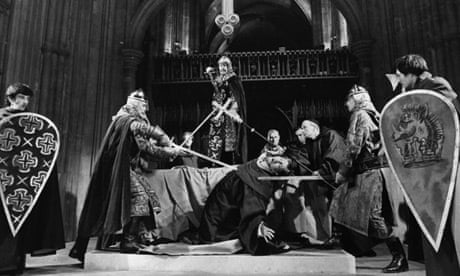
From the film adaptation of Murder in the Cathedral
From: “Murder in the Cathedral”
Yes! men must manoeuvre. Monarchs also, Waging war abroad, need fast friends at home. Private policy is public profit. Dignity shall be dressed with decorum.
–1935
Your Opinion
I can’t always do it, but when it works out, I’ll share writings from our laureate. Eliot’s has an only moderately mature collection of poems titled Old Possum’s Book of Practical Cats. When we found a copy illustrated by Axel Schaeffer (the man behind drawings in beloved picture books The Gruffalo and Room on the Broom), it was clear that there was an opening to try it out with you.
The results: Alex: “It’s funny and good, and also I’m all done.” Owen. “No! Not that”
Message
There’s a lot lying within Eliot (including the ability to be both good and not at all enjoyable at once). There’s beautiful aching, and bitter realizing. There’s a subtle appreciation of the past and a slam-bang-crash of the uncertain future. There’s a willingness to see both sides of the coin, the arguments for and against and the awareness of complexity in all things. To put it in as direct a way as I can think of: all that is beautiful rises from and ends in destruction.
Position: #6
With a view that bleak, and a style that multi-faceted, Eliot seems to me well suited to a role in the middle of the field where he can both create art and cause chaos. There’s a position like that in modern soccer, one that is often mocked as dirty work or unpleasant, but also does something that no one else on the field does in the same way. It’s the defensive midfielder role, and while I certainly think that Eliot was much too cerebral to be an out and out beast, he certainly could keep up with a high level of play and obtain the respect that he clearly deserves. It calls to mind a player like Ozzie Alonso, who spent his time in Minnesota altering the level of play while never reaching a heroic ideal.
What do you think? Is Eliot more of an eight? Have I totally whiffed on my attempted analysis? Leave a comment below…please.