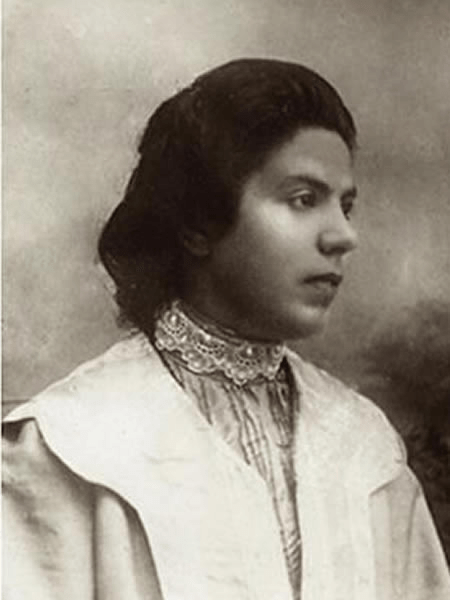
The 16th and most recent (for now) French Nobelist is one of the oldest winners for the Nobel, which makes sense as a she plumbs the depths of her personal experience for her writing. Her works frequently cover her own lived experiences as auto-socio-biographical or memoir-style composition. Her childhood in Normandy was marked by a young girl’s stressful and shameful agonies of post-war trauma in a misogynist patriarchy. Her adulthood, as a teacher and author, has been marked by stressful and shameful agonies of a modernizing world that retains many old power structures.
Why Ernaux’s work stays fresh…
As the patriarchy remains dominant (if a little more discrete) she has had plenty of fodder for her writing. Covering everything from traditional families and romance to assault and marginalization, her works were specially marked “for the courage and clinical acuity with which she uncovers the roots, estrangements and collective restraints of personal memory”.
Works
With as short and direct as Ernaux’s prose is, I’ve been able to listen to a couple of her works Happening, and Shame. Her writing is often blunt plain, one of her books includes the explanation: “my writing is still confined to the language of the past. I shall never experience the pleasure of juggling with metaphor or indulging in stylistic play.” Still, her writing has an honest beauty.
“I realize this account may exasperate or repel some readers. It may also be branded as distasteful. I believe that any experience, whatever its nature, has the inalienable right to be chronicled. There is no such thing as a ‘lesser truth.'”
“Among all the social and psychological reasons that may account for my past, of one I am certain: these things happened to me so that I might recount them. Maybe the true purpose of my life is for my body, my sensations, and my thoughts to become writing. In other words: something intelligible and universal causing my existence to merge into the lives and heads of other people.”
–Happening
“I almost feel I am committing a sacrilege replacing the sweet landscape of memory…by a far harsher one that strips it of all magic but whose truth cannot be questioned.”
“The worst thing about shame is that we imagine we are the only ones to experience it.”
—Shame
(Side bar–that last line about shame might need to be my personal mantra)
Message
There are a lot of assumptions that Ernaux’s work and message is limited to women and others who suffer directly from misogyny. But one thing that stands out on reading her works is how the pain and difficulty she faces stems from revisiting and reviewing her life and how, despite the pain, there is power and meaning there. We all face those moments, and they can cut us to our core, but if we can find some of the strength that Ernaux does we’ll be well-served. Memory is informative and inescapable.
Position: #7–Left Wing
I was torn on where to put Ernaux. Her plain Marxist leanings put her on the left for sure. She’s short in her prose, direct, and a little blunt, which feels defensive.
But her bluntness is confrontational, challenging, and uncomfortable. Much more like an attacker. She questions and challenges tradition more than I think would be appreciated by the other French winners (looking at you Prudhomme and Simon)–so let’s call her a winger with some wingback tendencies.
What do you think? Given that Ernaux scrupulously avoids rooms with soccer matches on, I figure she doesn’t care…but feel free to prove me wrong Madame Ernaux (or literally anyone else).
Next Time (back to our 80th anniversary winner!) 1946 Honoree–Herman Hesse
BONUS!
I started making videos about these posts, feel free to watch it here, or on the YouTubes
I realized recently that I feel guilt and shame about what I like to do with my free time. Soccer is long and not always exciting. Wrestling often doesn’t reflect my values. Writing, reading, studying languages, solving crosswords, and running are all great for me personally, but they’re utterly inconsequential to helping others or building a better world.
In that light, you might wonder why I keep doing this project. Why not stick to things that matter?
Dear Kids,
Because, the things we love matter too.
Conveniently, after reading a pair of Italian Nobel Laureates this year, I found the original (reputed) source of a widely used quote in Italian manager Arrigo Sacchi
“Football is the most important of the least important things.”
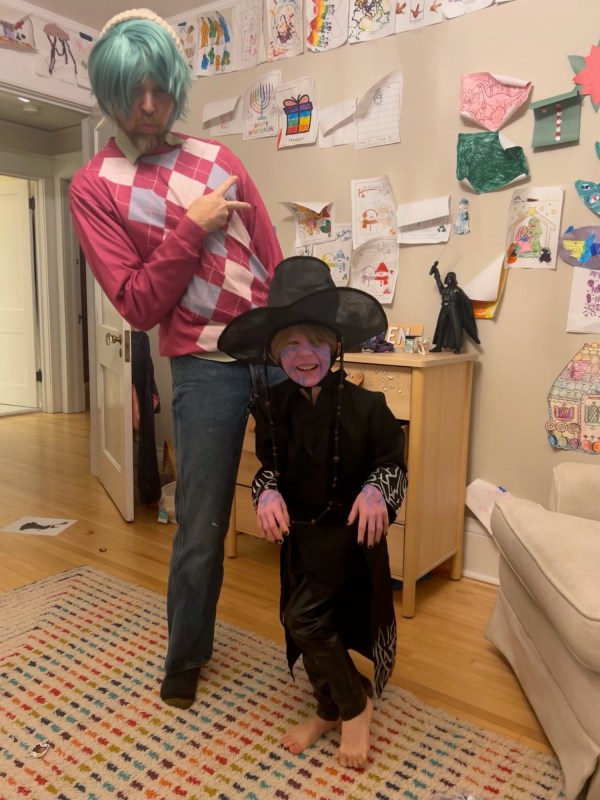
Inigo will “no be moved” either
Right now there are many “IMPORTANT” things happening. War, injustice, corruption, dehumanization. The guilty part of me feels like maybe: I should teach about those issues; take you to protests in the streets; get you writing your congress people now in the hope of stemming the tide of cruelty in the future. I think I should not just talk about sports ball.
And yet…This is where I am, and this is where I stay. I will not be moved.
In part because proponents of war, injustice, corruption, and dehumanization try to pass off their contempt for others with the misdirection of organized sports events (see World Cup 2018, 2022, 2026) and calling that out rebuffs their slight of hand and reclaims our joy. In part because savoring the joy of human life helps to anchor why we fight for it.
And perhaps most of all, because in the midst of all the madness, I got to take you both to matches this month. I got to share snacks, and jokes, and laughs, and dances with you. And those are the most important things…so, football might not matter, but what it connects us to, definitely does.
Rosenborg, Punjab, Minnesota, and Emelec all started their seasons in earnest this month. Of those sides only Punjab really seems to be ready, and given the long layoff before the season started in India, that makes sense. While longstanding talisman Lucka Macjen left the team during its interminable offseason, Nikhil Prabhu is ready to step up…or was until his injury. But defenders Khaminthang Lhungdim and Bijoy Verghese both have stepped up wonderfully to help the team (and in Verghese’s case himself en route to a national team cap). Plus defensive midfielder Samir Zeljkovic has already chipped in plenty of offense with an assist and goal.
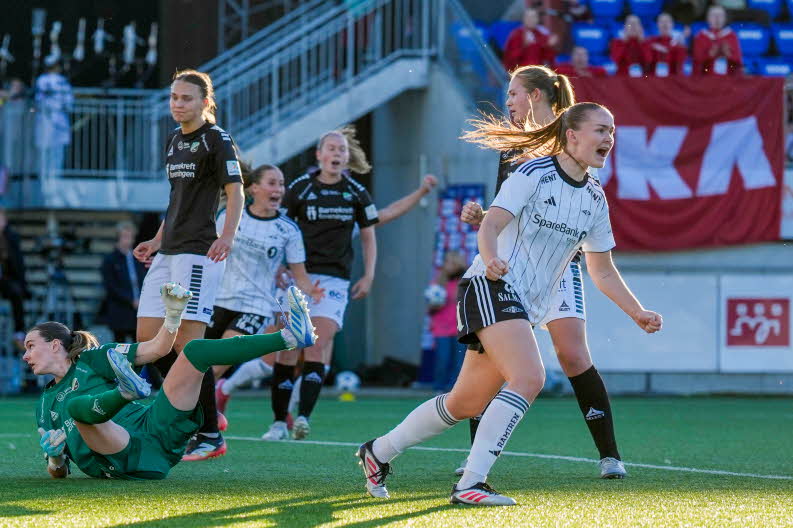
Meanwhile both Emelec and Rosenborg have balanced fine debuts for their women with rougher goes for the menfolk. Irene Dirdal and Marie Kristine Vik combined well in the first match, and Beate Marcussen looked to provide a fulcrum in the second but the team wasn’t able to shut down opponents chances. At the same time that inconsistency would be welcome for the men who (after falling to Molde, Valerenga and getting dumped from the League Cup) has been consistently awkward.
In Ecuador, Los Bombillos have had better luck but also seem dependent on Miler Bolanos and Romario Caicedo caputring the old magic to mixed effect. Meanwhile the women are looking to be putting together a campaign as professional as their ptich as they stand solidly in the middle of the table after beating teams they should (and struggling against top sides)
Punjab
W 2 – D 2 – L ; GF: 7 / GA: 2
Emelec
Masculinos: W 1 – D 1 – L 2; GF 3/GA: 5
Femininas: W 2 – D 0 – L 2; GF 4/GA: 7
Rosenborg
Menner: W 0 – D 0 – L 3; GF: 2/GA: 8
Kvinner W 0 – D 2 – L 0; GF 2/GA: 2
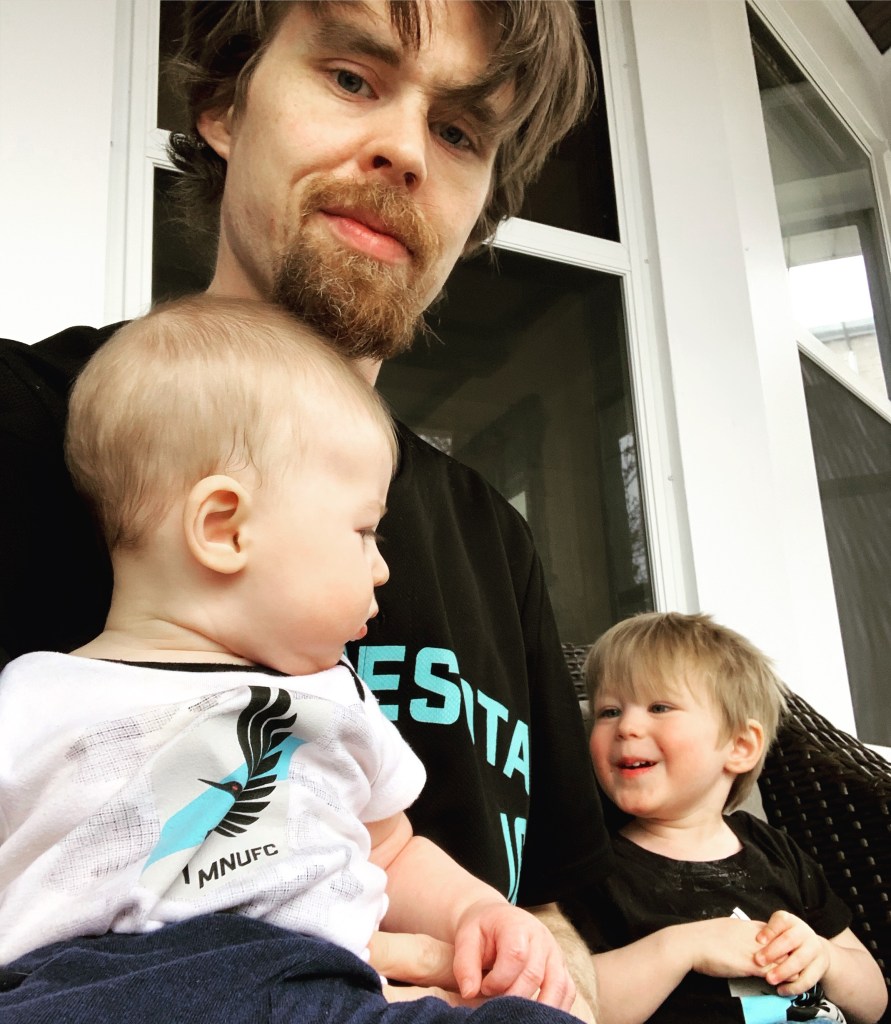
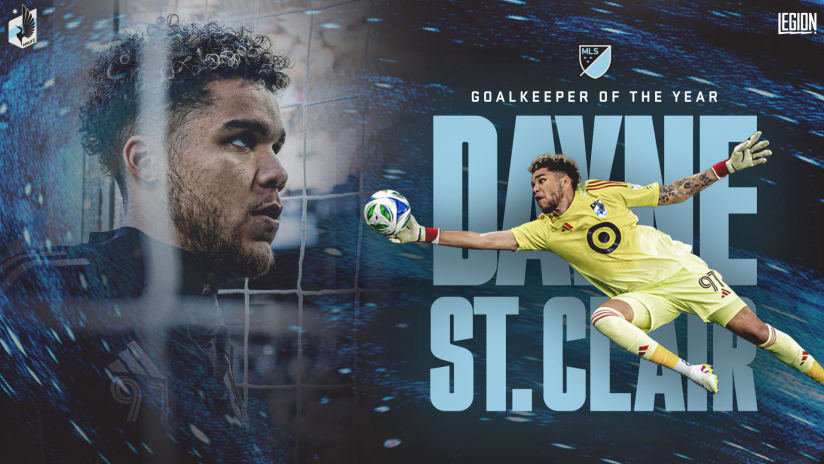
Finally amongst the newbies, it behooves us to take a little time to talk about the team that we’re closest to. But the clearest lesson is that the Loons have definitely missed Dayne St. Clair. The goalie of the year’s departure for Miami and Messi makes logical sense, but its also put extra pressure on the defense to figure out how to organize themselves while new keeper Drake Callendar gets to know them and Michael Boxall works back from an injury. Anthony Markanich still looks like a dynamic and undervalued full back, but the actual offense hasn’t done much to fire up their engines or the crowd as we all shiver in a Minnesota spring.
Among the teams that already had matches to their credits, it was a rough showing for both Grenoble and Freiburg who simply could not find any consistent form. The Frenchmen have been winless since the end of January, and the women might be in real trouble if it weren’t for three straight second half equalizers (including two straight stoppage time savers from Laurine Baga and Graziella Mazza.
Freiburg’s struggles came on opposite ends of the field. The women could not get the attack into gear, finding the net once in their first two matches. To be fair, they do have a young attack with the front four in both matches fielding nobody younger than 24. While the men’s defensive inconsistency, putting a lot of pressure on Noah Atubolu. Fortunately Igor Matanovic did put together a good attack to help them get another win in the league.
Grenoble:
Hommes: W – D 2 – L 2 ; GF: 2 / GA: 4
Femmes: W 0 – D 3- L 0 ; GF: 3 / GA: 3
Freiburg
Herren: W 2 – D 1 – L 3 ; GF: 10/ GA: 10
Frauen: W 0 – D 0 – L 2 ; GF: 1/ GA: 4
For the rest of the sides there was a similar ebb and flow to the month. With several great showings and some disappointments.
Alebrijes has long struggled with their offense, but seem to have a strong squad to show up this year with Jose Franco netting two in a win, 19 year old Jesus Bustos with two in a loss, Hecor Mascorro and Fernando Morales again in match where they get the lead before needing a late winner from Bubakarry Fadika. Meanwhile Vozdovac put their focus on the defense with defender Nikola Jankovic in the right back spot has been the most consistent contributor to the Dragons defense. Finally the Staggies continue to just barely avoid the bottom of the table after a couple of collapses, but the women’s side clicked in a big way with 15 goals unanswered (7 of which belonged to Rhea Hassock).
Sadly, we should also mention both Legon Cities sides who had plenty of disappointments and not a lot of great showings with one point from 7 matches. The Royals gave up 9 in a row to the same component over two matches, and only Eden Kofi Asamoah’s two second half goals against against Samartex saved it from being a month long shutout for both teams.
Alebrijes
W 2 – D 1 – L 2 ; GF: 10 / GA: 16
Vozdovac
W 2 – D 1 – L 2; GF: 4/ GA: 3
Ross County
Lads: W 1 – D 2 – L 3; GF: 5 / GA: 9
Lasses: W 3 – D 1 – L 0; GF: 17/ GA: 1
Legon Cities:
Premier Team: W 0 – D 1 – L 3 ; GF: 2 / GA: 8
Divison 1 Team: W 0 – D 0 – L 3 ; GF: 0 / GA: 12
Looking Ahead
April will feature two big splits as teams in Scotland and Serbia fight against the other sides in line for promotion or relegation (as the case may be). Right now County is in real trouble, while Vozdovac is in the thick of their scrap as well. Meanwhile it’s all over but the crying for both Legon clubs as more relegation awaits….but maybe they’ll just buy another team to make it three?
At the same time the World Cup will kick into the next gear as the final six teams book their spots in the group stages (assuming, as named above, more ridiculous political theater doesn’t derail it further). I’d love to say Vincenzo Grifo could finally get some international acclaim, but as he’s 32 and hasn’t played with the national team in 3 years, it’s sad to say that he’s probably past it at this point (which just means more for us!)
Standings
I think it’s worth noting that Punjab went from last to first this month, while two time cup winner Rosenborg is bringing up the rear (even including the mess at Legon Cities)
Like her fellow Italian winner Giossue Carducci, Grazia Deledda was fierecely proud of her local community. Unlike Carducci, who spread his wings to write about the whole world around him, Deledda was stayed on Sardinia and write about the world around her and the people in it. That specificity was critical to both inviting the world into the (often inhospitable) island and appreciating the same for everyone’s appreciation and awareness.
She received her award in 1926 for her ability to picture the life on her native island with depth and sympathy, defying easy categorization and assumptions among visitors. That PR Blitz full of hometown pride is not uncommon (and, was in Deledda’s case supported by world class twit Benito Mussollini).
Works
I read Deledda’s short but truly beautiful story The Mother in which the titular mom fights for her son’s (the local priest) soul. There is a lot of quiet desperation, but also aching love both parental and romantic (between the son and his illicit paramour).
Man is a hunter and Woman his prey.
Little by little, desire crept into that love of theirs, chaste and pure as a pool of spring water beneath a wall that suddenly crumbles and falls into ruins.
He was unhappy because he was a man and was forbidden to lead a man’s natural life of love…. Then he reflected that pleasure enjoyed leaves only horror and anguish behind it.
—The Mother
Message
Deledda relished everything about Sardinia and captured the essence of the spaces that are both protected from danger and deeply insulated to the point of endangering themselves. That definitely reminded me of Montana, where the mountains, and scrub brush make people both leery of and loving to outsiders. To me Deledda’s message sounds more like this: “we can all appreciate each other more and judge each other less.”
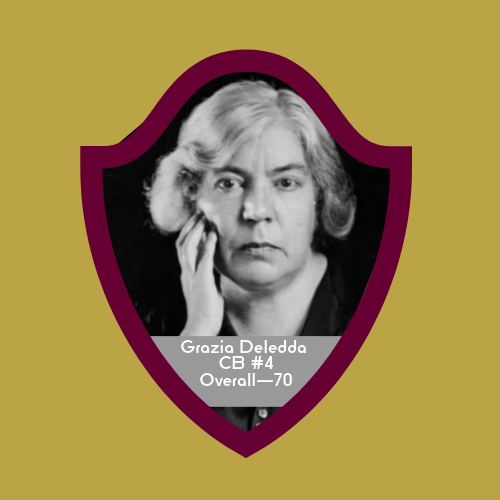
Position: #4 Center Back
Try as she might to be inclusive and appreciative, Deledda was born a home with a hearty distrust of others. That combined with her solid (though unremarkable) writing suggests the career of a true center back. Her writing doesn’t push many boundaries or reinvent the wheel, but it is prepared to do what it takes to protect her kith and kin.
Monthly plea for interaction goes here!
Next Time: We dart back to the present to honor one of 3 women honored by the Nobel within the last 6 years. Annie Ernaux (2022), c’mon down!!
When your mom went on a special trip with her friends a few weeks ago it was time for an OPA celebration (Owen, Papa, and Alex). We did some special stuff that I’m much more likely to encourage: we ate a lot of meat, practiced burping, and watched pro wrestling.
O’s Hero
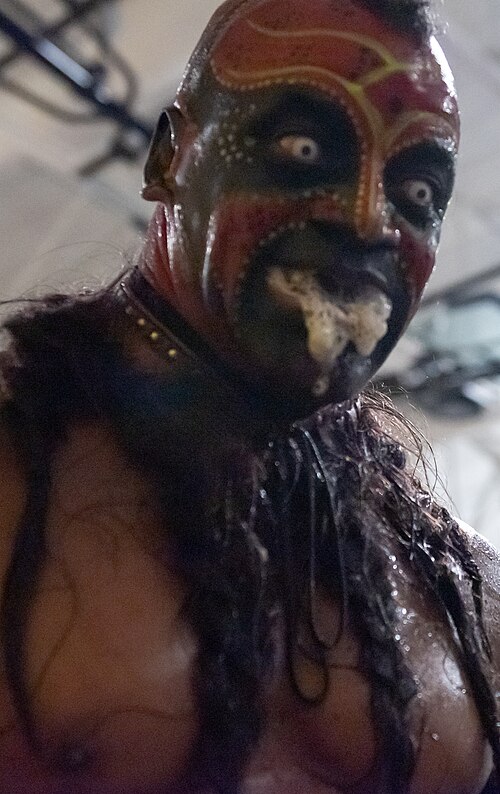
I have a soft spot for the not remotely subtle science, and I can’t help but want to share it with you particularly when my favorite match of the year, the Royal Rumble, is in season. So, we watched, and Owen discovered a new hero: The Boogeyman (also known as Martin Wright).
Owen has long had a soft spot for the bad guys: the Sanderson Sisters, Scar, the Saja Boys, so I’m not overly shocked that a monstrous, worm-eating, figure of fear is the wrestler who sticks with them. What it made me realize though, is that, in sport (and sports-entertainment) there isn’t really one bad guy and one good guy. There are just favorites and foes.
Take the case of Ecuador’s biggest rivalry where our side (Emelec) faces their neighbors (Barcelona) in El Classico del Astillero (the battle of the shipyards). Emelec is vaunted, celebrated, and successful. But they’re widely seen as interlopers, funded by a wealthy foreigner (American George Capwell) and ignoring their actual community.
My Hero
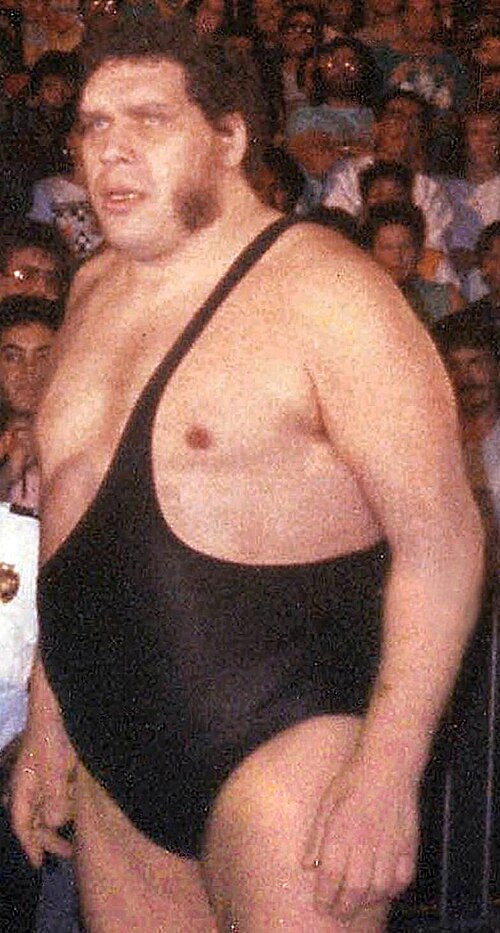
I will still cheer for Emelec, but I can fully acknowledge that others never will. In the same way, I’m actually delighted to hear that Owen’s selected champion is a spooky-wooky monster. Who cares if everyone else responds with fear, disgust, or opposition. Your favorite is your favorite, O. Enjoy it…just like I cheered until Andre the Giant was bodyslammed by Hulk Hogan and everyone else screamed in joy.
It can be tempting to think that we only cheer for the good guys, or that our opponents deserve to lose. But that’s not a fair way to view the world. I can see well reasoned arguments that there are absolute rights and absolute wrongs in some particular areas (treatment of other humans for instance). But shows, entertainments and sports aren’t one of them. So feel free to like who you like, and respect that others will disagree.
All around it was a rougher month for the teams, with most teams struggling to win more than a single game (though, to be fair, several teams only just got off the line…or in the case of Vozdovac forgot to score, or in the case of Emelec, got postponed).
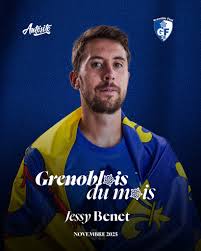
Once again, Noah Atubolu is the biggest name in the conversation, (goal)keeping Freiburg in matches where the rest of the defense struggles to hold a consistent line. Jessy Benet, long a favorite of this website, seems to have a new midfield running partner in Yadala Diaby who is creating lots of chaos and lining up some impressive shots from distance. But the men’s undefeated month really owes a lot to Loris Mouyokolo and Clement Vidal who have stepped up to the vital Center Back positions with ease.
The other team with the most points this month is Alebrijes! Julio Cruz has been more of a super sub this year than his usual lead attacking self, but it’s been working with Hector Mascorro running the show. (I very much want to heap praise on the Ur-Royals’ Forward Makhmud Bansi Isaak who netted twice more than the top division team this month…but the second division Royals also lost 3 games despite scoring 6 goals….oof)
The women’s sides continue to play a strong team game, with Freiburg’s defenders Julia Steirli and Lisa Karl running both sides of the ball, Melanie Charbonnier and Laurine Baga serving the attack in a big derby win against Thonon Evian. And I’m choosing to believe that Ross County’s four goal deluge to notch their first win of 2026 was inspired partly by the goalkeeper “Sofia” who also helped them stem the tide against Arbroath. I’m rooting for her to start a trend of one-named Scottish wonders like “Ederson” or “Marta” only colder.
Looking Ahead
Good luck Coach C!
In the rush of the end of the year I missed some major news out of Missoula where Chris Citwoicki (the superb Griz coach) chose to take his talents to the higher profile and better funded Washington State University up the road in Pullman Washington. Genuinely, Citowicki is a very nice guy and an excellent supporter of his players. It seemed inevitable that he would be going on to bigger things so we wish him well. But this month the Griz got a new coach in Stuart Gore. Gore came to the US from England for college and then as a coach won a lower level national championship in Ohio, a conference championship in Louisiana (with the Northwestern State Demons–an old favorite logo of mine) then Troy in the dangerous Sun Belt conference. We hope he continues what’s going well and continues supporting the toughest team in Big Sky Country.
Sadly, I won’t be attending the World Cup this summer as your uncles and I did not with the lottery, but Alex did try out for his team again so I’ll be having fun regardless.
Emelec will kick off their new campaign in early March after an unexpected stadium related delay (that’s been going around as Punjab had the same issue on their first match day). While Rosenborg hopefully won’t have any such problems as both the men and women start fresh.
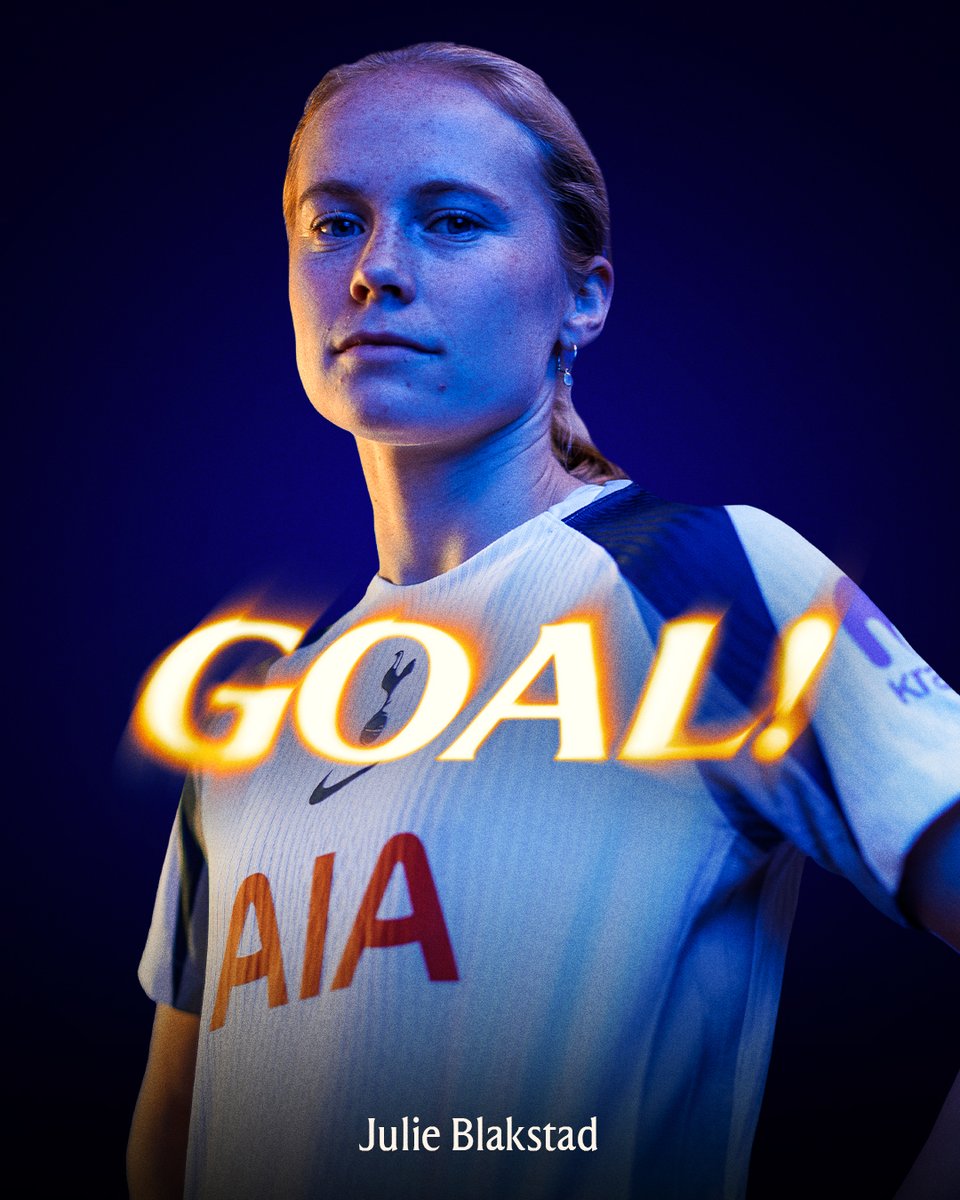
Finally, our fondness for Tottenham Hotspur is being tested by something approaching gross incompetence, but our beloved Julie Blakstad is now on their women’s team, so we’re committed again.
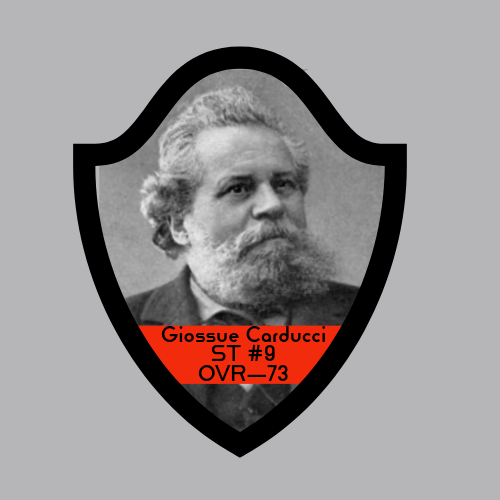
Giossue Carducci is as Italian as it is possible to be. The man came from a family of revolutionaries in Tuscany who abhorred separated rule (including the deeply revered Pope) and insisted on the chance for federal unity among Italian regions. Those strong opinions suffused his work, a massive collection of poems that revived some of the classical and pagan world but brought them to bear with more modern (for the time) language.
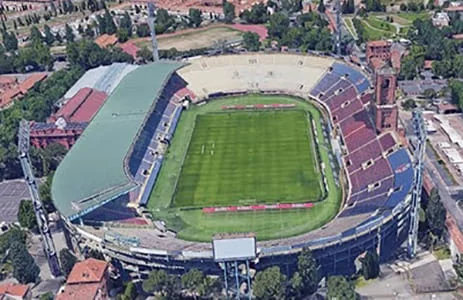
While Carducci was probably most honored to become a Senator with in Italy’s newly independent system, he was widely appreciated by the Nobel committees becoming a unanimous selection by the committee in 1906 (over the much more widely read Leo Tolstoy). He was cited most plainly for his “creative energy, freshness of style, and lyrical voice”. He was buried in Bologna where he was a professor, and his tomb sits facing the stadium of Bologna FC (literally, one block away).
Works
Satan alone lives. He holds sway in the tremulous flash of some dark eye,
Or the eye which languidly turns and resists, or which, bright and moist, provokes, insists.
He shines in the bright blood of grapes, by which transient joy persists,
Which restores fleeting life, keeps grief at bay, and inspires us with love
You breathe, O Satan in my verses, when from my heart explodes a challenge to the god
Of wicked pontiffs, bloody kings; and like lightning you shock men’s minds.
–Hymn to Satan–
Message
Carducci was as political as he was poetic, and the citation for his “lyrical force” was a very considerate way of describing what sometimes feels like a diss-track master for the turn of the last century. If I were to sum up his message from the poems I read it would probably be something like: “F*** the system, bros…LIVE FOR THE NOW!!”
Position: #9 Striker
With this much aggression and energy, Carducci makes the most sense to me as a Striker, making him the first pre-1980 laureate I’ve put at the point of the attack. I’m aware that his legs have decayed a lot more than other options for the goal scorer, but Carducci’s old school style of doing what has long worked is a good match here. (Like Lucas Holer)
I started writing these notes to you when Owen was still small enough to fit in the crook of my arm, and Alex’s favorite activity was chasing the vacuum cleaner, and while that seemed simple…handling both of you (and a vacuum cleaner)…navigating a pandemic was not.
Dear Kids,
It has stayed hard.
Through murder, unrest, insurrection, division, deceit, venality, corruption, and now an armed invasion again (and that’s just in our country…never mind the terror, invasion, and war crimes abroad), things are hard, have been hard, and will likely remain hard.
When everything is hard, it is so easy to get discouraged, to get mean, to get angry and cold (especially in Minnesota in January), which is why I take heart from the little things.
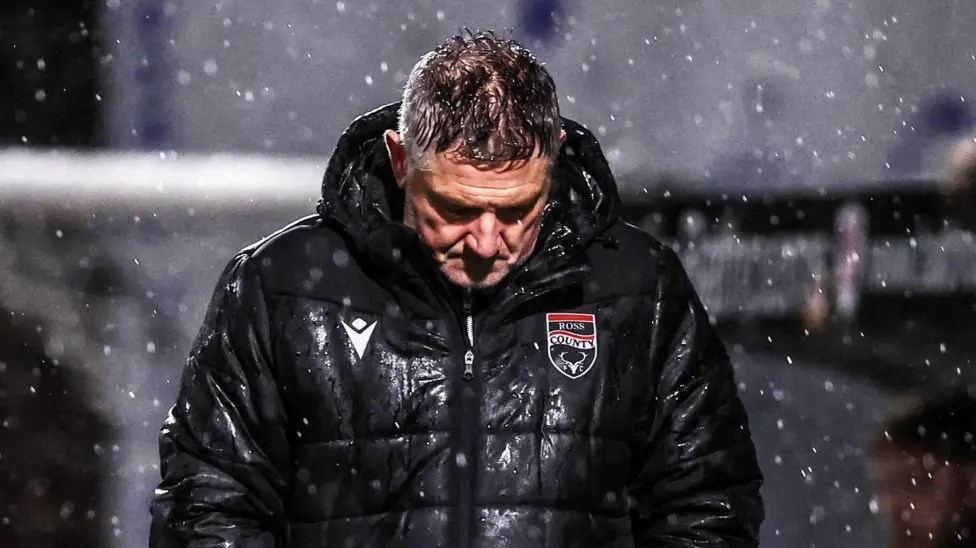
Ross County is in a hard place. They are struggling to get points of any kind. They have conceded more goals than any other team in their division this year, and they look likely to be demoted for the second straight year.
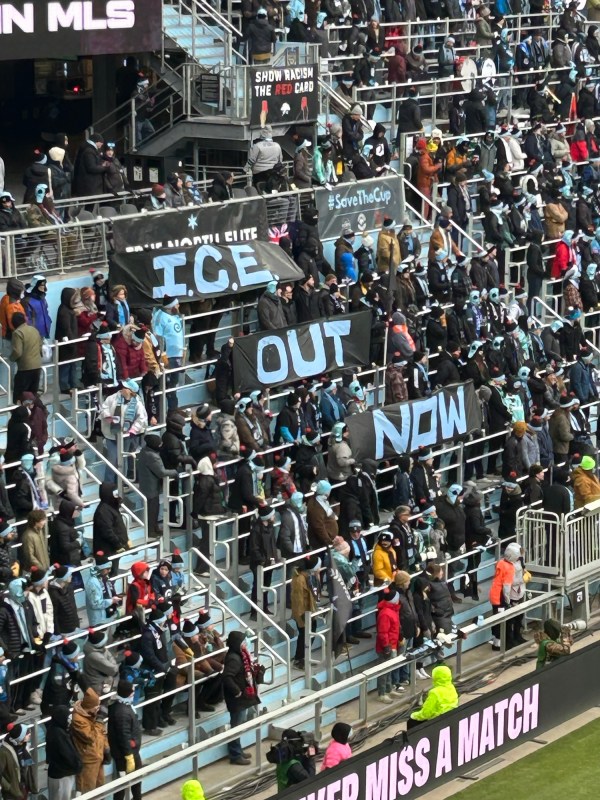
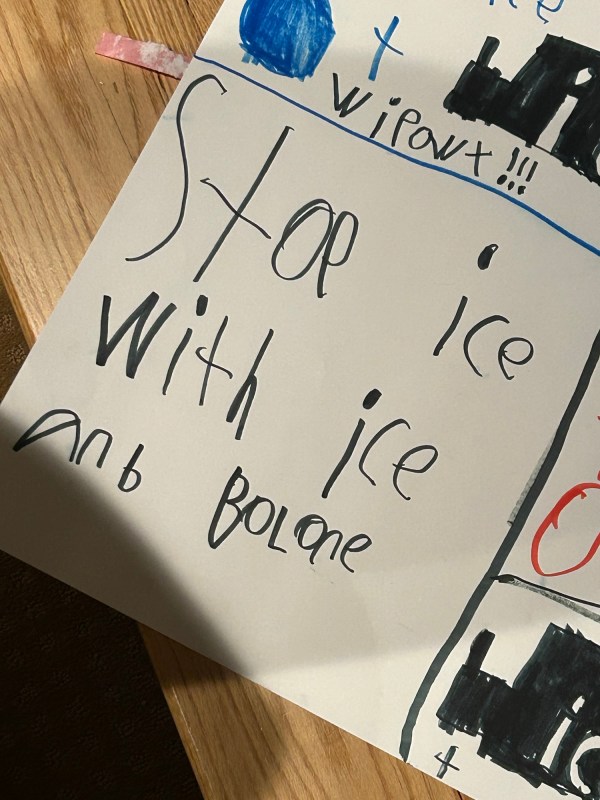
Alex wants to stop ICE with ice and bologna.
So Alex Iacovitti didn’t need to do this. He could have just let the ball go past again…let the team lose 2-0 instead of 1-0. But he did what he could, he threw himself into the situation and managed to help. Iacovitti’s play is sweet…and a very tiny glimmer of the energy and effort that we and our neighbors are throwing at the situation in Minnesota now.
As federally endorsed officials attempt to detain and expel other Minnesota residents, we have seen senseless brutality and violence. But, I also see breathtaking effort, love and care when your mom and so many others stand in the freezing cold to keep kids safe on their way into your school. I see it in your aunt and uncle fundraising and gathering groceries for other families in their day care. I even see it in the two of you making posters to protest and tease the officials who are imposing their interests on our community.
I don’t know if Alex Iacovitti would be with us in lending help and support to the people in need. But I know that I love living and working with a bunch of people who would, no matter how bad things are, rush back to try to clear an attack away.
Freiburg leads the charge out of the gate in our 2026 season, with Vincenzo Grifo (big shock) being a talisman in attack; Goalie Noah Atubolu stopping both Hamburg and Koln; Matthias Ginter and Christian Gunter offer goal opportunities in the defense (attack and pk to fight back).
Grenoble sits second with a big pair of goals of the bench getting the ladies in to the round of sixteen before the bowed out to Strasbourg. But we’ll also tip a cap to Claudia Fabre who got the winner against Guingamp and Gaetan Paquiez who saved the day in defense before sending in two assists to steal a point against Pau.
Ross County’s Alex Iacovitti has already gotten his flowers, but we’ll also shout out Jay Henderson whose two goals gave the Stags their first win in the league since October. And honorary mentions to the last teams on our list including Rauf Muna with two goals to get the Wonder Royals their first points in six attempts, and Jair Cortes delivering a late equalizer against Cancun.
Looking Ahead
The biggest item on my horizon is finding out if your uncles and I will be attending a World Cup match in Philadelphia this summer. But we’ll also watch as each of these teams builds into fuller form and Minnesota United kicks off their new season with a change in veterans, goalies, and even coaches, while Punjab (maybe) kicks off (maybe) on Valentine’s Day (unless something weird happens…which with Indian soccer…it will)
Standings
Team
W
D
L
PPG
GFA
GAA
Freiburg
4
1
2
1.86
1.00
1.00
Grenoble
3
1
2
1.67
1.00
1.50
Ross County
2
0
3
1.20
0.80
1.00
Legon Cities
3
0
5
1.25
1.00
2.13
Alebrijes
0
1
1
0.50
0.50
2.00
Emelec–b
0
0
0
—
—
—
Montana–b
0
0
0
—
—
—
Rosenborg–b
0
0
0
—
—
—
Minnesota–b
0
0
0
—
—
—
Vozdovac–b
0
0
0
—
—
—
Punjab–b
0
0
0
—
—
—
Table Updated 1/26/26 b–Team is between seasons x–Team is finished playing for 2025
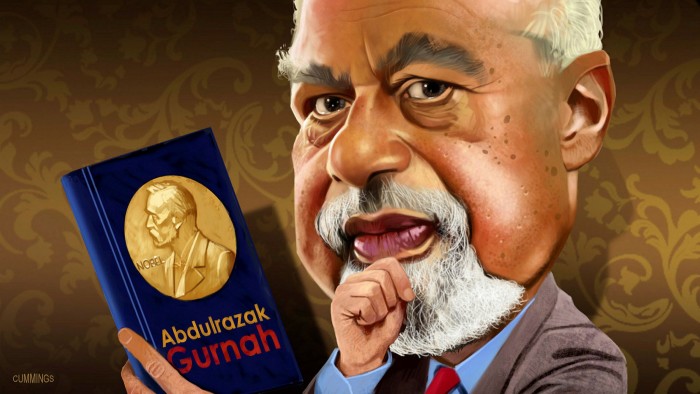
Abdulrazak Gurnah is one of only two black African authors to win the Nobel prize. Unlike the Nigerian Wole Soyinka, he was born and raised on the Eastern coast of the continent in the Sultanate of Zanzibar (part of present day Tanzania), but had to flee the country shortly after he finished his high school education due to an overthrow of the Islamic ruler of the island.
Displaced from his home, Gurnah was pushed into life as a refugee, in a moment that clearly shaped (but did not dictate) his work thereafter. He immersed himself into studies of literature and became a professor first in Nigeria and then at the University of Kent. Throughout this time he also wrote a small selection of lauded and awarded novels (though they weren’t considered big sellers) leading both him and others to believe the announcement of his name was “a prank” or “a joke”. But the Nobel truly did award him “for his uncompromising and compassionate penetration of the effects of colonialism and the fate of the refugee in the gulf between cultures and continents”.
Works
I read/listened to his latest novel: Theft, and liked it enough that I’m certainly planning on reading/listening to more later. A few key quotes I loved:
“Does beauty like hers make its own rules, disregarding responsibilities and duties?”
“What do these people (foreigners/tourists/volunteers) want with us? Why do they come here? They come here with their filth and their money and they interfere with us and ruin our lives for their pleasure, and it seems that we cannot resist their wealth and their filthy ways … Volunteer! You see them in their big new cars, bringing us their goodwill. They should stay in their own country and do their goodwill there.”
(This is as perfect an encapsulation of my old colleague’s claim that I and those like me were part of “the New Raj”)
Message
Obviously, as someone who spent several years teaching in post-colonial systems and studying the legacy of British colonialism, I’m biased…but fortunately, so is Gurnah, so we’ll get along fine. Impressively, if unsurprisingly, he doesn’t opt for a simple lesson about that flag planting frenzy, instead I’d say he turns a careful eye on the human scale of the shifts and argues colonialism’s legacy lives on in those with a will to power who adopt its lessons.
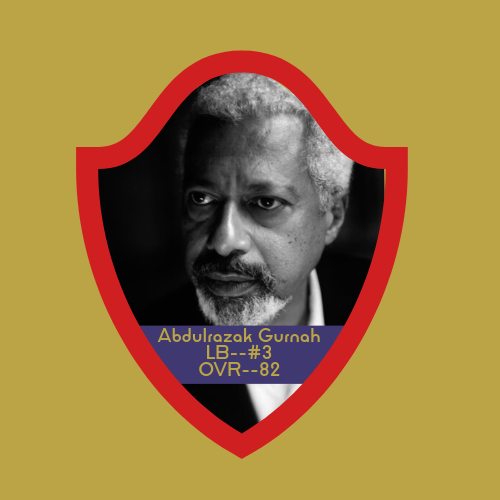
Position: #3 Left Back
Gurnah reminds me of a full back, he’s wide ranging, flexible and fluid, able to react to whatever is thrown at him. He often reacts to the world that is flung in his face, but he can still cut in and be dangerous in a way that echoes Tolstoy, Ishiguro, Jane Austen and Scotland star Andy Robertson (yes, I linked a Liverpool player to Leo Tolstoy and I stand by it!)
In another crass attempt to get someone to leave a comment on my posts, I’ll just point this out: Gurnah makes 4 Left Backs, but I only have 1 Right Back and 1 Left Winger…am I going to hard on the position I played back in my AYSO glory days? Or have I been fair to put progressive/socialist leaning players on the left?
Next Time (pingponging back from the most recent decade to the first one) 1906 Honoree–Giossue Carducci
Once again, attempts to keep up on these tactical components did not go well. As I work on direct, specific, and simple apologies: I’m sorry.
Moving on!
Here are the final standings for this year’s MacKenzie Cup from 11th to 1st
11th) Legon Cities
An Explanation:
Legon faced one of the most chaotic seasons in the 6 years of this project, and I should try to explain why:
I try not to write much about owners. The wealthy and powerful already get more than enough attention, and, having been a Minnesota Twins fan, I know that obsessing over the whims of multi-millionaires is an exercise in futility.
But, the owner of Legon Cities requires a little attention.
Richard Attipoe bought Wa All-Stars after a title winning campaign and moved them to Legon, connecting them with a bunch of Accra celebrities to capture attention, followers, and ticket sales. Not so much to win matches. After battling against relegation for several years, the Royals finally fell to the second division last spring. In response, Mr. Attipoe went out and bought a newly promoted team (Eleven Wonders) and moved THEM to Legon, giving them the same kit and asking to call them the New Legon Cities (despite the old Legon Cities still playing in the second division).
So, which is Legon Cities? The Premier League Legon Cities (aka 11 Wonders in some new laundry), or the Original Legon Cities (wallowing in the second division)? I asked Legon Cities directly and a facebook fan group…but haven’t heard anything yet…so…I’m going to count both of them as best I can.
Results
Premier League: W 1 – D 3 – L 12; GF: 9/GA: 23
Division 1: W 1 – D 2 – L 10; GF: 11/GA: 29
Total: W 2- D 5 – L 22; GF 20/ GA: 52
Great Players:
Midfielder Matthew Amponseh (who has more goals in half as many minutes as the other strikers on the moribund Royals/Wonders side).
Quick Notes:
After opening their Division 1 campaign with all three points, the Division 1 Royals only have two more from the following 12.
Things are a little better for the Eleven Wonders who have won and drawn within their last five games…but they also haven’t done much of anything else and remain the poorest performers (both in goals for and goals against) and sit well adrift of the rest of the league.
Julio Cesar Cruz (Forward), Sergio Meza (Wing), Hector Mascorro (CM), Fernando Morales (CB)
Quick Notes:
New season…same Alebrijes. The goals are in short supply with Julio Cesar Cruz trying to carry the whole load while Fernando Morales tries to anchor a defense that can’t make up for a lower than average attack. The team benefitted from Hector Mascorro taking a more aggressive role in the defense to stop attacks before they start. But there’s a lot more to do before Alebrijes rejoins the top contenders.
9 )Ross County
Results
W 6 – D 8 – L 11; GF: 36 /GA: 40
Great Players:
Akil Wright (WB), Ronan Hale (ST/W), Trevor Carson (GK),
Quick Notes:
A blugenoning of Edinburgh City wasn’t enough to save a League Cup campaign. (They had been successful in recent years, with a few trips to the knockout stages, but a particularly bitter defeat to highland rival Partick Thistle ended that hope). But the Staggies have done quite well in other cup competitions, handling their business in both the League Cup and the Challenge Cup.
However, things have been far less impressive within the league. Four of the Stags six wins came in cups and tournaments, but only two have come in the league. While the other relegated side (St. Johnstone) looks likely to return to the premier league, County is facing another relegation five points away from the automatic trap door (this after they shoved another manager, Tony Docherty, down their own trap door)
Masculino: W 10 – D 4 – L 8; GF 29/GA: 28 Feminina: W 0 – D 3 – L 1 ; GF 2 /GA: 3
Total: W 10 – D 7 – L 9; GF 31/GA: 31
Great Players
Romario Caicedo (FB), Pedro Ortiz (GK), Facundo Castelli (ST), Jose Cevallos (CM), Jesus Castillo (FB)
Quick Notes:
A good run of form in July helped the men’s team climb up the table, but what kept them going strong was a new running partner for Romario Caicedo. Jesus Castillo’s ability to advance down the field gave the team a boost in attack, even while they continued to struggle in converting goals. The ultimate outcome put Emelec solidly in the middle of the table.
Throughout the summer, Las Femininas seemed to be getting their feet underneath them in the Superliga. After a rocky beginning, the steady run of draws (while not inspiring) was a good sign and demonstrated how consistently the defense has played. Over the season the women ranked 8th in goals allowed, but 10th in offense and 10th place is where they finished. If they had a league average offense their goal difference would have put them around 6th or 7th. The club stayed afloat, and now has a clear objective going into next season…if only there were some team full of excellent amateur attacking players Emelec could contact (cou*AURORA*gh!)
7) Punjab
An Explanation
Punjab FC did not start their season in September, but no one else did either. It appears that India’s top soccer league is on the brink of collapse thanks to everybody’s favorite reason: corporate conflicts.
An answer everyone who has been in India recognizes as “yes…or no…I don’t really want to say”
In basic summary: the regular league sponsors felt they didn’t get enough return on their ten years of investment, and the football federation didn’t have a backup in place. Without the money, the league couldn’t start and no one could agree on who could foot the bill. A new corporate entity? The Indian Government? The clubs themselves? We’re currently about to enter month four of a freeze on the league, and one club (Odisha FC) has already shuttered their doors for the year. Some have suggested the league can start up again in February playing in a few closely situated stadia…so is that the plan? Will it happen…?
The summer challenge of the Durand Cup was not what the Lions had in mind for their new rebrand (seriously…we’re an orange side…why are we not the Tigers?) A scramble in the late second half helped them scrape a win in extra time over Karbi Anglong Morning Star, and they didn’t score again: tying with the Indo-Tibetan Police team (having lived near that border, I can vouch for it being excellent for altitude training), and then a defeat to Bodoland FC knocked them out. After making the knockouts last year, this was disappointing. But the two goal scorers are each just 18 (including center back Pramveer), so that’s a plus for the youth movement.
Then came the awkward confrontation between tournament organizers, the government, and clubs themselves, and Punjab could only take the field for the Super Cup in November. There they looked much more like the dangerous side they had been in the I-League, with two 3-0 wins in the group stages and a strong defense propelling them through a shootout to the semi-finals.
6) Grenoble
Results
Femmes: W 5 – D 1 – L 6; GF: 14/GA: 16 Hommes: W 5 – D 7 – L 6 GF: 20/GA: 22
Total: W 10 – D 8 – L 12 GF: 34 /GA: 38
Great Players
Hommes: Jessy Benet (MF), Theo Valls (MF), Stone Muzalimoja Mambo (CB), Clement Vidal (CB), Mamadou Diop (GK) Femmes: Laurine Baga (MF), Candice Charbonnier (MF)
Quick Notes:
The first season in Ligue 2 for the women of Grenoble has seen their steady and reliable performance put them in a reliable position to stay up for another season. No one has been setting the league on fire, but Laurine Baga and Candice Charbonnier have continued their strong leadership.
The men are similarly treading water. Over the past five years, no full-time manager has been able to string together a campaign where they get more than 1.5 points per match (that would be winning a majority of their games). In a quest to shake things up, Franck Rizetto tried talismanic captain Jessy Benet as a center back…but then moved him back to midfield immediately netting 3 chances and an assist…so maybe Jessy isn’t the problem. Since then it has been the traditional defensive showcase for les Alpinerres including possibly my new favorite name in the whole of football: Stone Mambo! (Mr. Muzalimoja if you’re an attacker).
5) Freiburg
Results
Herren: W 12 – D 7- L 5; GF 36 /GA: 30 Frauen: W 8 – D 2 – L 6; GF: 32/GA: 25
Total: W 20 – D -9 – L 11; GF: 68/GA: 55
Great Players
Vincenzo Grifo (MF); Matthias Ginter (D); Noah Atubolu (GK); Johan Manzambi (DM) Lisa Karl (LB), Luca Emily Birkholz (F), Nia Zenk (RB), Leela Egli
Quick Notes:
The Herren have been busy with three competitions running at once: the ever challenging Bundesliga has thrown up a number of strong teams and they’ve only been able a mid-table performance thus far (with an equal number of wins, draws, losses, and goals for and against). But they continue to charge through the German cup (or Pokal) and look like a major threat in the Europa league. The long standing defensive stalwarts continue to carry the squad along, but Noah Atubolu continues to come into his own and at just 20, young Johan Manzambi is proving extremely versatile around the field.
Die Frauen have had another strong if unremarkable campaign firmly in the second-tier of the women’s league in Germany. Alongside the usual suspects have been a horde of talented young women 22 and under. Luca Birkholz has been great up top, while the wings have been the domain of Nia Zenk and Leela Egli (both of whom play with and off of Lisa Karl perfectly). With just 5 points between 8th place and the Europa League position, there’s a lot still to decide for the Griffins.
Vozdovac has put together their best finish in our MacKenzie Cup competition ever! They set the tone early on with a dominant 7-0 win against FAP, and have continued their upwards trend, sitting in one of the end-of-season championship playoff positions. While Nenad Lukic is in great form as a veteran goal scorer, it’s the young combination of Braunovic and Ouanda who has given the dragons reason to hope of a return to the top flight again.
3) Minnesota
Results:
Loons: W 13 – D 8 – L 10; GF: 43 /GA: 35 Aurora: W 3 – D 0 – L 1 ; GF 5 /GA: 1
Total: W 16 – D 8 – L 11 ; GF: 48/ GA: 36
Great Players:
Tani Oluwaseyi (F); Dayne St. Clair (GK), Robin Lod (MF), Bongokuhle Hlongwane (FB); Anthony Markakis (FB); Carlos Harvey (CB), Adrian Pereya (MF) Mariah Nguyen (MF) ; Sage Wimes (F)
Quick Notes:
Once again Aurora celebrated an unbeaten regular season, and once again they stormed into the playoffs with sky high expectations. Unfortunately, once again, the winner-take-all mentality of the single-elimination playoffs sent them home before the title could be claimed.
Meanwhile, the vaunted Loons defense came in for some harder times during the summer swoon. Part of that may have had to do with goalkeeper Dayne St. Clair fighting for Canada in the North American Gold Cup, but continued struggles after it derailed a promising League Cup campaign.
The fall saw the team sputter a bit on its way to the playoffs, while it technically had a shot at the top seed until the last three games, it was practically treading water until the final fury against red hot Seattle Sounders (long the Loons bete noir). But two nervy penalty shoot out wins saw the Loons into the second round agains top seeded San Diego, where everything came undone. There’s plenty of bright spots to savor for the team, but there’s a big transition coming as they try to move forward without striker Tani Oluwaseyi (currently seeing time in the Champions’ League), and goal keeper Dayne St. Clair (bound for a partnership with Lionel Messi in Miami (as well as talismans Hasani Dotson and–possibly–Robin Lod).
The most dominant team in the MacKenzie Cup competition, and back-to-back winners of the Big Sky/Big Sippy Cup, had an injury plagued season that led to one of their least dominant showings in recent memory. With a mix-matched team, coach Chris Citowicki relied on role players stepping up in big moments and a frenetic home atmosphere during the final playoff push to book the team on another trip to the big dance. The Griz ran into a motivated Washington Huskies side who controlled the flow and put lots of pressure on Ashlyn Dvorak before the Griz broke. It was the first year I didn’t expect a tournament upset for the Griz, but the incredible performance to win the Big Sky crown in front of Montana’s largest ever soccer crowd was worth it!
1) Rosenborg
Results
Menner: W 10 – D 5 – L 9; GF 42 /GA: 13 Kvinner: W 10 – D 2 – L 4; GF 27 /GA: 15
Total: W 20 – D 7 – L 11; GF: 69/ GA: 28
Great Players
Marius Broholm (W), Adrien Periera (LB), Ole Kristiansen Saetnes (CM) Thomas Nemcick (CB); Rebecka Holum (W), Celine Emile Nergard (ST), Oline Brekke Fulgem (CM), Syne Austen (D)
Quick Notes:
The wait for a trophy (beyond the sippy cup) in Trondheim continues.
Once again the women put up a strong showing in the league and the cup (with ANOTHER appearance in the final), but any mis-step is enough to throw the team’s chances for a loop. With a strong creative corps, the big question is if they can work out an equally forceful defense (without having defenders flee for other squads).
Likewise the Men had some truly great moments, but they were often overshadowed by a continual two steps forward-one step back approach to the game. Without Sverre Halseth Nypan (decamped for Manchester) the offense grew a little better rounded, but more inconsistent.
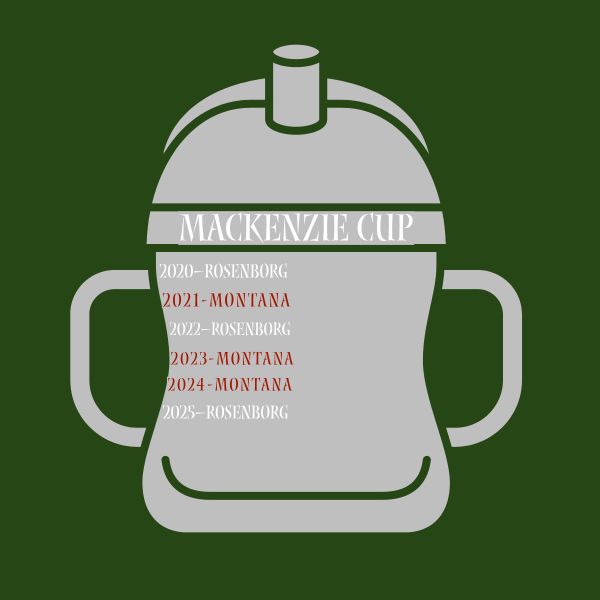
While it’s clear the team would prefer to win a trophy that isn’t completely imaginary, we are happy to welcome them back to the top of our trifling table for their first Sippy Cup in 3 years, allowing them to equal the Griz for the most Sippy Cups in MacKenzie Family History.
Alongside the final trophy, here are the final standings for all you number lovers out there.
Team
W
D
L
PPG
GFA
GAA
Rosenborg
35
13
17
1.82
2.34
0.66
Montana
13
6
6
1.80
1.24
0.52
Minnesota
32
15
15
1.79
1.58
0.94
Vozdovac
19
6
8
1.70
1.33
0.67
Freiburg
33
16
20
1.67
1.70
1.29
Grenoble
27
15
9
1.57
1.34
1.08
Punjab
6
5
9
1.15
1.35
1.25
Emelec
18
14
29
1.11
0.90
1.51
Ross County
11
12
13
0.98
1.28
1.65
Alebrijes
4
6
18
0.64
1.04
1.96
Legon Cities
6
7
35
0.52
0.69
1.71
Table Updated 12/30/2025
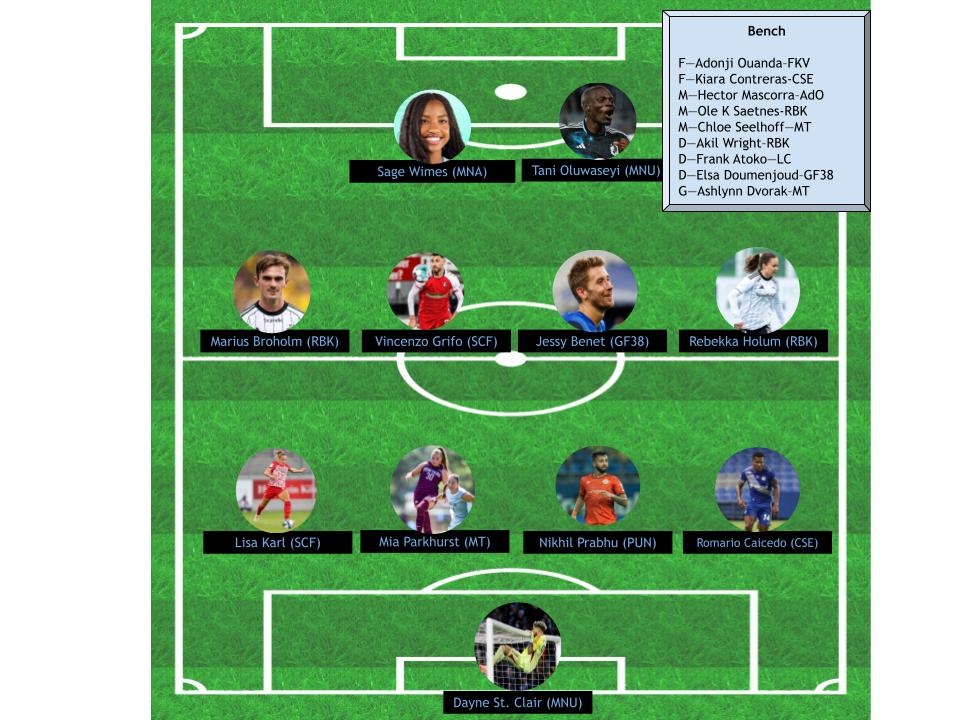
And here’s this year’s Best XI featuring many players taking a final bow before they head off to bigger clubs, and the indomitable midfield of Vincenzo Grifo and Jessy Benet
Will a new team take the title in 2026? Can the Loons and Aurora finally break through? Is Vozdovac on the cusp of an epic run? Will something radically alter the fortunes of Ross County, Alebrijes and the purgatory of Punjab? Can Richard Appoie just buy every Ghanaian team until it’s Legon Cities v. Legon Cities for ever?
Theodor Mommsen was born in Denmark and spent most of his life studying, teaching and living in Germany. While he advocated for progressive causes in the German legislature and took the controversial opinion of the time that Jewish people aren’t horrible monsters, he probably would have preferred to live elsewhere.
That elsewhere would be ancient Rome. Mommsen got a degree in Roman law. Became a professor of Roman history. Wrote a still cited book compendium of everything you ever wanted to know about Rome forever and even, once (according to some) had to be physically restrained from running into a burning building in order to retrieve documents related to…ROME.
As a historian, he is an unusual laureate, and, as with first ever winner Sully Prudhomme, a large segment of academics disliked that he was selected instead of Leo Tolstoy and Henrik Ibsen (who this time were at least nominated) for being “the greatest living master of the art of historical writing”. If Wikipedia (citing Nobel Prize historian Gustav Källstrand) is to be believed, the chairman of the time (Carl David af Wirsen) nixed the two better known candidates because they were “too radical”. Mommsen definitely was not radical…but he was cool enough to make Mark Twain turn into a fan boy.
Works
I will confess, I did not read Mommsen’s complete 7 volume history of Rome. (I probably would just poke the pages of Roman history with a long stick to try to save them…sorry Teddy.) But even the small samples I found were well worded and impressively thoughtful.
“The grandest system of civilization has its orbit, and may complete its course, but not so the human race, to which, just when it seems to have reached its goal, th eold task is ever set anew with a wider range and with a deeper meaning.”
“The great problem of man–how to live in conscious harmony with himself, with his neighbor, and with the whole to which he belongs–admits of as many solutions as their are provinces in our Father’s kingdom; and it is in this, and not in the material sphere, that individuals and nations display their divergence of character”
Message
I’m sure there’s more to it if I read more of the 7 volumes and the life’s work Mommsen dedicated to the Eternal City. Perhaps you could even see the parallels between his work and his progressive views (I was impressed that he took time to specify ways that Rome only reached its heights due to ancient tribes of India). But realistically, the primary message he seems to have is: “Did you know that Rome was super cool?” (Also that lets me link Mommsen to Momoa)
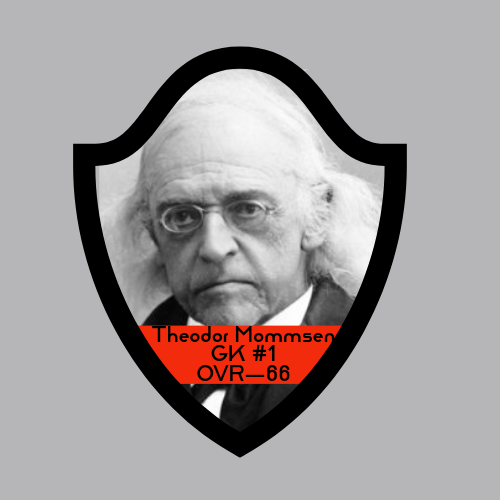
Position: #1 Goalkeeper
Mommsen’s traditional mindset and emphasis on the past aligned him with my other Goalkeepers in this project. He’s not a terribly adventurous guy (despite being politically progressive), so I likened him to some of the strongest shot-stopping keepers of his native Germany’s Bundesliga. While some folks might fan out about him, he’s more of an acquired taste and a deep cut from Nobel lore, so I put him in line with many of the good spot starters (rather than true stars of international soccer).
Next Time, we start off the 2026 class with one of the 2020 honorees we haven’t covered yet: Abdulrazak Gurnah
The most recent honoree for the Nobel Committee has been lauded as one of the best writers in the world for many years now. More than a few scholars have declared it being a matter of when, not if, he was honored (though, given how many “deserving” winners ended up medal-less, I’m more inclined to say that it was some very strident projecting).
But before the universal acclamation, Kraszhnahorkai was born in a small Hungarian village to a family of both Jewish and Transylvanian extraction. He grew up studying Latin and then Law under a repressive Soviet-aligned government. Though his dad was a lawyer, he pursued the law because he sought to emulate his favorite writer: Czech master, Franz Kafka. He witnessed tragedies during military service but still found power in art, both writing and playing in Jazz and Rock groups (apparently, he wanted to write like Franz Kafka, play like Thelonious Monk, and sing like Aretha Franklin…which is as wild a sentence to consider as it is to write).
After leaving the Law, he became a freelance writer, and then literary marvel in Hungary. As the Soviet Union broke apart, he was able to explore the world more widely, including long stays in Germany and New York City. In all of it he witnessed a great deal of suffering (like his Soviet-era youth) but remained optimistic and hopeful which clearly has gone on to influence his writing, so widely appreciated. Eventually, the critics were right and he did take home the laureate for “his compelling and visionary oeuvre that, in the midst of apocalyptic terror, reaffirms the power of art”
Works
Kraszhnahorkai has a wide range of work, most of which fits in the category of “door stops” aka books big enough to keep doors open. As an added bonus, most of those massive tomes are also one sentence that ebbs and flows through any number of phrases and ideas. So reading a whole work in a month was a little beyond my abilities, but I did get through a number of essays/stories/prose poems in the collection The World Goes On, here now, a few select quotes (all translated by John Bakti)
“We are in the midst of a cynical self-reckoning as the not-too-illustirous children of a not-too-illustrious epoch that will consider itself truly fulfilled when every individual writhing in it…will finally attain the sad and temperorarily self evident goal: oblivion.”
–He Wants to Forget
“The most lasting and most profound melancholy springs from love.”
–Universal Theseus (Pt. 1)
“Good can never catch up with evil, because, with the gap between good and evil, there is no hope whatsoever”
–Universal Theseus (Pt. 2)
BONUS QUOTE! (Luckily found this within three random tries to flip pages in one doorstop)
The inspiration of Krasznahorkai’s Dante
[When a conniving schemer asks to be called “Dante” another character challenges him as that is too synonymous with the famous Italian poet, but the schemer defends himself…thusly]
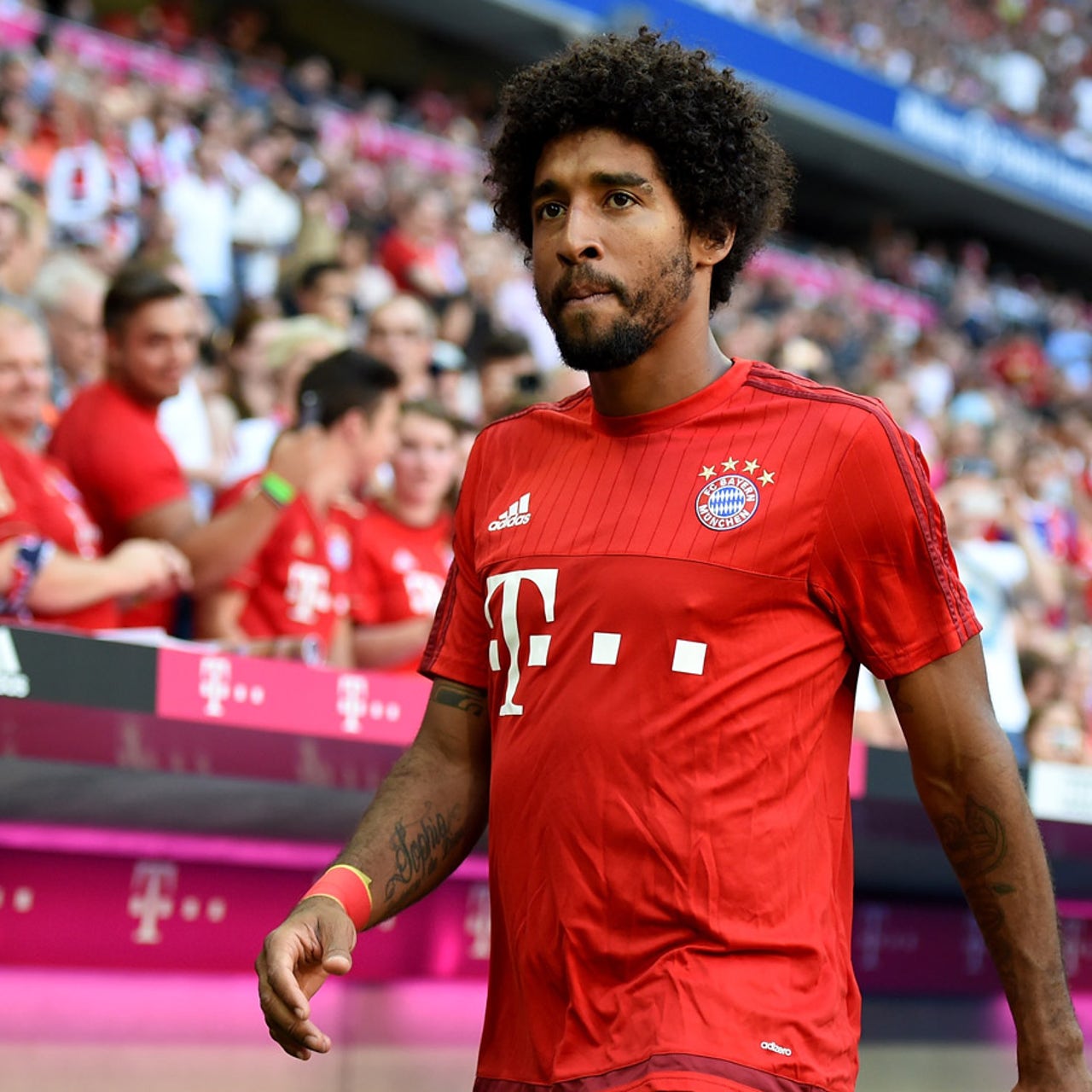
“getting over his surprise in one brief moment interrupted him, saying that the Baron shouldn’t think that he was speaking about a nobody here, Bayern Munchen was one of the world’s greatest teams, if not the greatest, certainly he must of heard of them–well never mind, that’s not important, the self-designated secretary interrupted, the main thing was that he proudly bore the name of Dante, because the Dante who played for Bayern Munchen, you could say, had reached his peak, and for him–he pointed at himself–such a comparison could only be advantageous, nameely it expressed that within his own realm of endeavor (the colorful world of slot machines) he himself was regarded as an expert…[the poet] didn’t matter at all, the secretary quickly replied because according to many, his Dante was the greatest rearguard ever.”
–p. 137 Baron von Weckenheim’s Homecoming (trans. Ottilie Mulzet)
Message
As the committee mentioned in their citation, Kraszhnahorkai is a master of the apocalypse, but it’s not so much about the desolate wasteland of that future, it’s the existential dread that accompanies our quickly evolving, increasingly threatening modern world. He does a fine job of capturing the fear that comes within our modern global society, but (despite the often dire quotes that I selected above) balances it beautifully with artistic sincerity. Even in a time of unprecedented disaster and terror, there is–and always will be–beauty.
Position: #6
I went back and forth on this position for a while. John Fosse and Han Kang fit what I imagine to be literary equivalents of Box-to-Box midfielders, and Kraszhnahorkai has some clear similarities to those recent honorees, running the gamut of emotions through writing that ebbs and flows as well. But the apocalyptic parts of his work led me to position him more defensively (though not as far back as the “Dante” who is now immortalized in the quote I lucked upon).
I’m putting Kraszhnahorkai in as a Defensive Midfielder. He is absolutely able to dwell on defensive destruction, but there’s a silver lining there that suggests that he knows that such destruction has its own value and (here’s that word again) beauty.
I’m definitely not done reading Kraszhnahorkai (just like I’m still working on this literal doorstop I’m having for lunch), and you can jump in the mix too! I have an additional outpost of nerdery over on Fable, and have a book club for people who love high-falutin literature discussed in decidedly non-high falutin’ language: Nobel, No Bull. Come join us and try to read some Kraszhnahorkai.
Next Time (I’m going to finally do it…[deep breath]…monthly posts)-In December, roll back the clocks and let’s talk about Theodor Mommsen (1902’s winner)