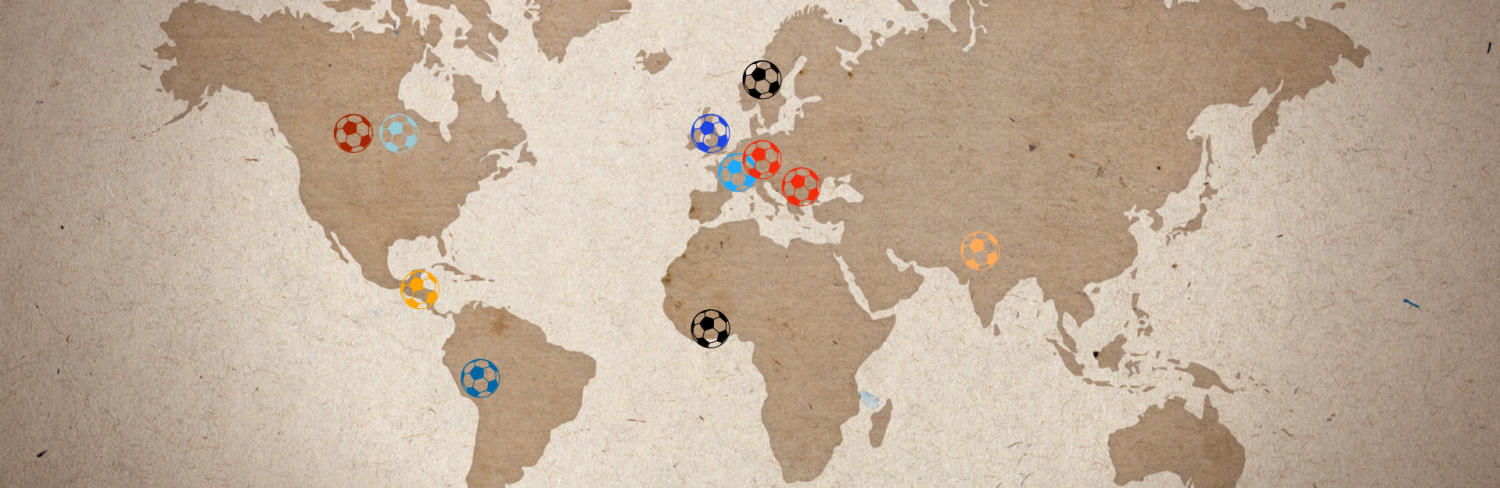

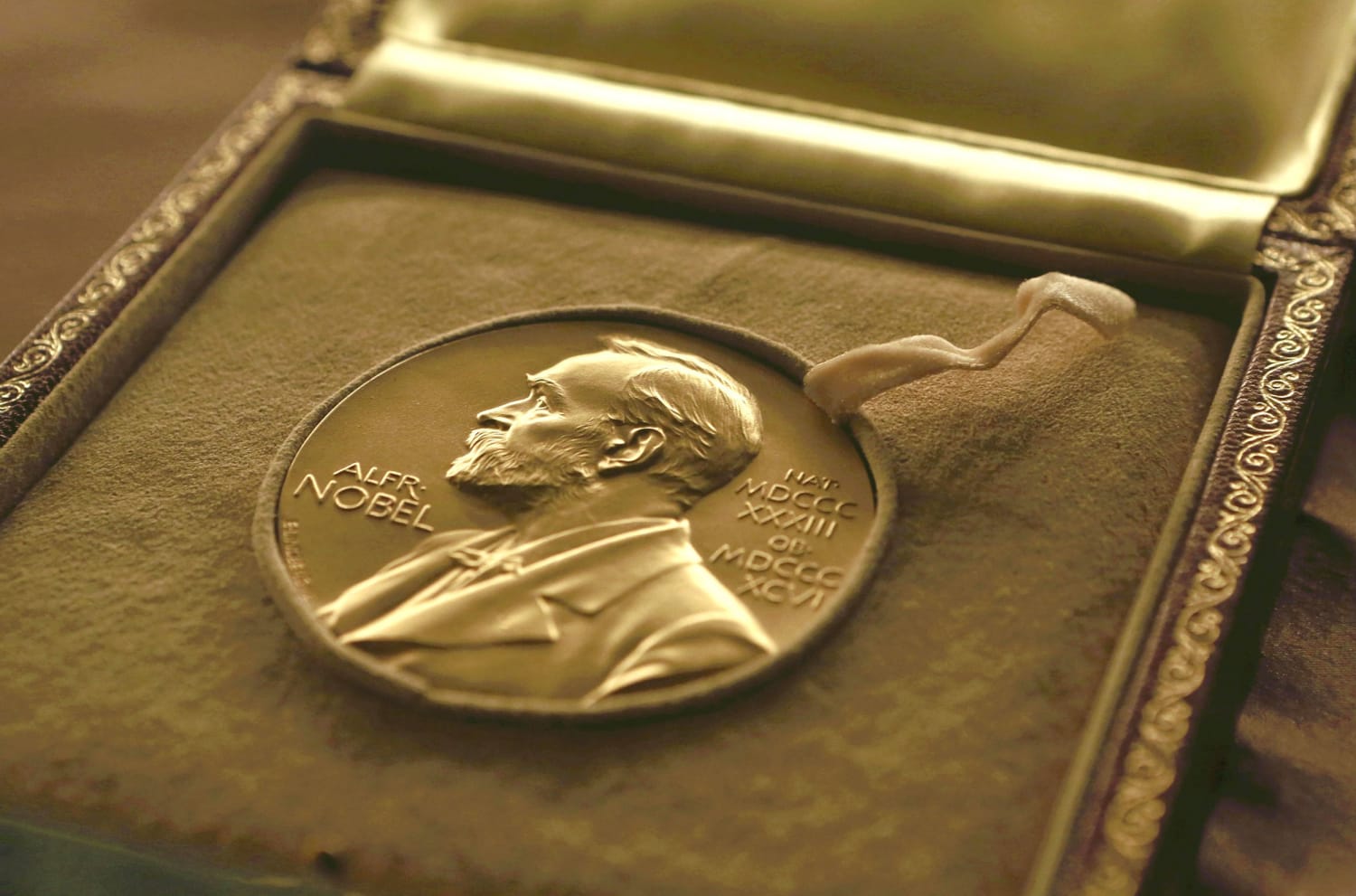
In just over a week, the Nobel committee will announce the winner of the 2025 Nobel Prize for Literature. Just like last year, the honoree will join an elite group of writers from around the world, and a small selection of those writers who we have read, reviewed, and classified as members of Nobel FC: The only Fantasy Football team where the Fantasy is that these people would spend a bunch of free time together playing soccer rather than, you know, talking about books.
Here now is my third annual prep-blogpost for the prize. If you need an explainer on “sports drafts” (book nerds) or “who decides the Nobel Prize for Literature” (sports nerds) take a look at my posts from years gone by and you should be better informed.
So Who Could be “Drafted” This Year?
While about 2 million people published books in the last year alone, the field probably isn’t quite that big: instead eagle-eyed sleuths and prognosticators have developed a system for scrupulously combing the Swedish Academy’s Library databases to find some likely candidates. After reviewing both betting odds and the message boards at worldliteratureforum.com, I am ready to toss out the following 11 candidates based on my own gut instincts.
Last year’s 11 now off the list:
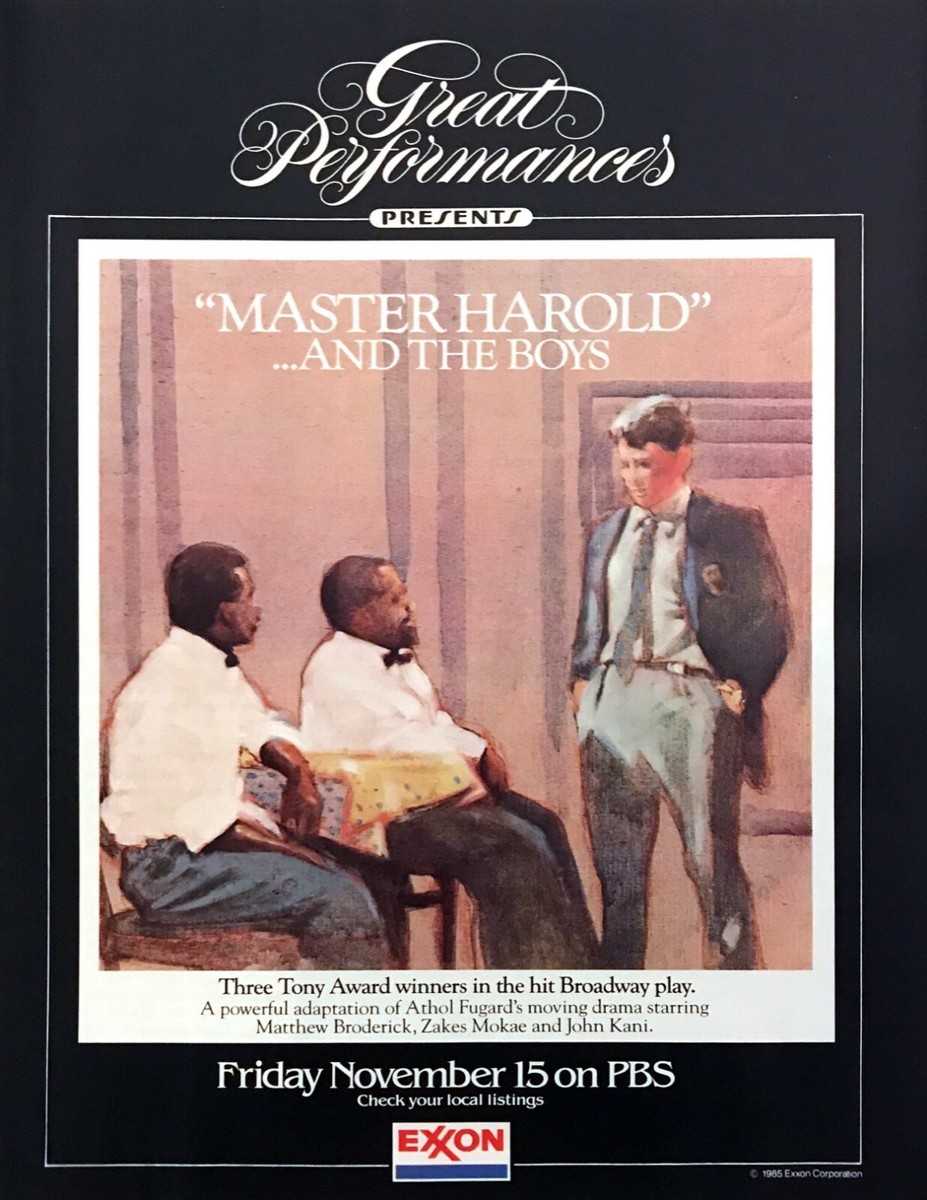
First, the sad news: Ngui Wa Thiong’o of Kenya, who had appeared on the last two lists passed away in May of this year. He was a rare author who wrote in his native African langauge, and was widely beloved. Another African writer who never gained a lot of traction but wrote one of my all time favorite plays Master Harold and The Boys, Athol Fugard of South Africa passed away as well.
Additionally, even though last year’s winner, Han Kang was not on my radar, she still has a clear effect on this list. While betting favorite Can Xue still tops the odds list, it would be extremely unusual for the Nobel to reward the same area (other than Europe) in back-to-back years, and the committee has a recently established streak of awarding things in the same boy, girl, boy, girl order so beloved by Elementary School Gym Teachers. So while Xue was my “will win” pick last year, she’s not even in the top 11 candidates this year. Ditto the popular but similarly geographically disadvantaged Haruki Murakami (sorry millions of people who buy his books, this isn’t about popularity.)
Leading Candidates:

As mentioned above, there’s a clear Boy/Girl/Boy/Girl pattern going on in Sweden’s salons, and while this is vastly preferable to a 25 year jag of nothing but dudes, it does impact the perception of the award. Given the recent parity, the most buzzy names this year belong to men. But the question is what region the Academy will recognize.
Many feel that after adding in a token Asian writer, they will return to familiar European ground while adding linguistic diversity. In that vein, the most likely laureates would probably be Romanian novelist Mircea Cartarescu or Hungary’s Laszlo Krasznahorkai (who is a new name on our list) and seems to be consistently buzzed about as a guaranteed future winner. After reading short-stories from each, these writers struck me as similar to Jon Fosse, though Cartacescu felt more estranged from reality, and Krasznahorkai seemed truly depressing. Europeans are usually a good bet, but I’m not sold.
The other option would be to keep globetrotting and approaching a few regions that could use some more love. For example: the Arab world is often overlooked as a slice of land that’s not quite Asia but not quite Africa either. There hasn’t been a winner from the Arab world since 1988, so Syrian poet and frequent betting pool favorite Adonis (aka Ali Ahmad Said Esber) would make a lot of sense as an overdue honoree. What I’ve read of Adonis has made me think his style is a good match with other recent winners (very fluid and stream of conscious) but less dark and dire than other writers I’ve named. At 95, it’s hard to tell if the Academy will deem him too old to travel for the prize or be motivated to finally give it to him.
But you can also make the case that no Australian has ever won (Sure, Patrick White (1973) lived there, but given his upper-crust English heritage and education…that’s a selective choice). Gerald Murnane has popped up on several lists as a worthy and true Aussie, fair dinkum. I finished his A Season on Earth a month or so ago and found his interior monologue reverie style to be perfectly in keeping with recent winners even if some passages grated like an overwrought Holden Caufield.
Other Candidates
The final region worth mentioning would be the Hispanophone world. As South America and the Spanish language has not seen a winner since 2010, they fit “geographic region rotation” logic. But I’m struggling to see a consensus winner. Two writers in the top 5 of betting pools fit the bill, but as one’s a woman and the other’s from Spain, I’m going to look elsewhere. One buzzy candidate at longer odds is Argentina’s Cesar Aira. He was kept in the wings of my list last year, but I’m adding him in this year after finding some kooky and odd bits in his writing (which apparently, he never edits…which is a look). And while I considered dropping Homero Aridjis, a widely appreciated poet/environmentalist from Mexico who is even farther down the odds list, I’ve grown too fond of him in my three years of this project (but I freely acknowledge that’s more my stubbornness than popular opinion).
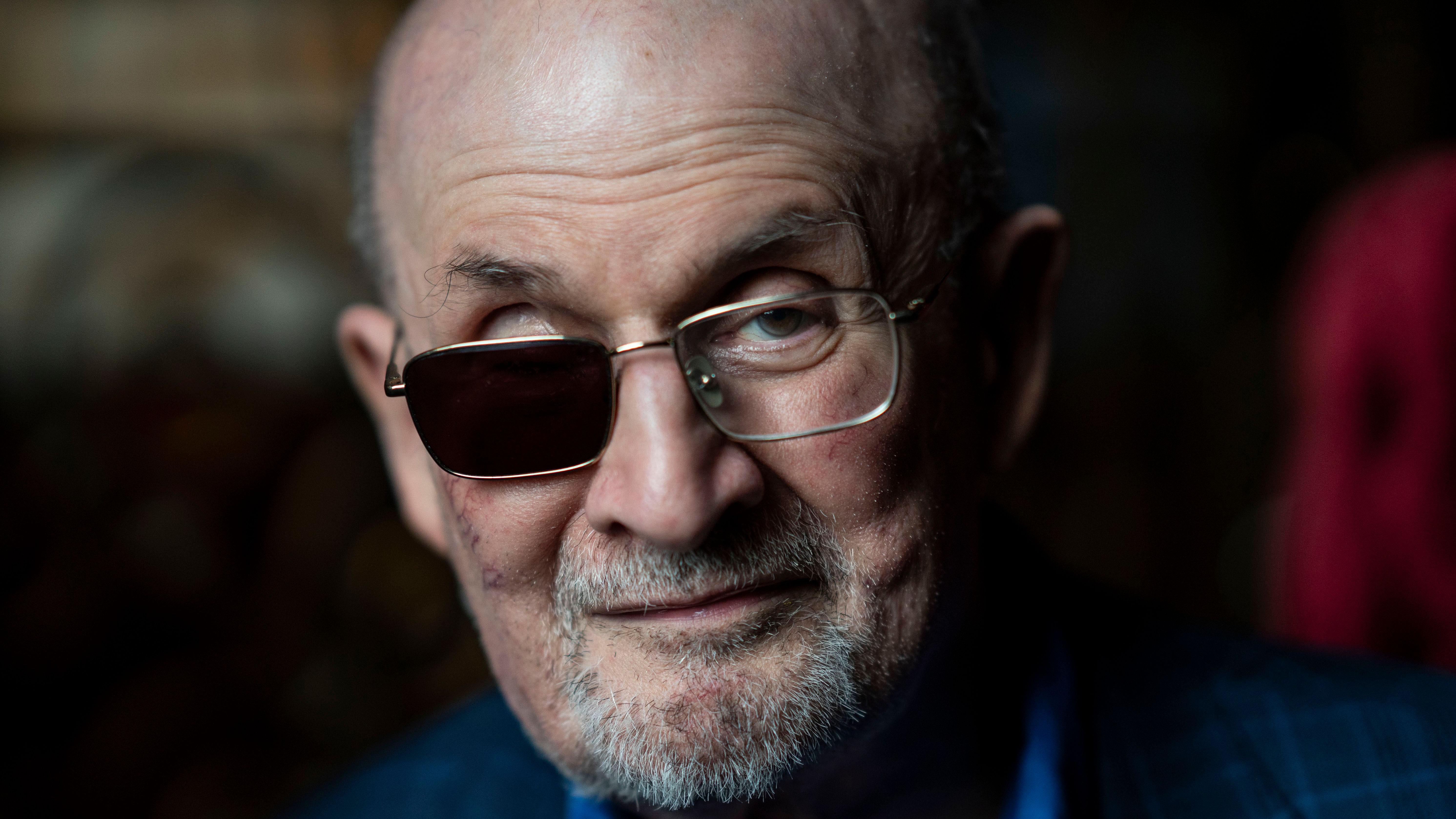
Without Murakami on the list, the biggest name out there is probably Slaman Rushdie despite his recent decline in critical acclimations, a career retrospective award could make sense (see Hemmingway, Ernest). Thomas Pynchon‘s another name from the New York Times’ Best Seller list (and above Rushdie in many of the betting pools) but as I actually read a work of his this year (Inherent Vice) I’m wildly underwhelmed and certainly won’t put him in my top choices.
The same could be said of other writers recently on top of the pools who have fallen a bit but can’t be totally discounted. Canadian Anne Carson has a broad appeal and parcel of awards while anti-Putin Russian author Lyudmila Ulitskaya may have faded from public consciousness as the autocrat digs in but remains a powerful read. (I read Ulitskaya’s Funeral Party this year and found it a great distillation of expatriate experiences (“[The USA] hated suffering; it rejected it ontologically, admitting it only as an instant which must be instantly eradicated“) full of funny jabs at home culture (“the finest monument to Soviet power was an empty pedestal“) and romantic foibles (“over time the small sums [she loaned her lover] grew unnoticed, like children“). Her slide may be owed to her gender, or the less lyrical, florid style that has been popular among recent winners, but I still want to shout her out.
After compiling a list of likely candidates who match the common leading contender profiles, I’m opting for Caribbean author Caryl Phillips whose fluid writing touches on a wide array of topics and especially delves into issues of race. One factor that’s also worth noting, locals who share the Swedish academy’s library reported that suddenly Phillips’ works were all checked out at once…perhaps because he was being seriously considered for the prize.
Left Out of the Line up (no points to me if they win)
Injured–have been in the 11, but aren’t there now: Can Xue, Haruki Murakami, Pierre Michon, Helene Cixous
On Bench: Good writers widely recognized (and highly touted by the odds) that I haven’t included yet Michael Oondjaate, Peter Nadas, Colm Tobin, Cristina Rivera Garza, Enrique Vila-Matas, Vladimir Sorokin, Botho Strauss, David Grossman, Antonio Lobo Antunes, Ibrahim Al Koni and Tahar Ben Jelloun.
On Loan: Names that might make big noise soon, but are still betting pool long shots: Louise Erdrich, Linton Kwesi Johnson, Percival Everett, Yan Lianke, Mohamed Mbougar Sarr, Javier Cercas
Analysis: Who will it be? Who should it be?
In articles analysing a team’s draft-day decisions, writers look at two things. What they think the team leaders will do, and what the author themselves would do if they had a chance.
This year I’ve made an effort to expand my reading of the potential honorees going through whole books by a few (Thomas Pynchon, Lyudmila Ulitskaya, Javier Cercas, and Gerald Murnane) and here is my earnest evaluation.
The Academy Will Pick
The last two years I’ve done this, the Swedish Academy has continued to prioritize authors with something artistic to offer in their work, primarily through stream of conscious and fluid prose poetry. They have also been doggedly consistent in their “boy/girl” alternating since 2017, and while they could truly drive to parity by picking only women for the next 87 years, I don’t see that happening now.
So I think they will pick: Syrian Poet Adonis. I think his writing speaks for itself, and he has long been considered a contender for the prize which arguably makes this an overdue award. At the same time, I don’t think it’s just a matter of finally throwing him a bone. Politically the moment is ripe with Syria emerging from a dictatorship, and a 95 year old with a broad and significant body of work balancing out 53 year old Han Kang’s win for youthful promise.
Honorable mentions: Gerald Murnane, Mircera Cartarescu
I Would Pick
I’m not quite so hidebound as the committee and I’d really rather prioritize looking beyond the common-sphere of Nobel winners (ie Western Europe/America and white men). A more diverse writer with a point of view that connects to the wider world would be the ideal for me. Artistry is something I think lies in the eye of the beholder, so better to be clear than artful in my eyes.

As time in this project has gone on, I’ve come to accept that I’m a bit of a Basic Bookworm, with little tolerance for artistic writing for art’s sake. I prefer clarity and focus in writing, and so, even though he’s been entrenched for two years as my best writer available, I’m standing with Homero Aridjis. Come at me.
Honorable Mentions: Salman Rushdie (I still think of him as an Indian writer despite his increasingly American identity) and Caryl Phillips
Chaos Pick
Here’s a totally left field suggestion: Japanese animator/story teller: Hayao Miyazaki. Plenty of folks will get up in arms about a film maker and an artist getting awarded, but if literature is “written work” not “published books”–then he counts. Add in his fierce opposition to AI and he could be a bit of a statement (even if he would double up East Asia’s wins)
Who would you pick?
Leave a comment below, please, there’s dozens of you who will talk about this, so I’m just going to keep begging for you to comment with your pick.
Next Time…I rush to judgement on whomever our winner is László Krasznahorkai
Given the repetition of 11s in this site, I wanted to see how soon I can hit 11 points with
- 5 points if I correctly predict either on the *will win*, should win, or chaos pick
- 2 points if they’re on either “honorable mentions” list
- 1 if they’re in my 11 top candidates—Krasznahorkai fits here so 1 more point to me
Nonsense Point total: (was) 2/11… (now) 3/11
For an added Challenge, I’m also going to award points to the Universe for the other side of the coin
- 1 point if the winner is in one of my “left out of the line up” lists
- 2 points if they aren’t on that list but are within 25/1 on the odds
- 5 points if they are outside of 25/1 odds
…and since I got points for 2023 and 2025, I shouldn’t omit 2024’s winner. So congrats Universe, the unexpected Han Kang pick nets you 5 points and gives you the lead…for now.
You can join in this too! I will keep pleading for comments until I get them.
 MacKenzie's Boot Room