
Despite the unusual circumstances, I’ll always remember this summer’s Olympics as Alex’s first real sports fandom moment.
Each day you were excited to ask “can we watch some Olympics?”
Dear Boys,
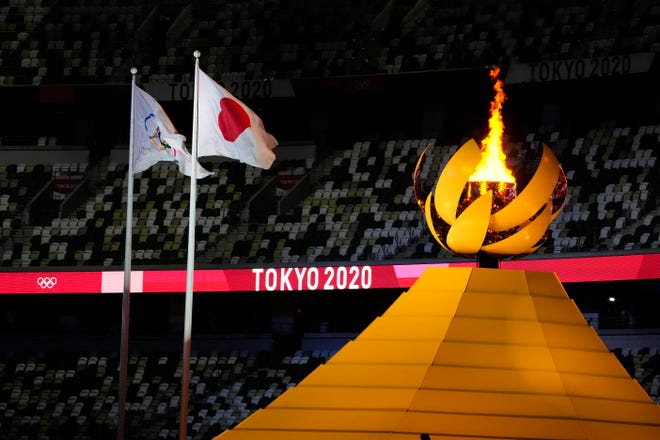
It was clear as could be that you liked the Olympics. You were willing to cut back to only one Reading Rainbow a day, and your joy in sharing it with me, with mama, and with your grannies was clearly apparent. After hoping for more swimming at first, you came to enjoy whatever came your way: bike racing, sprinting, relay races, ribbon dancing, diving, it was all fun, and you were all in.
But there was a moment that you missed. A moment, I wish I could capture for you again and again.
That simple question: “can we have two golds?”
It’s such an easy question that it’s a little surprising that no one ever asked it before Mutaz Barshim. [Though, having refereed my share of disputes between you two boys, maybe not terribly surprising.]
“Can we have two golds?”
That kind of question at the height of your sport, the peak of competition, with the eyes of the world on you.
“Can we have two golds?”
I’m blown away by it, because it simply questions every expectation we have in sports. We expect competition. We expect victory and defeat. We expect winners and losers. We expect finality, a degree of absolute fact or truth: one record, one best, that’s it. Either Barshim or Gianmarco Tamberi would be gold medalist. One would be in history books forever. That’s what we expected.
“Can we have two golds?”
That’s something we don’t expect.
As Barshim says in his interview, “[Sports] is a tool for us to come together.” So, what if, instead of the expected delineation between winners and losers, what if we sought to celebrate moments where we share.
It’s certainly not easy. Even in soccer, one of the few sports where teams may share the same number of points, it’s a challenge. I can’t tell you the number of times growing up I heard friends ask “how can you like that? can’t you like…tie?” The tie was a complete unknown to us. One team won, one team lost. It might take slo-mo instant replay, but you could figure out who came first and who came last. [To paraphrase one of your preferred Little Blue Truck Books]
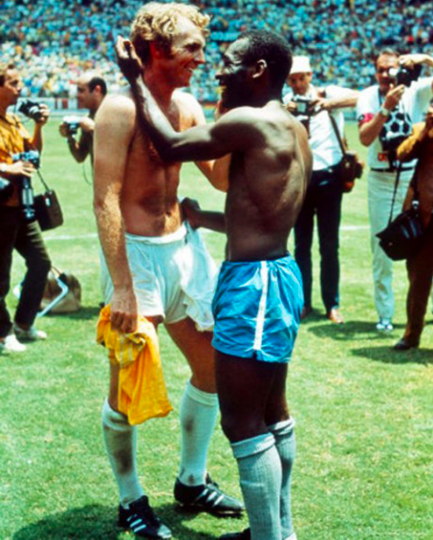
Soccer draws are often frustrating for fans, we often come away thinking about the two points dropped rather than the one point gained. But truth to tell, even if they coulda-shoulda-won….they could-woulda lost if something else had gone amiss. Maybe that’s why soccer players often come away from the end of a match with appreciation for the other side, swapping jerseys and exchanging pleasantries no matter how bitter the blow is.
The players understand that the game is one thing, but life is another. We fans, we citizens, we don’t always understand that.
Sadder still, we have taken the sport mentality, the thirst for victory, well beyond cheering on our local team/high jumper. Lots of people look to gloat at the failures of their rivals.
In the wake of the fall of Afghanistan and the deaths of innocent people, there are some who have seized this moment to denounce not violence, not human rights violations, but their political opponents. They don’t bother to acknowledge the suffering of people, the desperation and fear, but instead they demand we blame someone…someone other than them. At the same time, there are those who fight back. Pinning the blame back on those who are criticizing the failure. In their own way, seeking to score a win in the history books for their side, regardless of what failure is happening on the other side of the world.
It’s strange that in a serious moment of humanity we seek to push others down still further, but in a moment of fevered competition, Barshim and Tamberi chose to lift each other up.
I write these words knowing that you boys will probably never be olympians, or soccer stars, or have the fate of an armed invasion on your hands. But whatever you do, I hope you boys find new ways to question expectations.
 MacKenzie's Boot Room