Double-Edged Passion

Double-Edged Passion

The more time I spend with you boys the more I come to recognize that lessons about life, about our world, about important skills in reading, writing, and arithmetic, all stand subordinate to lessons about our emotions.

While there are many times where you need to vent your anger, or express your sadness, or scream out your joy, there’s one emotion that cuts across all of them: passion. It may not be an emotion in and of itself, but rather an intensity of emotion that supercharges each feeling to its extremity.

Sadness isn’t just sadness, it’s a part of “the WORST DAY EVER”. Frustration isn’t just frustration it’s the impetus for each of you to slam doors and scream out “YOU. RUIN. EVERYTHING!!!”

At four and six you are still learning how to express emotions, how to handle the extremity and how to appreciate the nuances.

But you aren’t the only ones.
Dear Boys,

Of all the things that happened in our small corner of the soccer world, I found myself thinking about this moment in Dingwall, Scotland frequently.

That’s fans of Partick Thistle letting their passions run riot before a Cup match at the end of January. Given that Thistle lost a painful playoff battle just last June to County, I can understand why emotions were running hot. Given that their team was in fine form while County was bedraggled, I understand why there was such confidence and energy.

But I keep thinking about that last moment. Watching one young man stop, grab, and rip away another young man’s drum. I understand the emotions. I understand how passions rise up, but I just don’t understand why it has to lead to pushing down someone else in order to lift yourself up.

I certainly have seen you both tussle and bicker over this toy or that one. I’ve watched your feelings turn into passions, and your passions turn into punches (or the four-year-old-equivalent), and I honestly can see a physical resemblance between you both and the young men in this video (the men are likely only 10-15 years older than you).

One of many intense fights

I see all this, all these echoes of you in bigger bodies, thousands of miles away. And I worry.

I like that you have all the emotions. I like that you express them. But I don’t want you to fall into this trap.

Lots of people have lots of emotions. All of them are real, and none of them are bad. But when we let passion push our emotions beyond ourselves to interrupt others, there’s a problem.

First and foremost, if you let your passions run the show, you risk harming others. Add to that, when other people get harmed, their passions intensify and suddenly you’re at risk as well. Consider, as well, that as you grow into bigger bodies, bigger muscles, and develop a bigger arsenal of attacks, you face bigger consequences. You can be seen as a threat, a dangerously violent force, and you can face legal consequences too.

That’s what happened to these young men. I’m sure their petty hooliganism released their passions in the moment, but it also made them targets of police inquiries.

It’s not only the young pseudo toughs who let their passions get the better of them. Sometimes, it’s the older adults who are supposed to be mature enough to lead others.

That’s County manager, Derek Adams, the same man who helped the Stags climb to the Premiership years ago. Frustration for him turns into an impassioned argument, but one against his own players, the men he claims to lead. Saying that they (and their opponents) are “rubbish” that they aren’t worth paying to see, that they are 100 times worse than a lower tier team in England.

Conveniently, Adams opted to quit working with “rubbish” players after they continued to struggle (not long after that cup defeat against Thistle as a matter of fact).

I don’t mind that Adams was frustrated or that he let his frustrations pour out in a passionate outburst after a difficult match. I do mind that he let his passion excuse some cruelty to people who are trying their best. Adams didn’t steal a child’s drum, or commit petty vandalism, but he did bully and ridicule others.

Passion is important. It can give you motivation and energy to do more than you imagine. It can connect you to others and build a community of enthusiastic strivers. But it can also run down others and isolate you from those who could help you.

Passion is powerful. Learn from the poor examples of Derek Adams and County’s highland rivals. Please, use it to empower and unite, not to batter and divide.

77. Complexity

77. Complexity

This is a time set aside each year to be extra intentional in how we consider and study the lessons of Black History Month in our nation.

There is no wrong time to study this, and this is certainly not the only time to study this, but it’s good to bring some intention to the work we do and how we do it.

At first glance, you might not see the effect of Black History in our lives. We are white men. We can, if we so choose, read stories and learn histories that emphasize people who look and think like us. We can blinker ourselves to the belief that we are here because people like us have done everything of importance.

But we choose not to make things that simple.

Dear Boys,

That’s Briana Scurry. Specifically, it’s young Briana Scurry from her time playing youth soccer (like you) in the Twin Cities (like you). Arguably, the greatest goalkeeper in the history of the United States. Certainly, one of the most impactful athletes of my life time.

I could teach you about Scurry’s superb play. She controlled the goal for the Women’s National Team en route to a World Cup title and two Gold Medals. She was the quintessential American keeper: poised under pressure and fiery in her leadership. But playing very well isn’t where the impact comes from.

I could talk to you about how she broke new ground. She helped to start the agitation for equal pay between the women’s and men’s team. She was a woman of color and an openly gay athlete at a time where it was difficult to be either, let alone both. But if we simply celebrate the accomplishments you miss out on the context that surrounds them.

I could discuss the challenges that complicated her life: the concussion that ended her career: the depression that endangered her life and her livelihood. But, fixation with someone’s problems can create a simplified view that makes someone little more than a victim of circumstances.

From OutSports.com

The truth is that Briana Scurry has handled all of those issues and more. She has gone through trials and tribulations and emerged the other side with a full sense of who she is and who she wants to be. Briana’s play created one of my most lasting memories of soccer, one that influences my work with it even now. Her historic legacy shows us there’s progress to be made and celebrations that go far beyond winning and losing. Her perseverance reminds us that there is much more humanity in our heroes than we acknowledge when we fret over wins and losses.

Briana Scurry’s story is much more than one post, or one game, or one lesson. She shows that there’s so much to see and to learn and to accept and to do if we open ourselves to everyone else. That’s what serves us best during these months of special celebration: it’s not a single lesson, or a particular inspiration. The lives don’t have meaning because they touch us, they are important because they are so complex, and remind us that we are all complex.

We contain multitudes. And everyone is better for it.

42. Taking a Break

42. Taking a Break

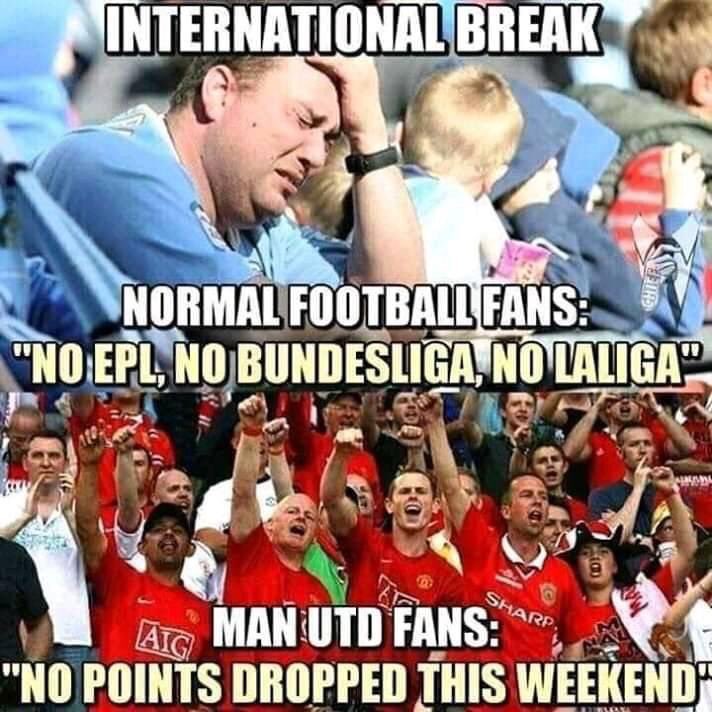
This last week was an international break. A time when great players can compete for their country, and when fans can thrill in a patriotic triumph.

It’s also a time when fans complain.

Feelings about International Breaks

A lot of fans would rather the players keep playing. Some wonder why clubs with international stars don’t carry on with the players who are in games for their country. Some wonder why we have to have international matches at all when the clubs actually pay the salary for players. Some bemoan the lack of entertainment and quality games, others wish that a few players who seek to stay home would respect the honor of playing for their nation.

Here’s my thing on this, for the very little it’s worth: everyone benefits from a break.

Dear Boys,

In my own career, I’ve spent hours upon hours not just teaching, but refining my practice, improving my skills, and attending workshops to discover new methods. I do it because I think my work’s important and I want to do it to the best of my ability. Sometimes I do it past the point of helping myself. [Ask your mom about the time I tried to cook lentil soup while grading papers and designing a new unit…it was…not good.]

Me at this time of year…

I benefit from a break, and, more to the point, so do my students, so do you boys, so does everyone I encounter. Because if all I ever do is work, then I don’t keep working well.

Hard as it is for passionate sports fans to admit, the same is true for professional athletes.

These people have spent their entire lives training their bodies to be in peak condition to compete at the highest levels and provide entertainment for us all. Every month or so, they get a break.

Good.

They don’t just need an “off-season” to recover, they need the time and head space to be human beings rather than our favorite source of excitement. They can rest their bodies. They can connect with their families. They can even not care at all about what a bunch of fans want and make sure that they are taken care of first.

Former Loons’ Captain Francisco Calvo deserves a break too (Pioneer Press)

Truth be told, rested players tend to be more fit. More fit players play better games, and we’ll all benefit from it. They also can be more balanced and better able to cope when their careers come to an end. Their health and well-being is so much more important that what I want for entertainment on a weekend that I can’t help but feel that anyone complaining about people taking a break is utterly selfish.

So, while some will tell you “there are no off days” or “grind 24/7/365”. Please, take breaks. You’ll be better for it.

32. In a Mad World, only the Mad are Sane

32. In a Mad World, only the Mad are Sane

I’m trying to write you these notes to build an honest, Frank, hopefully funny reflection of the world as we see it now. To that end, I want to be honest with you about something.

I’ve fought depression most of the last five years. Sometimes I’ve won. Sometimes I’ve gotten my butt kicked. And on those days when my butt is thoroughly and totally kicked, I’ve felt scared, adrift, and frankly furious. All the more so because students I teach could see my struggle and sometimes responded, not with compassion, but with jokes, jeers, or dismissals.

Dear Boys,

Rationally, they’re kids and kids don’t know what to do when they see adults struggle. But when you’re getting your butt kicked by depression, you aren’t rational. So I didn’t accept it. I panicked, I beat myself up, and I generally was one of the worst versions of myself.

You are kids too. I’m frankly terrified of being the worst version of myself just because you are kids too.

I tell you this not to scare you, or to justify my behavior, but because being honest about your health, including your mental health, is critical to creating a healthy environment.

Too often, we see “you’re crazy” as an insult. We’re not right. We’re wrong. We’re dangerous. We should be ashamed of ourselves. But truthfully, owning your struggles, your instabilities, your pain is the most healthy way to handle it.

Strangely, this came to mind while gearing up for the coming Scottish Premiership campaign. Newly assigned analyst Stephen Craigan joked “football keeps us sane, until the whistle blows for kickoff”.

Perhaps that’s a well known phrase, but it was my first time hearing it. Whomever said it first, I truly like it. Both for what it says and what it implies.

Superficially, it’s a cute joke. In trying times, Soccer can be a welcome distraction. As soon as it starts it’s trying in its own way.

But at this time, in the context of global upheaval, uncertainty, panic, and isolation, it’s uncomfortably true. Soccer may have been a respite from disease, financial ruin, and hard racial truths. But when you watch all those same things are still there. Players risk their health and the health of loved ones to play. Many players and clubs will be in dire fiscal straights without tickets or concessions. And anti-black epithets and symbols still dot stadia, while systemic avoidance of black managers perpetuates the unequal opportunities for leadership.

What might, at first glance, seem like a waste of time is just another means to confront the same problems. The comforting thought that we’re safe in the little bubble of sport is popped as easily as a soap bubble by a toddler in a tantrum.

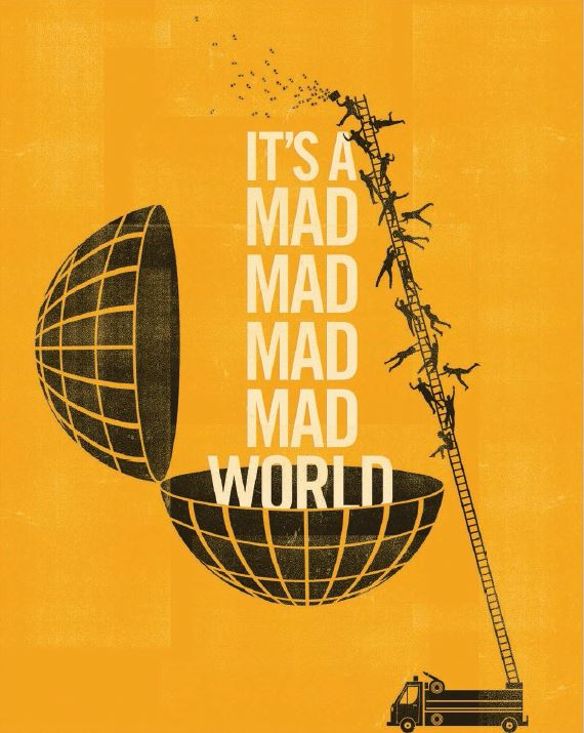
The world is mad, and soccer is as mad as everything else. The only reasonable thing to be is mad, so kudos to everyone struggling.

That’s good. It’s time to face facts and address what we are and what we need. It’s time to be honest about how hard it is day to day, and how hard it is for both average joes/janes/jos and elite athletes. One need not hide their difficulties in this difficult world. Together we can see them and we can support each other through them.