There are any number of cliched phrases to sum up the lesson I want you boys to learn today. I’ll resist enumerating them and settle for the one that came to mind this week: play to the whistle.
Recently, we have gotten better and better at analyzing predictions and planning appropriately. Data scientists and computer programs can digest a pile of data points and extrapolate the most likely outcomes: political campaigns, pop song construction, and especially sports.
It’s never been easier to accurately predict things. And each prediction enables people to work smarter not harder. Each analysis allows us to conserve our energy and craft support for ourselves.
But all those predictions come with risk. Complacency. Indifference. Defeatism.
The future looks cloudy
It’s tempting, with our increasingly accurate prediction models, to assume there’s nothing to be done. To accept that, as probability approaches 100%, we might as well move on. To believe, in short, we can’t fight the math.
We forget among all these likely outcomes that humanity is the least likely outcome of all. Scientists tell us that the odds are heavily stacked against a planet being habitable, and even more heavily stacked against life evolving. Yet, here we are.
The same is true in these statistical models. Sure, the favored candidate, or likeliest cord progression, or most obvious final score might be the actual result. But we still have upsets, and innovations, because some people keep trying. People like Ross County’s Billy McKay.
There’s no secret to their surprising successes. They fail more often than they win. Yet still they try, and try, and try again. They go until the last vote is cast, or chord is played, or whistle is blown. They try every day and–eventually–it becomes habit.
When you build the habit, and you live with it daily, it makes the chance of a turn around more real. No matter how often it doesn’t work, it makes those moments of defying the odds richly deserved and deeply satisfying.
So play to the final whistle boys. Today, tomorrow, from here on out. Play to the whistle and even when the odds are stacked against you, you’ll have shortened them, just by being you.
Today, I had an unusual experience. One that I loved and that the people around me shrugged at. Afterward I realized a big truth behind both this blog and my life in general.
While it’s easy to fixate on the best, don’t let it distract you from the very good right in front of you.
Let me explain: the hardest moments I’ve had have been when I set my heart on one thing and refuse to accept something else. Not having the thing you want can drive you crazy. Appreciating the thing you have can bring you joy.
Gamuk Glacier
For instance, when I was overseas I knew lots of people who couldn’t tolerate not having what they wanted most. At the top of Gamuk glacier, in the midst of the Himalayas a troop of hikers was offered roti, rice, and yellow daal on aluminum trays by a small group of monks. Some were not going to have daal when they wanted meat. Others looked askance at the dirty/dripping plates. I ate it all and went back for more. Maybe I put my digestive track at risk, but that moment, savoring a fresh made meal, shared in gratitude with our hosts in the face of natural beauty, I was delighted.
I have a harder time accepting where I’m at in my work and actions. Many is the time a lesson goes awry or students cause a pointless, rude, ruckus, and I sit in sullen self-abnegation. I don’t want to be a bad teacher and every time things seem bad or less than ideal, I just want to scream: “I wanna be better!!” My colleagues and bosses tell me to appreciate what we do accomplish and appreciate my strengths before I get into “self-improvement” mode. I see why: wanting to be the best and refusing to appreciate my strengths when there are weaknesses to worry about has never helped me. But it’s hard to give it up.
Which leads me to today. With me standing in my last class, stressing over how students were identifying evidence and supporting thematic claims when the principal opened the door and announced an interruption.
Senor Amarilla
In walked Luis Amarilla. The newest member of our Minnesota United. A tall, devestating striker from Paraguay by way of Universidad Catolica in Ecuador. I was amazed. My students, many who love soccer (and some of whom have parents with Universidad allegiances) shrugged. One young woman beamed, others used the distraction to whisper with each other at the end of the day.
I confess, I was a little disappointed: why would this group of soccer crazed kids collectively cower when a professional, an immensely talented one, came to say hi?
Two Track Mind
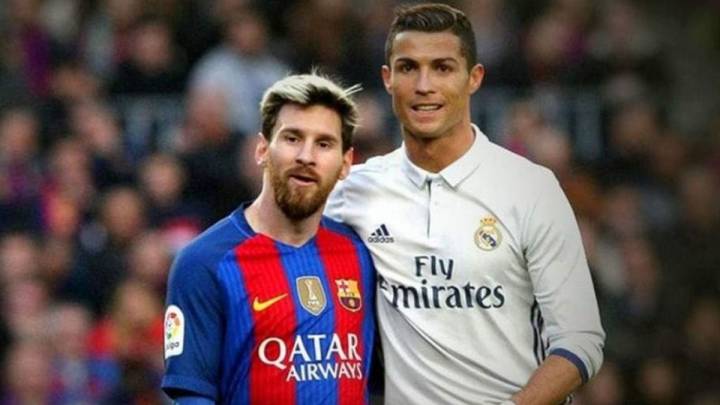
Then they told me: they don’t follow the local team, they only care about the best. They idolize Messi and Ronaldo. They obsessively hunt and trade for and buy the best players on video games. They ogle the signature shoes. Everything and everyone else is just noise.
It’s nice that they have lofty ambitions, but it’s sad that it blinds them to excellence in front of them. Señor Amarilla isn’t a legend of the game, he won’t win the ballon d’or or the UEFA Champions League this year. But he has a powerful engine, a killer instinct in front of goal, and the drive to share his gifts here and now.
I was delighted to introduce Señor Amarilla to students and shake his hand in welcome. I understand that, at first, you might prefer someone better known, or with more power to impress your friends. But, if you shrug off greatness around you, you let great opportunities to cheer and shout and savor special moments slide by.
You probably have heard your mother and I talking about “Forks”. As in “Fork that” or “all out of forks to give” etc. There is a reason why.
You come from a long line of “fork-givers”. People who got worked up about politics and went to war. People who refused to accept their situation and instead moved to unseen, unknown locales. People who really care. Who care so much, in fact, that it gets in the way of doing justice to yourself.
I have been, and probably always will be, someone who gives a lot of, what we’ll call on this G-rated blog, “forks”. I give lots of forks about my lesson plans, about what students achieve and don’t, about where people cross the street, and use grammar, and speak to others, and show care for the world around them, and, naturally, how you two grow up. I give so many forks in a day, I often don’t have many left to give about myself, my health, or my welfare.
There’s nothing wrong with caring. Giving forks is good. But please boys, give a fork about what you do, don’t give a fork over how it is received.
Few things show this better than Grenoble Foot’s disastrous attack last Friday night against AC Ajaccio.
That’s three chances. Gilt-edged chances. Gimme-put style chances. Your-great-grammy-Zoe-would-have-finished-it-and-she’s-been-dead-ten-years. Chances. But they didn’t go in. Not for Jessy Benet, not for Arsene Elogo, not for Florian Raspentino. The result was sealed. And defeat was made still more painful.
Mamas, don’t let your babies grow up to be Shawn Bradleys.
If you give a fork about the game, your job, your team, then it would be easy to be upset.
Obviously, fans would be upset. The coaches would be upset. The players would be upset. That kind of performance is not why you go into sports. You aren’t there to be the butt of the joke; you’re there to win.
But fans don’t put in the effort, they just watch the entertainment. Coaches don’t make the plays they just help train players to make it happen. Even players can’t control every part of the game; they just participate in it.
If you give a fork, it might seem like you ought to be upset when it goes wrong. It’s certainly how I’ve always responded when the class goes wrong, or people are rude and unsafe in public, or I don’t change the world three times over before breakfast. But that’s not the way to do it.
By all means, give a fork about how you prepare. Give it your best effort. And when it’s done, accept that it leaves your hands. My meticulous lesson may not move the needle in a student’s understanding. Your preferred candidate may lose. And you may, despite years of preparation, strong game planning, and the will of thousands of fans miss…and miss…and miss again.
Otherwise you may find that you’ve lost your pride in your own work, in the face of things beyond your control. And that would be a forking shame.
Some things are special. They might seem every day or inconsequential to others, but to you they grab your attention, fill your heart with hope, and offer a new beginning for a long standing love.
Owen, at two months old, this is probably any time you hear a play mat toy jingle. Alex, any bus related noises (particularly beeping and break hissing) demands commentary so that others might know that “that’s a bus” and tell you “where the bus go?”. For me, it’s any time someone or something alludes to Ghana.
While for other parts of the world, I have affection, fondness, or appreciation, with Ghana (and Montana) it is love. Pure and simple love. So when it comes up in daily life, it fills me with hope that this could be the beginning of a beautiful friendship, or a great conversation, or the chance to get my hands on some high quality nkatekwan (peanut stew).
I’m still not over this…
I’m starting this blog, at the same time Ghanaian soccer is starting a new beginning of its own. For most of its past, Ghanaian soccer was the story of a great team and a star player (Abedidi Pele) who rarely had the chance to shine on the global stage (thanks ingrained FIFA bureaucracy). Then it was the story of an immensely talented team that never reached its full potential (thanks Luis Suarez). But most recently, Ghanaian soccer was the story of staggering corruption and near ruin.
Two years ago a group of Ghanaian journalists, dug deep into the local soccer world and brought to light the 12th Man of Ghanaian soccer: corruption. Referees and executives who played a major part in organizing teams and determined winning teams admitted a willingness to take bribes. (Of the 94 officials investigated, only 3 turned down the bribe).
Anas Arenewat Anas and Kwesi Nyantaki (The journalist and power broker at the center of the scandal)
Most discouraging of all was the head of the game in Ghana, Kwesi Nyantaki, a banker and lawyer who had overseen some of the country’s greatest triumphs, but who also crowed about using the nation’s President to get deals done and make more money. He resigned. He forfeited ownership of his own team (side note: if someone makes the rules and owns a team that profits from them, you shouldn’t be surprised when they turn out to be self-dealing.) Then, he was banned for life from all soccer activities.
The country and its favorite game were shaken. The organizing body was disbanded. The triumphant national team went on hiatus. And the national league was cancelled.
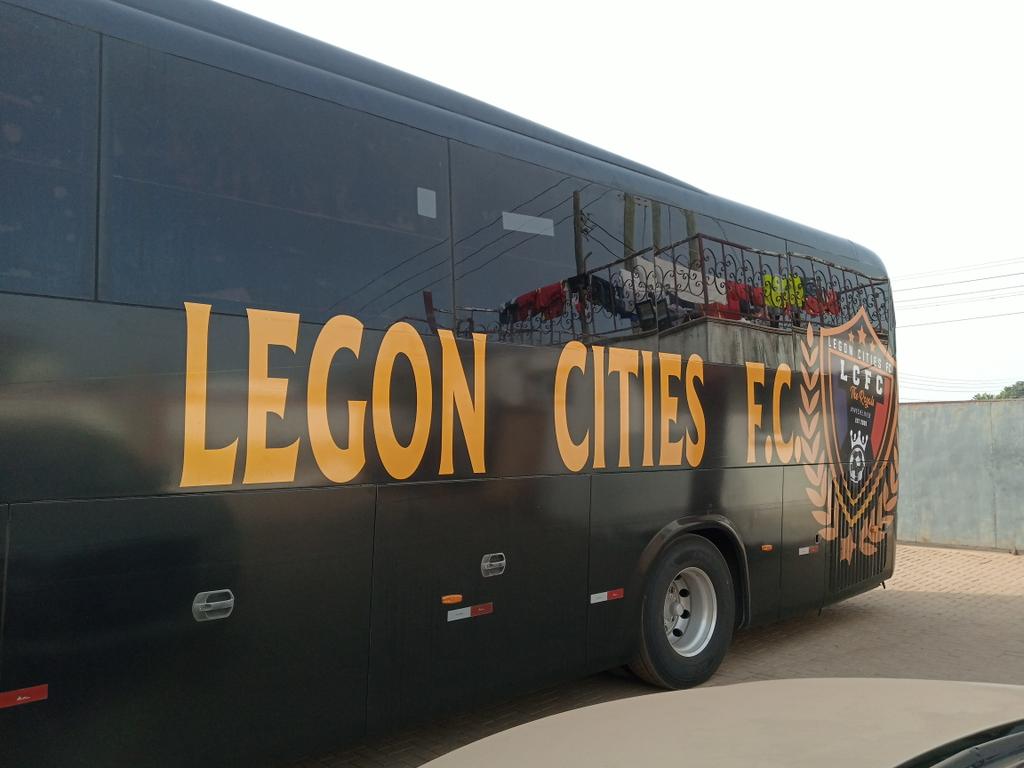
Just before the new year, the league started again, and Nyantaki’s old team was re-formed in a new city for its own new beginning. As Legon Cities FC, they are what I like to think of when I think of new beginnings. I hope, when you face new beginnings, you’ll do it like Legon Cities FC: with optimism and gratitude.
Think of new beginnings like you think of play mat toys jingling, or wheels on a bus squealing. You have hope in that moment of something new, something remarkable, as long as you approach it with optimism.
For Legon Cities, there are new fans, new hopes and new energy. Every social media post is hashtaged “#We Deliver” or “#BringBacktheLove” everything is possible, everything can be done. In this new beginning, all things are possible. Pessimism is not allowed. Every match, every kick, deserves an optimistic eye.
At the same time, new chances aren’t always on offer. Sometimes we succumb to the trap of thinking we deserve it, or just being glad for it without realizing that we have it through the grace of others. So please, practice gratitude for the new beginning.
The bell jingles because you’re there again, and because your mom helped you get there. The bus sounds because the driver made a stop. The chance to restart a team, a league, a love of the game, it all comes down to fans. Legon Cities knows that and shows that. Y’all can do the same.
To be sure, this second chance came about not because of contrition, or apologies, or a desire to change, but because one businessman saw the opportunity to take over where another had failed. Richard King Attipoe, the club’s new owner has splashed serious cash into his investment, trying to, in the eyes of competitors, buy his way into a title.
But the truth is that Attipoe did something that had to be done. He seized a new beginning and did so while letting go of assumptions of the past. Legon Cities isn’t just a flashy new team, it’s a team that is exploring new media, new fan engagement, new promotions (with dance hall music stars popping up to perform at every home match). Attipoe has done what Bill Veeck used to do in American baseball, drawing people with a game plus bread and circuses rather than just the game and a long still silence.
New beginnings bring hope, whether they come gilded with an owner’s gold, or just arrive when you least expect it. But they do not last long, so boys, take it when it comes, approach it with optimism and gratitude and do what you can.
Oh, and Alex, like Legon Cities, you can approach it with a really nice bus.



/cdn.vox-cdn.com/uploads/chorus_image/image/66281856/IMG_0977.0.jpg)



 MacKenzie's Boot Room