23. Ask to Help

23. Ask to Help

Dear Boys,

After the last three months, I know you can see the ways that life will be hard for you. Rarely have we had as long or as unsettling a series of experiences as we have had in 2020. While you are insulated from most of it now by your age, your sex, your family’s financial status, and your innocent age, I know that you’ve gathered some of the pressure that’s on your parents, grandparents, and neighbors every day.

At times like these the pressure often pushes us to do one of a few things: look outward to find someone to blame, or look inward for support. Please, please, please boys look inside yourselves and ask “how can I help?” as often as possible.

In the last week, our neighborhood has been on fire, our block has teemed with men and women carrying guns, our streets have been covered with heavy duty army grade equipment. I know you loved the sight of so many different trucks, Alex, but I also know that you saw your mama and I looking stricken, confused, and worried. Owen, I’m sure you could feel the anxiety in our arms and urgency in our whispers.

But more than think about what has happened or assigning blame for why, what matters now is helping with doing something next. This is where sports provide us with a reflection on life.

Hope Solo (Left)

When things go wrong, some players ask who’s to blame. They turn around and point fingers and demand that others change to serve them. Think about the best goalie in American soccer history: Hope Solo.

Solo was excellent for the Women’s National Team, and she knew it. If the team won, it was because she was great. If the team lost, she often put the onus on dirty playing opponents or incompetent teammates and coaches. In particular, she lambasted her predecessor (and Minnesotan Soccer saint) Briana Scurry after a 4-0 loss.
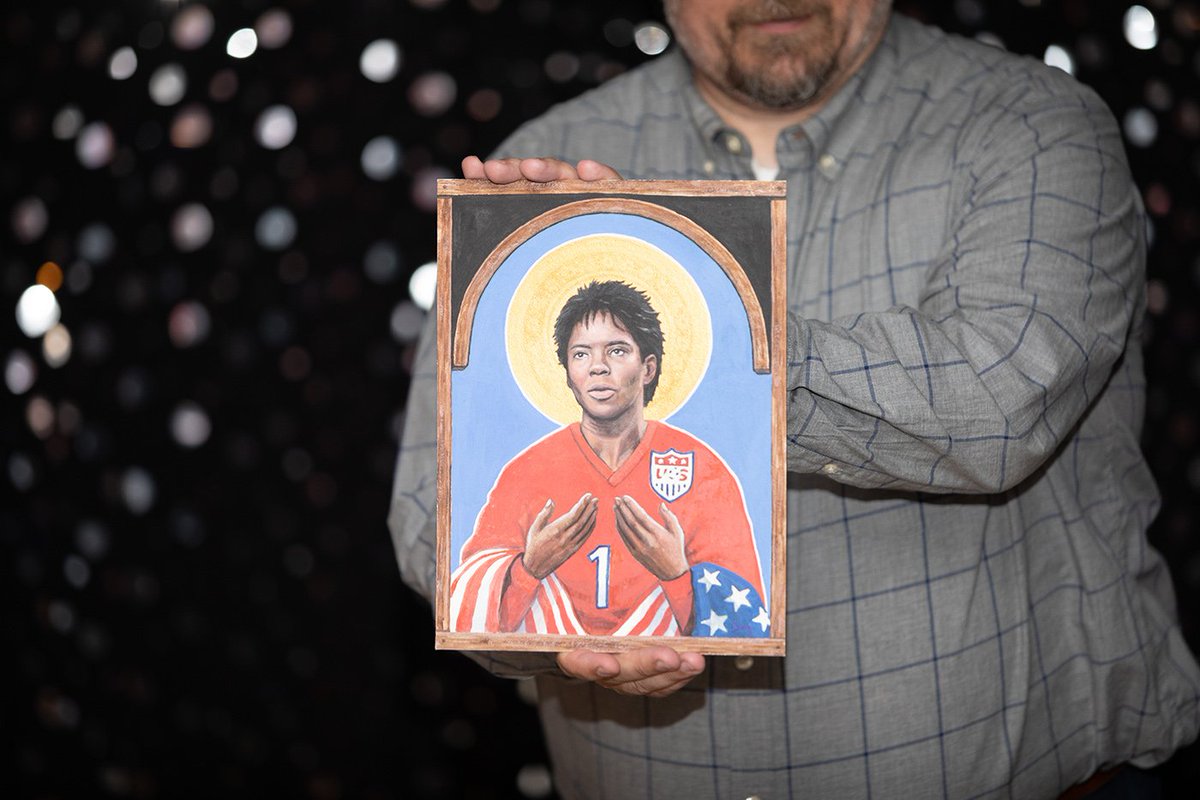
St. Briana of the Blackhart

Some people will tell you that such focus and ego is essential to being an all-time great. That may be true. Certainly Solo is an all-time legend. But sports, especially soccer, like life, isn’t about your own individual greatness, it’s about the community around you.

The most dominant player today…and Lionel Messi.

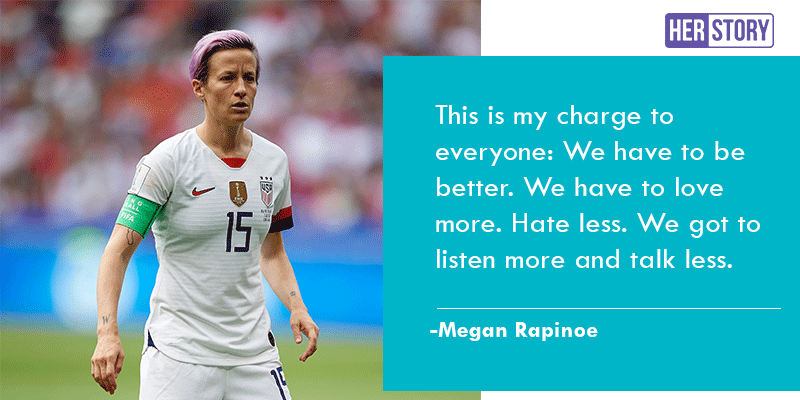
Consider the two players named the best in the world last fall: Lionel Messi and Megan Rapinoe. Each is excellent sure, and certainly, each has an ego. Messi’s competitiveness is legendary, but his memory for failure is short. He has the most goals in the history of Spanish football, he also has the most assists, providing opportunities for others and making his team (like himself) successful.

Likewise, Rapinoe is a dominant, tenacious competitor. Likewise she can be an imperious goal scorer and a tremendous distributor. But unlike the antagonistic Solo, or the quiet Messi, Rapinoe still speaks up, but does so to promote and support, rather than to diminish or blame.

She knelt to oppose police violence when no other women or white athletes were taking such a position. She questioned the expectation that her team celebrate with a divisive and crude leader. She repeatedly risks her own income to emphasize equal pay for all the women on the team. Rapinoe doesn’t just focus on her own greatness, she works for a greater society for all.
We could take this time to think about ourselves. But our discomfort doesn’t come from the peaceful protesters who camped out on our yards on Monday, or the frustrated few who broke things across the river last week.

It’s not something that the mayor, the police chief, the governor or even the president could control, and we shouldn’t waste time parceling out responsibility to them.

Even the officer, whose callous indifference to cries for help cost George Floyd his life, doesn’t shoulder the blame for our unease. We weren’t physically harmed by him and our unease is nothing compared to the Floyd family’s loss. He is simply the embodiment of a larger, heavier, inescapable system that fostered a belief that what he chose to do was right. It’s the system that makes us uneasy, and all the people, organizations, and inner voices we want to fight against that cause us this conflict.

Rather than assigning blame and absolving ourselves, like Hope Solo or our All-of-the-Credit-None-of-the-responsibility president, we can take this moment to ask how can we help. We can give, we can volunteer, we can agitate and advocate. We can assist others like Messi, we can fight for change like Rapinoe. And if you’re not sure what to do, start by asking “how can I help”, then do the needful.

21. Wabi-Sabi

21. Wabi-Sabi

Dear Boys,

It’s pretty great to have soccer games back again.

And yet, there are plenty of people who scrunch up their faces and share frustrations too. The players aren’t at their sharpest. The bigger clubs can just exploit their size and depth, replacing any millionaire starlet who falls sick with another one. Matches in front of empty stands are an insult to fans who supported the side, and without whom there would be no club.

Something’s missing…oh right, thousands and thousands of fans
(Image from outlook India)

It’s really easy to undercut appreciation what a thing is with critiques about what it is not. So I hope when given the choice, you boys appreciate what a thing is, including its faults, rather than wish for what it isn’t.

Japanese art has a concept called Wabi-Sabi. Simply the idea that beauty lies in impermanence and imperfection. A totally perfect Bonsai tree is unattainable, but one with a scraggly branch is perfect in its own way.

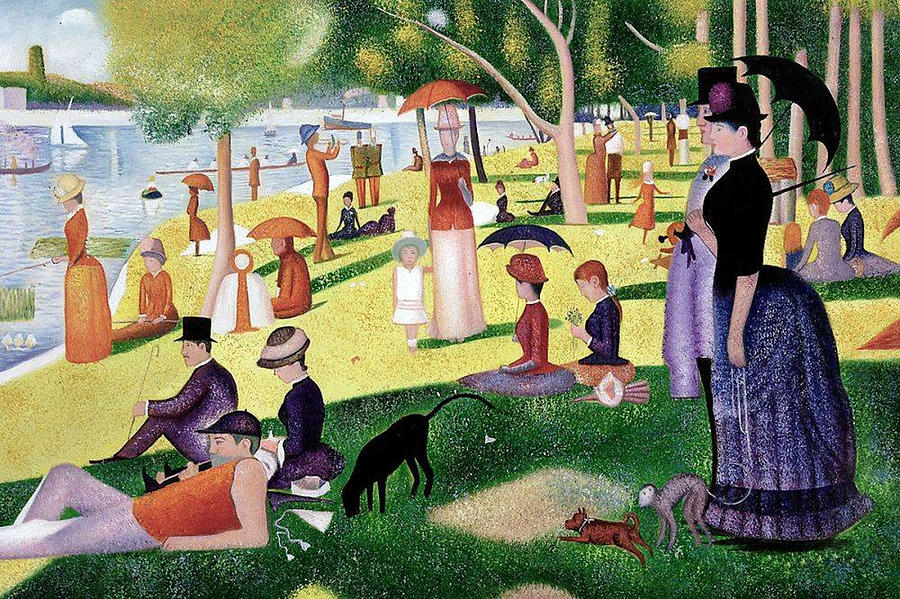
La dimanche sur la grande jatte (Georges Seurat)

So it is with other art: The Princess Bride (which I finished reading aloud to you this week Owen) has some issues with how it shows women, but it’s also a perfect piece of fantasy adventure with romantic guts. The pointillist works of George’s Seurat seem smudgy in spots. Sections of Camille Saint-Saen’s Carnival of the Animals (your current favorite music Alex) seem to overlap and repeat rather than invent. Zootopia (the movie y’all cant stop watching) has some pretty big honking plot holes.

None of that means they’re ugly, worthless, or garbage. Smudges tell a story, repetition reminds us of unity, even plot holes help support the broader themes of the movie.

I can critique this, but it’ll never
not be perfect for Alex

Of course you can critique things. You can offer opinions and suggestions any time anywhere. I just hope that your criticism doesn’t come at the expense of appreciating what is done well.

To be sure, there are bones to pick with an outclassed Freiburg defense. There is an argument to be made that the ref deserves glasses when he final goal was disallowed for uncertain millimeters of an elbow. There’s even a challenge to management to prove they know that fans can’t be replaced by amplified generic crowd effects.

All of that can be discussed, but in the moment of soccer’s much needed return, let’s appreciate the way things are. The teams are back, playing with pride, playing with passion, playing their best. I don’t care if they’re not at their best possible level: I’m grateful to watch them cut, run, pass, tackle, shoot, and save.

20. Maybe, You’re Going to be the One Who Saves Me

20. Maybe, You’re Going to be the One Who Saves Me

It struck me that I ought to explain a little bit about why we cheer for the teams we do. Well, in part, it’s because I thought we ought to, and I’m the one of us most capable of complex thought and logic. But also, each team has a special something that captures part of what I love about life, and part of what makes you who you are.

So periodically (like during international breaks, long summer holidays, or say, global pandemics that completely alter everything we understand about our lives and ourselves), I want to introduce you to the teams we are tied to.

Our sixth team to meet: Minnesota United FC in St. Paul (your home town). A team that captures better than any other how community supports sports like sports supports a community

Dear Boys,

Wherefore Minnesota United?

This one is pretty easy. You know that big silver structure we go past on the way to grandma and grandpa’s? That’s Minnesota United.

You know those black and blue shirts and scarves and hats your dad and mom wear and share with you? That’s Minnesota United.

You know the chants I teach you? The walks in summer sun to hear drums, to Shout “Go Loons”? to Eat pizza, and donuts, and curry? That’s Minnesota United.

The first five teams tie to part of our family’s past. The next five all relate to our community’s future. Minnesota United is our present, our here and now, our neighbors, our local team.

Who is Minnesota United?

There has been professional soccer in Minnesota since 1976. The names, colors, owners, stadia, and leagues have changed a lot in that time. But the fans have kept it going throughout.

The team badge

This particular side dates back to 2009 when one fore-bearer, Minnesota Thunder, ceased operating. by the grace of a new minor league a team was kept alive. Not just alive but thriving. The NSC Stars won one title and finished second for another before a new owner stepped up and made the team Minnesota United, complete with the red eyed “Deathloon” crest.

Every part of our local soccer history is a story of, as Tom Stoppard might say “insurmountable obstacles on the road to imminent disaster”. Luckily enough it all works out well in the end because of one simple thing.

How are we Minnesota United?

We are stronger together than we could ever be alone.

Soccer teams in America rise and fall like the stock market. The highs are thrilling and rewarding. The lows often include a sense of overwhelming despair and (often) abandonment.

We love the Loons, but they could have gone the same way as the Baltimore Bays, Tampa Bay Mutiny, or San Francisco Deltas. There’s only one thing that makes Minnesota United one of our teams rather than a wistful footnote of what might have been: a community that pushed on while the teams faltered.

As valuable as a team is, it’s nothing next to the community that unites behind the team. Lots of teams have supporters and fans, but that can’t replace a lack of financial support. Lots of teams can find a backer, but that doesn’t mean much if you alienate fans. It takes a whole club–players, coaches, owners, and fans–to make it work. And that’s what makes Minnesota United our team, we are part of the community that built and sustains it.

One of the team’s legends goes that when the money was tight and the future was unsure some players started singing “Wonderwall” by Oasis to celebrate wins. Then the players sang it to the fans in gratitude for loyalty throughout the season. Then the fans sang it back. Then the new owner felt inspired to join the team. And Minnesota United went from being “the team no one wanted” to being a team saved by everyone around it.

“Maybe you’re going to be the one who saves me

Cause after all

You’re my wonder wall”

Oasis
19. A fire in their heart, a light in their eyes.

19. A fire in their heart, a light in their eyes.

It struck me that I ought to explain a little bit about why we cheer for the teams we do. Well, in part, it’s because I thought we ought to, and I’m the one of us most capable of complex thought and logic. But also, each team has a special something that captures part of what I love about life, and part of what makes you who you are.

So periodically (like during international breaks, long summer holidays, or say, global pandemics that completely alter everything we understand about our lives and ourselves), I want to introduce you to the teams we are tied to.

Our fifth team to meet: The University of Montana Grizzlies in Missoula, Montana. A team that captures what I learned best from growing up in Big Sky Country

Wherefore The Montana Grizzlies?

Dear Boys,

If the first four teams are your ancestor clubs, the University of Montana is one of your immediate family teams.

I was born and raised in the big MT. Your mother visited almost every year as a kid. Our family ties back to Red Lodge and Billings in the southeast, to Libby in the northwest, to Great Falls in the smack dab center.

Your great grandparents soda beverage company (sorry about the appropriation)

But we also tie back to the University of Montana in Missoula. Your grandma Di got her BA, and your grandpa Bruce got his JD from the U of M. Even after decades away, your mom and I love to go home. Missoula offers those quintessential Montana scenes: the purple mountains majesty, the rolling rivers, and more hiking trails than you can shake a walking stick at.

Because our story is so immediately, personally tied to Montana, we needed a team from the Last Best Place on Earth. And there’s no better team than the Griz.

Who are the Grizzlies?

While the University of Montana has been educating young minds for well over a century, the women’s soccer team is just over 25 years old.

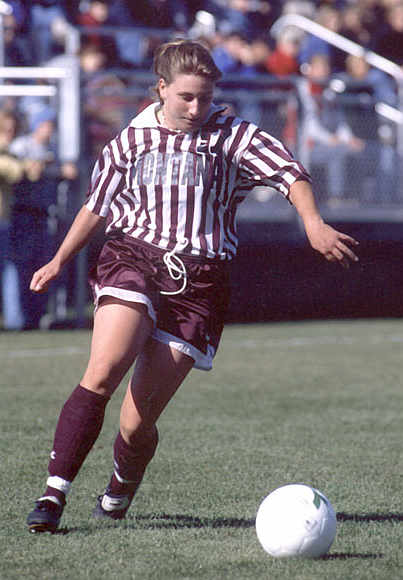
Karen Hardy of the early Grizzlies sides
(UM Sports Info)

Started back in 1994 (the same year I fell hard for soccer 166 miles to the north east-ish), the Women’s soccer team has featured tremendous and talented athletes from home and beyond. They’ve won the regular season title seven times, and won the conference tournament five more.

Because the team is still young (especially compared to the century old sides we’ve been talking about), they’re still building an ethos and a legacy. But under all four coaches (including Mark Plakorus who used to coach your uncle Matt, and Chris Citowiki who used to coach down the street from us at St. Kate’s): culture, community, and academics are all emphasized. During these odd times, the Griz have often found ways to celebrate each other and have fun, even at a distance.

One of my favorite things about sports here in the US is how, when it’s done well, it puts sports in its proper context. Much as I love it, watch it, write and read about it, it is still a group of people playing a children’s game. When done well, the game, the team, the experience, teach you about how to live and work just as much as they entertain or amuse.

How are we the Grizzlies?

There’s something special about pursuing what you love even when it’s not as popular or common place. A fire in your heart to sing, or code computers, or play soccer, even when ways to do it are scarce and public support is minimal.

South Campus Stadium with a view of Mount Sentinel
(UM Sports Info)

There’s also something special about clear-eyed appreciation for what things are and what you want things to be. To get that more important than winning or losing games, more than making money, getting a job, or earning the praise of others: what matters is how you do something, and who you do it with.

The Griz have, in 25 years, built a regional power in a place where kids like me heard the sport derided and diminished in very ugly terms. They’ve done it with coaches, kids, and fans from the state-wide community who are passionate about the game and focused on the family and character that comes from a good team.

Part of me wishes you could grow up in Montana, like I did. But that’s not possible. Times have changed, Montana has changed, and you (mercifully) are not me. But I still hope you’re raised with that Montana spirit as reflected by the Griz.

To paraphrase a John Denver song about my home state:

Oh Montana, give this child a home

Give ’em the love of a good family and a true love of their own

Give ’em a fire in their heart

Give ’em a light in their eyes

Give ’em the wild wind for a brother in the wild Montana skies.

John Denver, “Wild Montana Skies”

I hope you grow up with that fire in your heart, and that light in your eyes. I hope you grow up to be Grizzlies.

18. Distracting GOATS

18. Distracting GOATS

Dear Boys,

Cooped up as we are these days, it’s tempting to chase after distractions with an almost reckless zeal.

Ooh an oral history of the making of a movie I haven’t seen, better read that!!

Twitter tells me to choose three of nine Disney villains to keep: allow me to carefully analyze my options for the next two hours!

Hmm what was the name of that guy in that thing with that hat I liked? Let’s start the googling!!

In this unplanned off=season for sports, those kind of distractions are even more inviting and attention grabbing. Without the steady stream of results and data points to analyze, fans around the world have begun to fixate on debates over who was the Greatest of All Time (or GOAT).

Which triple crown winning horse would beat the others? Which World Cup winners from 2019 would make the legendary 1999 squad (and vice versa)? And, of course, Messi or Ronaldo? Jordan or Kobe or Lebron? Gibson or Maddux? Messi or Kobe or Maddux?

Let’s be clear: GOAT debates are fun, but they are also pointless.

I’m not saying that you should never indulge in a little thought experiment. If you love a sport and it’s history, It’s quite amusing to wonder whether Ruth & Gherig’s Murderer’s Row of the ’27 Yankees could beat Jeter, Clemens, and the ’98 Yankees.

Easy Content Creation

I’m also not saying that you have to eschew these questions in favor of weightier debates over say: universal healthcare, or whether the role of the state can ever be expanded (even temporarily) without impinging on civil liberties.

I’m saying that GOAT debates aren’t the ultimate arbiter of athletic excellence.

I’m saying that fixating on these questions or righteously defending our answers to them is not the fans equivalent of a championship game.

I’m saying subjective evaluations distract us from appreciating accomplishments in and of themselves.

Which was the more monumental accomplishment: Roger Bannister’s 4 Minute Mile, or Nadia Comaneci’s Perfect 10 at the Olympics? Here’s a better question: have you SEEN THESE!?!?

Bannister’s Four Minute Mile
Comaneci’s Uneven Bars Routine

I mean…who cares which I think is better. No offense, but, I don’t care which you think is better. Let’s not compare, let’s just enjoy. Enjoy watching Bannister churn his legs into a sudden burst in the last 300 meters. Enjoy watching his form wobble as he realizes what he’s about to do. Enjoy watching Comaneci’s hands slap and swing and swiftly switch between bars. Enjoy watching her speed and grace and strength beyond what any one else could do.

Sure, it’s fun to debate these things. It is a great distraction. But it doesn’t change the fact that both accomplished incredible things. Nor does it stop us from admiring the athletic skill in each case. Watching those accomplishments its much more fun to relish the moment rather than rehash infinitesimal differences to support an irrelevant argument.

The same is true for all those other questions: which all-time great line up would win a game? Pfft. How much fun would it be watching Gherig stretch at first to get Jeter by a whisker?

Megan Rapinoe needs a trophy case
THIS BIG

Which 2019 star could keep up with the ’99-ers? I have no clue, but man, imagine Rapinoe and Hamm running roughshod over every field between here and the Moon.

We don’t have to live in an either or world: you get to watch Messi ping-pong, and Ronaldo lash thunderous free kicks; you can tremble at Gibson’s fast ball and gawk at Maddux’s control; you can swoon at a Jordan scoop, a Kobe step-back, and a LeBron stuff; and when that’s all done you can also thrill at a triple in Kickball, or shout about a saved slap-shot, or stare in disbelief at any number of lesser-knowns far from the GOAT debate.

You’re going to be pushed in life to pick sides or argue for one thing over another. Sometimes you should, but when it comes to debating “Greatness” remember, everything has a touch of greatness.

17. Curiosity Culture

17. Curiosity Culture

It struck me that I ought to explain a little bit about why we cheer for the teams we do. Well, in part, it’s because I thought we ought to, and I’m the one of us most capable of complex thought and logic. But also, each team has a special something that captures part of what I love about life, and part of what makes you who you are.

So periodically (like during international breaks, long summer holidays, or say, global pandemics that completely alter everything we understand about our lives and ourselves), I want to introduce you to the teams we are tied to.

Our fourth team to meet: SC Freiburg from Freiburg, Germany. A team that offers a reminder that as we move, we grow.

Dear Boys,

Wherefore Freiburg?

This is the last of the family heritage clubs in our collection. From your mom comes Vozdovak, from your dad comes Ross County, from the both of us come Rosenborg, and from goodness knows where comes Frieburg.

A few favorite Germans

I mean that quite literally. It’s not entirely clear who in the family was really from Germany, and who was descended from Germans who had stopped elsewhere first.

Your grandma Di can tie her family back to a region of Europe that straddles eastern France and south western Germany. That strand of your DNA ran off to a tiny farm village in the wilds of Russia, and then beyond, and beyond, and beyond until they got to Billings.

Other family members speak German as a tradition from someone we’ve all forgotten. We sing it, study it, read it. In short: we know we’re a little bit German, but not sure exactly how much or what that means.

Who is Freiburg?

In choosing a team to represent your German heritage I hoped to find a side with a bit of pride and a lot of curiosity: I found SC Frieburg.

SC Freiburg is by no means the most renowned club in the Bundesliga, for a long time they weren’t even the most renowned club in Freiburg. But they are undoubtedly, special.

They absolutely question habits, as you’d expect from a University town with liberal ideals and an intelligent culture. Freiburg’s manager often eschews tactics in meetings and interviews in favor of sharing views about world events and the prejudices that diminish our world. (A habit shared by the team’s fans)

Freiburg loves its surroundings, and welcomes others from around the world. There’s a love for the foreign flair of their club not the stubborn “Deutschland-Uber-Alles” attitude that makes some foreign born Germans a little leery of their homeland. Freiburg’s crew includes French, Italian, English, Australian and even Korean players. They’re most cherished nickname is “Breisgau-Brasilianer” because it suggests a blend of Brazilian style with their neck of the woods. (Even the club crest is about blending: why be lions or eagles, when you can be a griffin and be BOTH Lions AND Eagles!!)

In all the club is welcoming, curious, and proud of their way of doing things. I’ll let them say it themselves:

“in Freiburg, football isn’t a way to release your frustrations – here it brings about a sense of joy. In this way, it is something for everyone in the region to enjoy, just like the wonderful landscape, delicious food and good wine also is.”

SC Freiburg Team Website

How are we Freiburg?

In short, Freiburg is at least close to your Germanic home land, but they also are the kind of open-minded, optimistic organization your family loves. SC Freiburg knows that a curious culture and a changing culture is the strongest.

Manager Christian Streich at the end of his commute

Whomever your German ancestors were, they weren’t tied to one way of doing things. Whatever their goals in leaving home, they were open to not just moving, but moving again, and again, and again. They passed on a love of family, but not a love of habit. They encouraged an attitude of engagement with others not isolation.

Yes, we have a family bond with Germany. We’re not sure what it is, why it’s there or what it means, but we’re curious and interested in finding out more.

SC Freiburg has a soccer team. They love it, but they know that doesn’t mean that it will triumph, or dominate. Frankly, that’s fine. They’re open to growing with each generation of players that comes along, each question that’s asked, each managerial lecture about everything but tactics, and each fan who feels the love of the game.

At a time when many people would rather wrap themselves up in familiarity than risk the unknown and possibly unpleasant, I hope you take the SC Freiburg mentality, and keep curiosity in your mind and change in your heart.

15. On Maradona, Macho Man, and Making Believe

15. On Maradona, Macho Man, and Making Believe

Dear Boys,

Without matches to pass the time, I’ve been looking at the wide range of documentaries about soccer history and histrionics. After all, just because there aren’t any games being played right now, doesn’t mean that we don’t have any games or players to talk about.

One of the most discussed documentaries of late is a found footage film about the adoration and damnation of Diego Maradona in Napoli. A documentary that reminds us: make believe can be dangerous if you aren’t using it wisely.

Diego Maradona’s talent was tremendous, but so were his demons.

Maradona was a genius with a ball at his feet, but the real story (according to those who know him and the documentary) is that Maradona was only one part of the person.

Maradona played on the field. Maradona answered media questions and dealt with fans. Maradona fueled his life with attention, and pleasure, and all the drugs and people who made it possible. Meanwhile, Diego waited to live the regular life. Diego played with his kids and called his family back home so often it cost more than I make in a year. Diego felt joy while playing just for the sake of playing and remained a charming genuine person. As his trainer summarized it, “with Diego I would go to the ends of the earth, but with Maradona, I wouldn’t take a step.”

Ultimately, Maradona consumed Diego. I came to know about him near the end of his career when he and his friends brought the world’s game to the United States for the 1994 World Cup and I was immediately hooked. Maradona was the man in the middle, the star of the show, the greatest in the game (this despite him only recently returning from a 15 month suspension and debilitating drug problems).

But when he scored against Greece, it didn’t seem too miraculous. I thought it was a good goal, but his response immediately overshadowed the shot.

That look. Those crazed eyes. That primal scream and intense response. It was a little much for me. So to me, with my innocence and appreciation of kinder, gentler figures: Maradona became not an icon, but a caution. I’m sure I’d like Diego, but I can’t see him with Maradona in the way.

One of your dads other favorite entertainments around 1994 was pro-wrestling. With larger than life characters, epic battles between good and evil, and fluid, artful, athletic feats to inspire a clumsy 11 year old, I was an easy mark.

Decades later I can see that many of the characters I followed faithfully left a wake of destruction outside the ring.

Take Randy Poffo, or as the world knew him then, Macho Man Randy Savage. His intensity, ferocity, and frequent fits of jealous rage made him an unpredictable persona. Watching him perform was like watching the inside of a volcano roil and rumble before eruption.

While that persona served Randy Poffo well in pro wrestling, it pushed him past many limits in his personal life as well. The gregarious, goofy athlete Randy Poffo who learned both wrestling and poetry from his dad, changed bit by bit to the paranoid, jealous, live wire called Randy Savage.

Former wrestler Dutch Mantel said it best in an Obituary from The Post and Courier

“When you talked to Macho, you wouldn’t be talking to Randy, and you would know that because Randy was hidden behind all those layers of Macho. And sometimes you’d have to ask yourself if there ever was a Randy there. Even his voice changed.”

Dutch Mantel, quoted in “Macho Man was a True Original”, by Mike Mooneyham. Charleston Post and Courier. May 11 2011

Both Diego and Randy used an alter ego to help their lives. Think of it like playing make-believe so well it really comes true. They could escape reality so long as they had Maradona and Macho Man.

Macho Man v. Randy Poffo
The superstar and the minor league after thought

Neither of them made believe on their own. They lived in places that fed their imaginations fuel like spicy tacos in a dragon. Napoli, Italy made Diego an idol, something like a god, and Maradona could handle that in a way Diego couldn’t. To reach the top of Wrestling you had to make believe your character was who you were, all day, every day. People in the stands, the streets, the malls, they wanted Macho Man, not Randy.

They both used drugs to change their points of view (cocaine for Diego, steroids for Randy). But the drugs were another way to escape. More extreme and clearly more dangerous than making believe, but an escape nonetheless.

That’s the line to remember. It isn’t bad to make believe; it’s one of the best things humans can do. But make believe because you want to, not because other people make you, or because you have to in order to escape your regular world.

I love making believe. I love to see you learn how to do it too. Remember: however much fun it is for me to be Papa Tiger or you to be Vacuum Boys, Papa and Alex and Owen are even better.

14. On Love and Change

14. On Love and Change

It struck me that I ought to explain a little bit about why we cheer for the teams we do. Well, in part, it’s because I thought we ought to, and I’m the one of us most capable of complex thought and logic. But also, each team has a special something that captures part of what I love about life, and part of what makes you who you are.

So periodically (like during international breaks, long summer holidays, or say, global pandemics that completely alter everything we understand about our lives and ourselves), I want to introduce you to the teams we are tied to.

Our second team to meet: FK Vozdovac from Belgrade, Serbia. A team that reflects how we love our family.

Dear Boys,

Wherefore FK Vozdovac?

You should know that you boys are deeply loved.

Not just by your parents (obviously), or your grandparents (certainly), or your uncles and aunties both of blood and affinity. You are deeply loved by people half a world away who have never met you.

Gozpic in Winter

You are loved by your Grandma Di’s cousins Mariana and Dragana in Serbia. Their grandparents were related to your grandma’s grandparents (your great-great grandparents). Great-great grandfather Mane and Great-great grandmother Sofia Dimich left Gozpic in the Lika Valley for America and (eventually) Red Lodge, Montana.

Your great-greats were Serbs before there was a Serbia. Before the Lika Valley and Gozpic were part of Croatia, or all of these kingdoms and places were part of Yugoslavia. They were people who started over on a new and different frontier, while kept the old ways and old family close to heart. So while the family is built on love, the truth is changeable.

Mariana and Dragana don’t live in Gozpic, or the Lika Valley, they live in Belgrade. They live among no fewer than 8 local clubs in one of the most feverish hotbeds of soccer in the entire world. Some are casual. Some are legendary. For you I chose FK Vazdovac.

FK Vozdovac

Who are FK Vozdovac?

FK Vazdovac are neither a legendary Serbian side, nor are they a casual crew of weekend warriors.

“Master Daca” with a great mustache

One of the oldest clubs in Serbia, Vozdovac can trace it’s origins back to 1912: two years after your Great-Great Grandpa Dimich headed west and two years before Sofia joined him. Its one of four clubs founded, in part, by Danilo Stojanovic. The forefather of Serbian soccer ran clubs, managed teams, and even played a rather adept goalkeeper from time to time.

The Old Vozdovac Stadium

For the next century, the team bounced around lower levels of Serbian, Belgrade, and Yugoslavian leagues. It would combine and merge with several other neighborhood sides when times were tough, but results never matched their more prolific neighbors: Partizan Belgrade and Red Star Belgrade.

It was only in the early 2010s that Vozdovac became a fixture in the top tier of Serbian football. This at the same time Serbian football began to face a serious split between how much of the games were organized for the owners, and how much for the Ultra Supporters.

The New Vozdovac Stadium

Vozdovac’s new owners helped them leave behind a tiny ramshackle field, for a rooftop arena perched above a lucrative shopping complex. Their money and vision helped the team remain stable and improve their performances.

But that doesn’t mean the fans are thrilled. After all, it’s not all about the winning, and many Vozdovac fans loved the club wherever they played and however they fare. The new ownership seemed to abandon long standing traditions and stadia which smacked of disrespect to the fans. Fan support in Serbia is much more about the community than the club, sometimes to the good, and sometimes to the terrible.

The past twenty years has seen a long, long, long, long, LONG stretch of ugly events around Ultra Supporters Clubs in Serbia, especially in Belgrade (whose largest clubs Partizan and Red Star, offer the fiercest groups: The Gravediggers and the Heroes).

Some groups provided recruits for the late 1990s Bosnian genocide, others for gang violence and illicit drug deals. Some engage in grim racist attacks, others in gross assaults of opposing fans and police. Through it all there’s an ugly strain of white nationalism, neo-nazism, and criminality broadly tolerated by the government because these supporters also crack down on protesters.

How are we FK Vozdovac?

I couldn’t ignore your Serbian heritage. I can’t forget that your uncles and I had a host of Balkan coaches and classmates in Montana who taught us to love the game, our teammates, and opponents. I can’t gloss over the tremendous pride in Serbian heritage that comes out in your Grandma and her family. I won’t insult the love that Mariana and Dragana show you by inviting you to love the whole wide world of football…except their country.

But I can’t talk about the beliefs and values we hold and blithely tolerate or ignore the Ultras that make football in Belgrade so bloody and bitter.

Choosing a team meant eliminating Partizan and Red Star straight away. The rest of the Serbian leagues can’t compete with those two teams’ trophies or their rap sheets. I looked at some other teams, but FK Vozdovac stood out early because of their unique stadium and the dragon badge I thought was a great reflection of your mother’s love of dragons. (For the record “Dragana” comes from the word for precious or dear, but the word play is nice to have.)

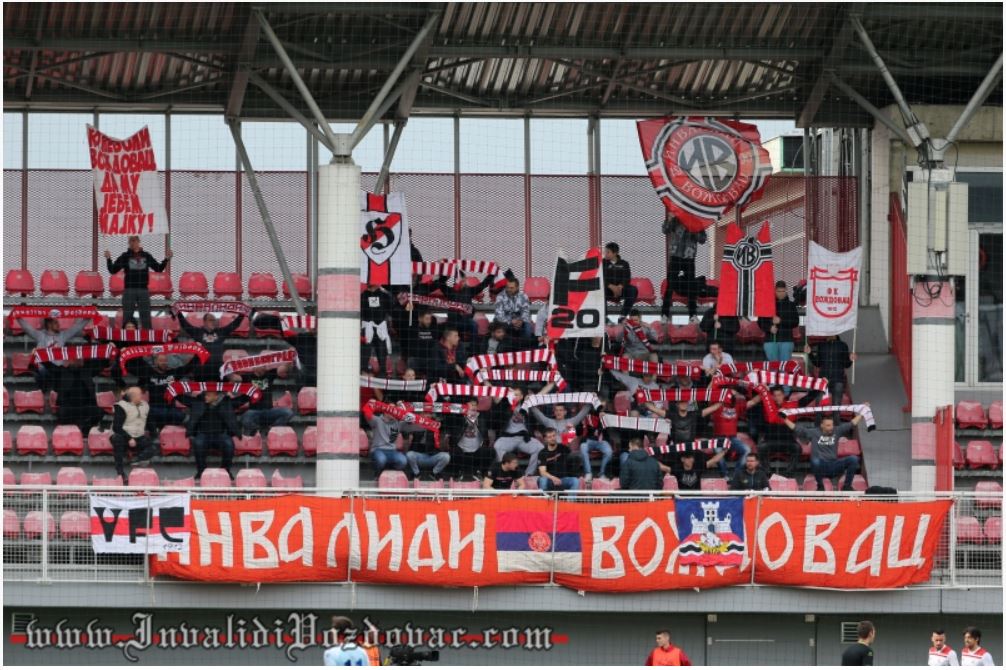
The Invalids

Still, like seemingly all teams, Vozdovac has an Ultras group with a little more love of violence and fascist imagery than I’m comfortable with. They call themselves Invalids (far less fierce or grim than “Heroes” or “Gravediggers”), but they still encourage a fight with the police and revel in sexist chants. They loathe the club owners, but the team owners completely accept their behavior, using the Ultra’s own language to describe fans on the official team page.*

So why stand alongside “The Invalids”?

I think we should be fans of Vozdovac because it offers a strong symbol of the kind of love for family I hope you grow into. Proud regardless of the trophies. Strong and precious as a dragon, but not blind to the problems we have. Above all, like your Great-Great Grandparents, like your Grandma, your Mother, and your Aunties around the world: lead with love and be willing to change.

Football in Serbia can be an ugly thing. If we choose to ignore it, it stays that way. If we amplify the love we have for our history, our heritage, our values, we can make sure that the team isn’t just for the Ultras. It’s for all of us.

All of us

*(I recognize you boys won’t get this until you are much older, but the performative analysis of the group posted on their own website is fascinating…and not nearly as positive as they seem to think it is…)

13. Proud Past. Strong Future

13. Proud Past. Strong Future

It struck me that I ought to explain a little bit about why we cheer for the teams we do. Well, in part, it’s because I thought we ought to, and I’m the one of us most capable of complex thought and logic. But also, each team has a special something that captures part of what I love about life, and part of what makes you who you are.

So periodically (like during international breaks, long summer holidays, or say, global pandemics that completely alter everything we understand about our lives and ourselves), I want to introduce you to the teams we are tied to.

First up, Rosenborg BallKlub of Trondheim, Norway. A team that captures your proud past and our family’s strong future.

Dear Boys,

Wherefore Rosenborg Ballklub?

This is our Norway team.

That is no small matter, especially since you are both half Norwegian. We’ll talk more about the other parts of your heritage but the biggest identity marker is undoubtedly the Norwegian part. After all, from the top of your blondish heads, to your fjord blue eyes, to your lefsa white skin, you look Norse.

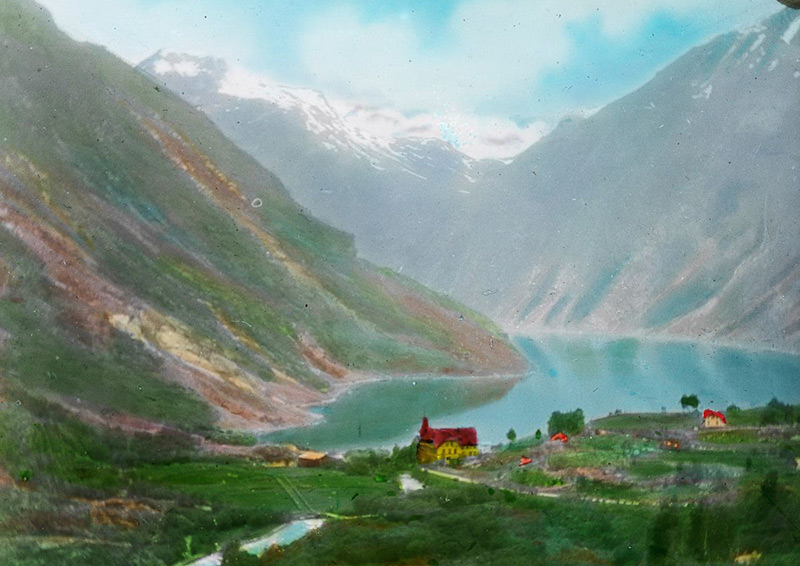
What it looked like when our ancestors left

But it goes beyond your looks. It’s in your names as well. Your mom’s maiden name, Gorder, is probably a lazy immigration agent’s interpretation of a great grandparent’s home: Gårder (farms). Owen Roe, your middle name (and mine, come to that) is a similarly lazy translations of “Røv”. The valley your great-great-great-grandparents left behind to come to Minnesota almost 170 years ago.

I find it easy to imagine your ancestors. Simple folks tired of the squeeze of crowded farm land and nosy neighbors, heading up to one of the biggest ports in the country and heading off too seek their fortunes in the new world.

Had they stopped before the boat. Had they abandoned the farm land for city living. We might have settled for decades and decades in the popular port of Trondheim. Even if they hadn’t–if they’d clung to the local land and familiar faces–it’d be hard to resist the lure of the team that defines Norwegian clubs today. And that’s where Rosenborg BK comes in.

Who is Rosenborg Ballklub?

For a team that can fairly be called the Real Madrid, the Manchester United, the New England Patriots of Norwegian soccer, Rosenborg doesn’t come from sterling silver stock.

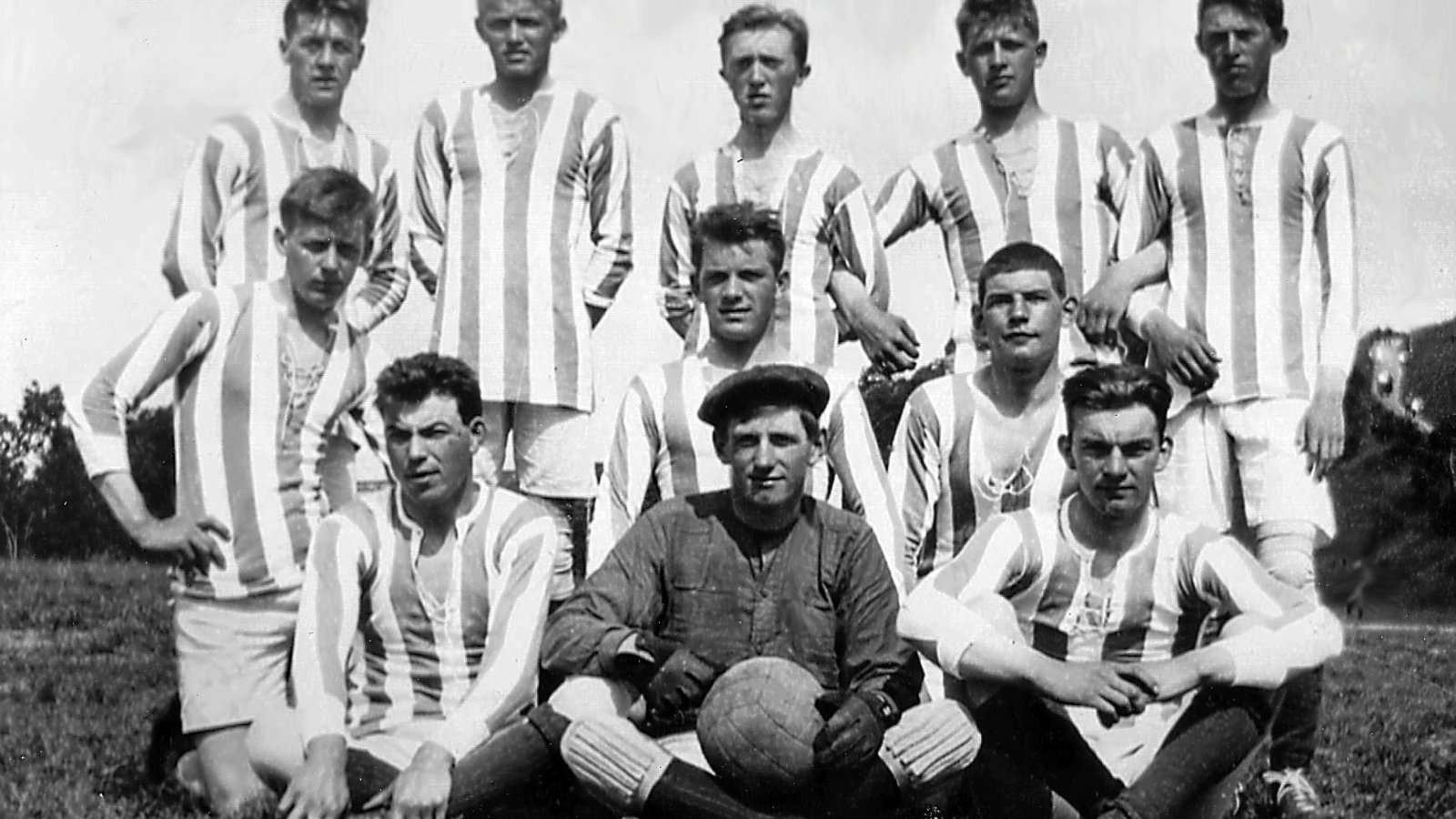
The Original Rosenborg (Nee Odd) 1917

At first they were just a few boys from a local suburb with some big dreams. How big? They named themselves “Odd” after the best team of the time. As hopeful and idealistic as when your uncles and I pretended to suit up for the Michigan Wolverines during driveway basketball.

The difference, most aspirational names remain just that: a hope, more alive in mind than in reality. Rosenborg outgrew Odd, growing more prestigious and popular in their own right. The team’s first trophy, the national cup in 1960 was won by beating Odd.

Since then the team has come to rule much of Norwegian soccer. Ruling the league table with a full decade of dominant title wins. Cruising with confidence into competition against the continent’s best teams. But in many ways, they still feel like that neighborhood gang of boys who dreamed of greatness from day 1.

How are we Rosenborg Ballklub?

To be clear, we are not Rosenborg because we are consistent champions. We are not. We do not rule. We do not dominate. We do not cruise with confidence.

Your Norwegian relatives had something else in mind, something very in keeping with Rosenborg. They had hopes more alive in their minds than in reality. They hoped to see their kids go beyond a little village. They wanted to do more than farm the same little acre of land. Not only did they succeed, they went far, far beyond it.

Historically inaccurate, but cute

One of their grandsons (your great-grand-father) not only went beyond the tiny village, he went around the world to Kolkatta and Beijing. One of their great-grand-daughters (your great-grand-mother) did much more than farm a little acre of land. She got a college degree. (She also got in trouble for sneaking back from a dance, but that’s another story.)

We are so far beyond the hopes and dreams of the Norwegian ancestors who left little farm villages, trod the streets of Trondheim and headed to the new world. We have reached greatness beyond what they might have thought or believed to be possible.

And still, we have those little glimmers of Norwegian neighborhood in our veins. It’s in the lutefisk we still make for Great-Grandpa Bud even though he isn’t here and no one else likes it. It’s in the Spritz Cookies that bring a tear to your Grandpa Mark’s eye when he makes them for you like his mother did for him, and her mother did before her.

Rosenborg BK is our Norwegian team because you are both a hope surpassed and a history alive. Our past is proud, our future is strong.

10. Can’t buy me Truth

10. Can’t buy me Truth

Dear Boys,

You both should know, despite your parents best intentions, you will probably spend more time in life than is good or healthy for you worrying about money.

Having it. Making it. Keeping it. Growing it. Spending it. Saving it.

In truth, money isn’t that important, except for all the ways that it is. And if that sounds maddening, congratulations, that’s money.

I don’t have much to tell you about money. I’m not an investment guru or a power trader. But this week, one thing about money seemed rather relevant.

Money makes things easier, but at the end of the day, it doesn’t stand a chance against the truth.

Sheikh Mansour enjoying the attention

The biggest story in soccer right now is happening in Manchester. Man City, a team backed by the vast wealth of a West Asian prince, has spent their way from an after thought to a global power. To do so, they lied about how much they made to cover for overspending.

It may not seem like much. Really rich guys pay more than advertised to other pretty rich guys isn’t exactly crime of the century stuff. The problem with Man City is that they are doubly flouting rules designed to give smaller teams, like those from Belgrade to Trondheim, a chance.

Spending more on one player than other teams do on their whole roster because you run a smart and profitable business, that’s tough, but grudgingly acceptable. Doing the same thing when you’re losing money just to keep up appearances and because your insanely wealthy owner can do things that local/fan community trusts can’t. That’s lousy.

At the same time, the United States is seriously mulling whether or not they want nine months of bitter campaigning between a pair of a 70 year old New York billionaires: Donald Trump and Mike Bloomberg.

Battle of the Billionaires

Bloomberg’s immense wealth has pushed him close to the lead in polls of democratic candidates. But this week, when he had his first chance to speak his truth about what he will do and why we should want it to happen, Mayor Mike could barely keep up with the most fundamental challenges.

Again, Bloomberg’s wealth is pervasive, his production of pithy retorts to the president is effective if unproductive. But when it comes to speaking the truth about who we are and what we need, “Mike Can’t Do It”.

As with Man City, if Bloomberg’s wealth was used to promote powerful and popular causes, then his rise would be concerning but acceptable. Using it to instead force himself into consideration just because he, like 99.99% of the world’s population, isn’t the current president, is maddening.

In short, money for both Man City and Mayor Bloomberg gives them opportunities others don’t have. For the rest of us, that’s frustrating. Using those opportunities to obfuscate and underwhelm: that’s unacceptable.

To be fair, you may wonder why I bring this up to you, with your parents in non-profits and your power nowhere near the Bloomberg’s and Cities of the world. Why bring this up with you?

Because of who you are You are American middle class, which makes you absurdly wealthy to most of the world. You are white men, which gives you extra privileges and power that you won’t even recognize most of the time. In the eyes of most you look much more like Man City and Mayor Mike than you like the underdog. So use your power thoughtfully, with truth and talent.