38. Savor Your Own Style

38. Savor Your Own Style

It struck me that I ought to explain a little bit about why we cheer for the teams we do. Well, in part, it’s because I thought we ought to, and I’m the one of us most capable of complex thought and logic. But also, each team has a special something that captures part of what I love about life, and part of what makes you who you are.

So periodically (like during international breaks, long summer holidays, or say, global pandemics that completely alter everything we understand about our lives and ourselves), I want to introduce you to the teams we are tied to.

Our ninth team to meet is a team that continues their race to redemption: Alebrijes de Oaxaca a team that takes pride in their style

Dear Boys,

Wherefore Oaxaca?

Far to our south, beyond the beginnings of Mexico, there’s the southern region of Oaxaca. It’s an area that has been settled for tens of thousands of years, long before there was a Mexico, long before there was soccer, long before there was even a Spanish or English language to give us those words.

As with Emelec, we owe our allegiance to Oaxaca less to what we know and more to who we know. Strangely, a large crew of immigrants from the southern coast have settled in the frigid north. I’ve worked with many, taught with more, and sincerely appreciated all that they bring to our community.

Who is Alebrijes de Oaxaca?

One of the youngest teams in our group, Oaxaca owes it’s existence to the struggles of another. Tecamachalco, just to the north of Oaxaca had earned promotion, but they had run out of funds. Worse, they couldn’t move up without a stadium to suit their needs.

That’s where the Oaxacan government and local businessmen stepped in. They brought the team south, financed a beautiful new field and led the team to rebrand as Alebrijes de Oaxaca. When I say rebrand, I mean rebrand. Gone are the simple colors, and the basic kits in are the bright local colors and the vivid local uniforms.

They haven’t been around for long, but with one title already in the bag, they are ready and eager to break the longstanding northern vice grip on Mexican soccer.

How are we Oaxaca?

I will make no pretenses to be stylish. I’ve been accused by more than a few students of dressing like I wanna be a banker. I know that I’ll never be mistaken for a fashion plate or a model, but the truth is, I’m fine with that. I have my style, and frankly I like it.

That’s all that matters really. Don’t worry what your style should be, enjoy what your style is.

That’s what Alebrijes de Oaxaca offers that again and again. The mascot, the Alebrijes, is a vivid embodiment of local folklore. And a name chosen by the fans. The kits are a riotous combination of colors and patterns that match the local artifacts and fervor.

Oaxaca is boldly, proudly, absolutely true to themselves. The name, the kit, the stadium, all of them are part of the local style and scene. You don’t have to adopt their style, frankly I think they’d hate that. But please, be like Oaxaca, enjoy your style, whatever it may be.

37. Just a Rest Stop on the Way Somewhere Better

37. Just a Rest Stop on the Way Somewhere Better

Dear Boys,

While I often wax lyrical about sports as a means of understanding the world, it is also a business. and like most businesses, the employees have more on their minds than just the job in front of them.

For many people, the thing on their mind is the next career move. Going from cashier to manager. Going from the cubicle to the c-suite. From drudgery to your own business.

Sports is much the same. Sure you have to perform in the moment. But it’s impossible to ignore the fact that competitive people (like athletes) don’t just strive to be the best on the day. They strive to be the best they can be.

You rarely become the best you can be by standing still. So athletes are often looking out for their next career move. From the bench to the starting lineup, from starting to starring, from starring to selecting championship rings.

Few players dream of anything less than excellence. And while we have our favorite teams, the truth is our dream of local glory is far smaller than most players, and that is fine. Don’t begrudge players leaving our teams behind, appreciate what they brought while they were here.

Robin flew North (Leeds United)

This comes to mind as I see the slow motion unraveling of SC Freiburg. In the last weeks several stellar contributors have bade farewell to Freiburg im Breisgau. Schwolow, Waldschmit, and Koch May never be marquee names, but each one is a little closer to that honor after moving up to a bigger or more well known side.

Or take Emmanuel Bébelo Reynoso, the latest addition to Minnesota United. The young playmaker is highly touted and, based on his first games, justifiably so. But while it was a coup to bring him to St Paul, it is a fool who expects him to stay forever.

Enjoy Reynoso while he’s here
(MLS)

You’re chanting Minnesota Black & Blue as babies. He heard it for the first time…well never because we’re still not going to games. He’s a great player, but I doubt his boyhood dream was to go to freezing cold Minnesota and thrill tens of thousands. An Argentine starlet, he had the thrill of playing for Boca Juniors. I’d wager he’d love to ply his trade in Europe, or to suit up for the national team. Minnesota is great, but great players dream bigger (Note: living in Minnesota you should get used to that, just ask your relatives about David Ortiz, or Johan Santana, or Kevin Love or Kevin Garnett, or Randy Moss, or Maya Moore, or etc, etc, etc)

To some fans, the departures of great players may feel painful. Players who have won the loyalty of fans ought not to go, the fans think. We’ve loved them, why don’t they respect that and stick around?

They don’t stay because, while this is a hallowed ground for us, it’s just a line on the resume for them. What is a life time’s love of ours, is simply the current “To Do” for them.

That may sound sad, but it isn’t. I come to this not as a lifelong big city sports fan but as a kid who’s first sports loves were the Great Falls Dodgers baseball team. If most players dream bigger than a Minnesota, EVERYBODY dreams bigger than Great Falls, Montana. Nobody grows up dreaming of playing Rookie League ball on a patchy field in between dizzy bat contests.

Pedro back Home (Imgur.com)

That doesn’t offend me. I love Great Falls, those players don’t have to. It’s fun to support them for the time they’re there, and hope we helped make them better long term. I’m glad I got to watch Hall of Fame pitcher Pedro Martinez when he was a raw teenager. I’m even more glad I got to explain his brilliance to a bunch of Nigerian students in Ghana as he lifted the first World Series Trophy for over 80 years in Boston. He couldn’t have done that if he just wanted to stay put in Great Falls for the rest of his days. I’m glad he dreamed bigger than that. (If I’m sad about anything it’s that, at the end of this month, teams will stop sending players to Great Falls.)

Pedro’s Dreams were bigger than Great Falls, and it’s been great to see them come true. I hope Freiburg’s departing stars succeed, I really do. I hope Bébelo enjoys being here for now. I have no qualms about loving a place that’s a rest stop for most players on their way to something better, especially if we play a small part getting them where they want to go.

36. MVPs: Most Valuable Partnerships

36. MVPs: Most Valuable Partnerships

Dear Boys,

Sports and all competition has a tendency to inflate the individual . Sure “teams may win championships”, but tv highlights and online fan videos and in game ads tend to emphasize just a few star players.

The current raging debate (Clutchpoints.com)

That comes across even more in American sports than elsewhere because our culture is so much more individualistic than others around the world. We hold tightly to the American dream, the belief that any one can succeed by sheer dint of hard work and gumption. We debate Jordan v. LeBron, or Brady v. Montana, or Ruth v. Mays because even though everyone of them played a team sport, their individual persona greatly outweighs any team accomplishment they might have.

It’s one of the reasons some people say “soccer won’t sell” in the US. We’re still waiting on a bonafide American star. The women have had Mia Hamm and Hope Solo and their game thrives, the men…well…not yet. (See Pulisic, Christian).

But this isn’t a post about what Soccer should do to be relevant, or what society should do to embrace soccer. This my advice to you, and my advice is simply this: You can absolutely do things alone, but helping someone else succeed often helps you too.

This is the dirty secret behind our idol worship in American sports. Jordan’s competitiveness, Ruth’s intimidation, LeBron’s social conscious, Brady’s ability to collaborate with others, Mays’ electric defense didn’t just win games or awards or endorsements. They also boosted their teammates. So please, don’t fixate on what you can do to stand out, but on how you can do your best and elevate everyone along side you.

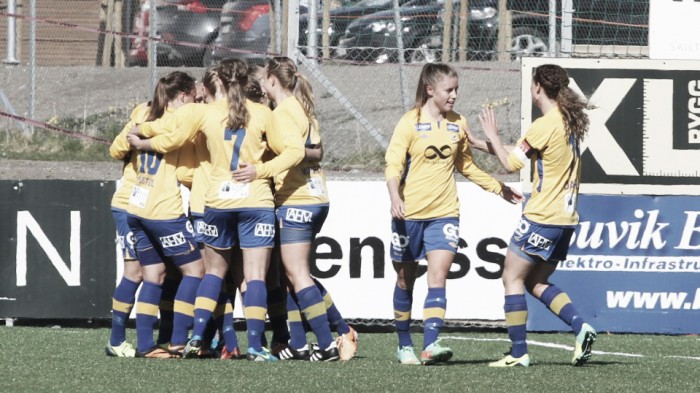
Rather than trot out my favorite tandems of yesteryear, I’ll just direct you to the best one-two punch we can see week-in and week-out: Marit Clausen and Julie Blakstad. Clausen and Blakstad have been integral to taking an unbeaten run through more than half the season. That’s not an accident. It comes from talent, from strength, and most of all, from supporting others.

It’s about more than a star, or even a pair of stars (Nearadio.no)

Perhaps Marit Clausen could run riot over other sides without the service Julie can provide. Maybe Julie Blakstad could grow into a star-attraction striker if Marit Clausen was plying her trade elsewhere. Or maybe, each uses their gifts to build up the others. (And in so doing, build the confidence and strengths of the rest of the team, and thus support the unbeaten run.)

At a time where we can be increasingly convinced that one person “alone can fix it”, it’s good to remember that a single individual can indeed be a hero. But more likely than not, they can help others become heroic in their own way. You may well do something incredible in your life times, but you were able to do so because a lot of other people helped you along the way. That’s what Clausen and Blakstad remind us of every week, and one of the many reasons I admire them so much.

35. Black Lives Matter

35. Black Lives Matter

I mean, I could write more, [and I will, it is my way to process] but really that’s it. That’s the thing I want you to learn this week.

Dear Boys,

Black Lives Matter.

I had other things to write about today, but again it seems insignificant. Like professional athletes across the country from Antekokounmpo to Zusi, sports are just a game, this is about life. It’s about serious things that at 2 years old and 9 months old you may not fathom. But you should.

Earlier this week, Jacob Blake was returning to his car. He was looking at his sons in the backseat. Boys not much older than you. He saw them, and he was shot seven times in the back. Jacob Blake’s life matters.

Blake has survived, he’ll see with his boys again, but I don’t know if I’ll ever buckle you in again without feeling the privilege that comes with just being white. Or without recognizing the privilege you have in being white. The trauma those boys witnessed chills my blood. Black fathers’ and sons’ lives matter.

They matter here.

Two nights ago, officers surrounded a man in downtown Minneapolis. A few miles from us. A few blocks from where I used to work. Right outside a Dairy Queen I would take the cross-country team too after races. The man was a suspect in a homicide, and rather than face arrest, he shot himself.

He did so next to five teens. Teens like my students who would congregate in the same spot. Teens like the ones who love every post I share of you two. Teens who were laughing, flirting, checking their reflection in the shiny marble. Teens who now have that trauma over their heads every day. Their lives matter.

We say that black lives matter not, as some pretend, because we think other lives don’t (looking at you fascist Vozdovac supporters). Not because we are being trendy or “woke”. We say it because it is true, and it bears repeating.

Mason Toye of MNUFC (Pioneer Press)

We repeat today when victims of violence suffer.

We repeat it tomorrow when the news-cycle moves on.

We repeat it in a month when the mourning stretches on for the community while others wonder why they’re so emotional.

We repeat it in a year when the bystanders confront their trauma without supports that taxpayers decline to fund.

We repeat it in a decade when those involved and those associated and everyone who has seen and feared and worried about injustice have faced it again and again and again while an ignorant and ambivalent country glides by.

Black Lives Matter.

34. Never alone

34. Never alone

It struck me that I ought to explain a little bit about why we cheer for the teams we do. Well, in part, it’s because I thought we ought to, and I’m the one of us most capable of complex thought and logic. But also, each team has a special something that captures part of what I love about life, and part of what makes you who you are.

So periodically (like during international breaks, long summer holidays, or say, global pandemics that completely alter everything we understand about our lives and ourselves), I want to introduce you to the teams we are tied to.

Our eighth team to meet is a team that kicks off their new season this weekend: Grenoble Foot 38 a team that shows us how loyalty pays off.

Dear Boys,

Wherefore Grenoble Foot 38?

In the French Alps, there’s a mountain town with a long history of sport. Grenoble has hosted the Winter Olympics, a strong rugby side, and, for over a hundred years a football team.

We aren’t French. Your grandmother wanted to be a French teacher. Your uncles and I still occasionally drop into French when we want to speak without others knowing what we’re saying. But we have as much claim to French culture or heritage as “French Fried Twinkies”.

But Grenoble is special. It’s where I got my first taste of independent living, and my first appreciation of how to do it well.

Who is Grenoble Foot 38?

The Grenoble team we see now is not the Grenoble team of 1892, or 1938, or even 2000 when I knew it.

For as beautiful as football is, for as magical and human as it can be, it is also a business. And though Grenoble is big for its region, it’s not exactly a focal point in French life, so making money on football in Grenoble wasn’t easy. That’s why teams changed, merged, folded, reformed and survived throughout the 20th Century.

Grenoble’s Stade Des Alpes

That is, until a company called “Index Holdings” arrived from Japan to buy the club and build it into a force. In four years, they moved the team up to the top tier of French football, only to crash back down soon after.

Why did they crash? Simple. They didn’t have the money to pay the players or rent the stadium. “Index Holdings” claimed to make a net profit of 204 Million Yen. In reality, they had a net loss of 605 Million yen. 800 Million off. An 800 million yen lie. I know you’re young, so let’s just put it like this. Their mistake would be like me claiming to have a box of Bunny Graham crackers for your snack, only instead of having a box of Bunny Grahams I had 3 pieces of paper that said “box of Bunny Grahams” on them.

Naturally, without that money, Grenoble couldn’t keep playing at the top league, or the next league, instead they plummeted to the fifth level of French football. Despite a sparkly stadium and high expectations, the team was back to basics. It has taken them nine years to be stable and steady in the second division, back where they were when I first met them.

How are we Grenoble Foot 38?

Like I said, Grenoble was where I first had to live independently. Why? Well, at 17 I went on a study abroad trip to France with my high school friends. After a few weeks of touring, we got off a bus in the village of Annecy and met our host families. Except for me. Mine wasn’t there. Mine wasn’t even in Annecy. I was driven to a meet up somewhere in the country side, put into another car and driven off to the distant city of Grenoble. I was 100 kilometres from my classmates, my teachers, and anyone who knew me.

I was also a massive disappointment to my host family. I spoke enough French to get by, but I wasn’t cool, or cosmopolitan, or full of American bravado. I was a nerdy, skinny little kid from rural Montana, and my super-cool host sister Natalie was stuck with me for a week. The saving grace was that Natalie was dating a guy at the local football academy. We would lie around the flat watching MTV in the morning, eat macaroni and a Cornetto for lunch, then go to the academy to meet her boyfriend, Sebastian, and all of his mates (Mehdi and Mohamadou appear in my journal at the time) before going shopping or swimming or just to hang out in the afternoon.

By the third day the guys had decided I was no threat. I was nice enough, trying my best, and definitely neither strong enough nor handsome enough to steal away a girlfriend. I had decided that they were the kinds of friends I would like to have. Reliable, supportive, and fierce.

The School/System my new friends used

Two nights before I left, we went to a house party in a small suburb. We didn’t stay there long before some local French guys began to harangue our assembled gathering. Our crew was, to a person, an immigrant, or the child of an immigrant. West African, North African, Lebanese, Italian, Spanish, Chinese, Romanian, and me, a bewildered American. The French guys wanted to fight, and this crew of friends stood shoulder to shoulder on picturesque cobblestone streets, jostling and jawing at each other.

I never threw a punch. I don’t think any one did. But when it was over and we walked back to the house at 2 AM I thought: you are never alone in the world if you have people you can rely on.

That’s what Grenoble Foot means to me. When I was alone, young men who trained to join the team, made sure I had someone to rely on. When they were targeted, they made sure everyone in the group had someone else to rely on, and I hope I was part of that.

Grenoble Foot 38 wasn’t alone when they found out their owners didn’t have two yen to rub together, let alone 200 million. They had their community, their staff, their players, and their fans. I’m there for them, because they were there for me.

33. Setting Your Goals

33. Setting Your Goals

Dear Boys,

I write a lot about sports. This despite the fact that I’m about as athletically gifted as a stalk of wheat. I’ve never been athletic. I was frequently the last one picked in just about any sport you can name. Even “Red Rover” didn’t bother calling me over.

Still, I love the thrill of competition, and when I found distance running, I found a sport that I could excel at and enjoy. I mentioned this briefly to a colleague during a pre-school-year training. 5 minutes later, I was officially a school’s track and cross country coach.

My students aren’t in this picture
They’d be behind the farthest back
(Runners Space)

While my new side-gig was absolutely accidental, it was also one of the most enjoyable parts of my work day. For 60+ minutes each day I could run, share the fun of running with students, and learn about them beyond the context of the classroom.

The biggest thing I learned was that my students always wanted to win. Their goals were to win. To be the best.

Those goals were stupid.

Wanting to be the best isn’t stupid, but setting your goal as something that you don’t control is absolutely ridiculous. So I worked with students, athletes, and some day I’ll work with you too on one simple idea. Keep your goals within your control.

Romain “The Machine” Metanire
(Particle News)

This all came to mind watching Minnesota United fall to defeat in the MLS is Back tournament. Again and again you can hear fans or coaches saying that the team has to set a goal around winning, winning, winning. But they can’t control winning. They can’t control if one of their best defenders (Romain Metanire) gets an injury. Or if they can only replace him with an out of position midfielder (Hasani Dotson). Or if their opponent fields a former Portugese international who happens to have one of his best games in America (Nani).

Winning isn’t in the Loons’ control. Trophies aren’t in their control. Nani isn’t in their control…I mean…unless they hypnotize him. (Note to self: learn hypnotism, then offer services to MNUFC, if turned down, hypnotize MNUFC into offering job.)

But the team can control how they position and react on set pieces. They can control how they track and mark in defense to start counter-attacks. They can control how they act on scouting information that helps you identify dynamic talents like Metanire and Dotson.

As I like distance running, I could set a goal to win the Twin Cities Marathon. That’s an admirable goal, but it also isn’t in my control. I can control how I run sure, but I can’t control how the other thousands of runners train, or run, or hydrate, or don’t. I might attain the goal of first place (if I had start training about 30 years ago), but I don’t really have control over it.

Marathon Finish
(Star Tribune)

But when I set my goal of maintaining steady 8 minute splits, that’s something that would mark improvement for me. It would put me in the top 10% of runners, and it was something that I could control, regardless of the other runners around me. (Humble Brag: I actually kept them closer to 7:30)

In the same way the Loons can control aspects of the game rather than the final outcome, I could control my pace times, and my cross country team could control saving their energy for final kicks.

Set your goals around what you can control and good things happen. Metanire and Dotson and Jan Gregus led a team that few talked about before the season to a final four finish. I am in the 90th percentile for marathoners. My team of runners loved the ends of races and were proud when they broke the tape.

So whatever you boys choose to do (be it sports or 100% not sports), set your goal around things you can control. You’ll be proud of what you do, whether there’s a trophy in the end or not.

32. In a Mad World, only the Mad are Sane

32. In a Mad World, only the Mad are Sane

I’m trying to write you these notes to build an honest, Frank, hopefully funny reflection of the world as we see it now. To that end, I want to be honest with you about something.

I’ve fought depression most of the last five years. Sometimes I’ve won. Sometimes I’ve gotten my butt kicked. And on those days when my butt is thoroughly and totally kicked, I’ve felt scared, adrift, and frankly furious. All the more so because students I teach could see my struggle and sometimes responded, not with compassion, but with jokes, jeers, or dismissals.

Dear Boys,

Rationally, they’re kids and kids don’t know what to do when they see adults struggle. But when you’re getting your butt kicked by depression, you aren’t rational. So I didn’t accept it. I panicked, I beat myself up, and I generally was one of the worst versions of myself.

You are kids too. I’m frankly terrified of being the worst version of myself just because you are kids too.

I tell you this not to scare you, or to justify my behavior, but because being honest about your health, including your mental health, is critical to creating a healthy environment.

Too often, we see “you’re crazy” as an insult. We’re not right. We’re wrong. We’re dangerous. We should be ashamed of ourselves. But truthfully, owning your struggles, your instabilities, your pain is the most healthy way to handle it.

Strangely, this came to mind while gearing up for the coming Scottish Premiership campaign. Newly assigned analyst Stephen Craigan joked “football keeps us sane, until the whistle blows for kickoff”.

Perhaps that’s a well known phrase, but it was my first time hearing it. Whomever said it first, I truly like it. Both for what it says and what it implies.

Superficially, it’s a cute joke. In trying times, Soccer can be a welcome distraction. As soon as it starts it’s trying in its own way.

But at this time, in the context of global upheaval, uncertainty, panic, and isolation, it’s uncomfortably true. Soccer may have been a respite from disease, financial ruin, and hard racial truths. But when you watch all those same things are still there. Players risk their health and the health of loved ones to play. Many players and clubs will be in dire fiscal straights without tickets or concessions. And anti-black epithets and symbols still dot stadia, while systemic avoidance of black managers perpetuates the unequal opportunities for leadership.

What might, at first glance, seem like a waste of time is just another means to confront the same problems. The comforting thought that we’re safe in the little bubble of sport is popped as easily as a soap bubble by a toddler in a tantrum.

The world is mad, and soccer is as mad as everything else. The only reasonable thing to be is mad, so kudos to everyone struggling.

That’s good. It’s time to face facts and address what we are and what we need. It’s time to be honest about how hard it is day to day, and how hard it is for both average joes/janes/jos and elite athletes. One need not hide their difficulties in this difficult world. Together we can see them and we can support each other through them.

29. Context is King

29. Context is King

Clearly Rosenborg Ballklub’s women’s team is the greatest team in the history of soccer. They’ve never lost a match.

Also, history is brewing near Dingwall. Ross County’s next transfer will break the club’s record for summer transfer sessions. The club is poised to join the top ten spenders in Scottish soccer.

Oh, and it’s terrible to ask about black people being shot by the police because more white people are victims of police shootings. How dare you make this about race.

Those are three very stupid hot takes. But they’re all stupid for the same reason.

Context is king.

Dear Boys,


You may hear people saying that you can’t argue with facts. Which is true. The encyclopedia has never changed itself while I yell at it.

But while you can’t argue with facts you can and should argue with people who use facts out of context. Facts out of context aren’t sacrosanct, their tools of persuasion: tools that can be wielded subtly or with all the careful grace of a hippo in a tutu.

You don’t have to let them use those tools any more than you have to let your dentist use a compound mitre saw to floss your teeth.

Each of those hot takes is based on facts, each of which I italicized. Those facts superficially support my claim, but include context and both the fact and my argument fall apart.

The classic look
(Vavel.com)

Yes, the Rosenborg Kvinner are undefeated under that name. But the sample size is ludicrously small. They’ve only played two games as Rosenborg, and under the club’s old mantle (Trondheims Ørn) they certainly lost their share. They’ve had a great two games with a new names, that doesn’t make them the greatest team ever.

Yes, the next signing by Ross County will break records and put them into the top ten spenders in Scotland. But you have to know both the team’s history and the state of Scottish soccer to see how irrelevant that is.

Really, isn’t everything a record
(From The Scotsman)

Since joining the top league Ross County have never paid for a transfer, so even one cent would break a record. Moreover, with only twenty teams in the top league, being in the top ten could mean you spend like crazed Glaswegians (Rangers/Celtic) or that you are right on average for the top league.

So a transfer fee would be historic, it also wouldn’t make a lot of difference. It would be as historic as the punctuation I put at the end of this specific sentence¡

Which brings us to the last out of context fact which both distorts sample size and skews away from cultural/historical context.

Yes, over 2,000 white people have been killed by police and yes that is two times more than other racial groups. Also, there are four times more white people in the US than black ones. So, black (and Hispanic) people are killed more than twice as often as white folks. Totals are facts, so are percentages and rates, using one while ignoring the context of others is stupid and biased.

That bias, that damned systemic racism, is the other part. Throughout the country’s history, we’ve undervalued people of color to over-inflate the importance of white people. Sometimes it’s as crass as proclaiming “reverse racism” over any racial discussion. Sometimes it’s as subtle as celebrating the white teacher before acknowledging the brown-skinned students. This time it’s pretty blatant, stupid, and divorced from the history of oppression that underpins the United States.

I mean…in a room with Andrew Jackson and Woodrow Wilson…maybe?

However you look at it, facts are indisputable. But the conclusions we draw from them are, always and forever, debatable. Much as we cheer Julie Blakstad and company, much as we hope for Steven Ferguson’s side, we have to know that our arguments are less about the facts and more about our feelings. Just as we know the dismissal of uncomfortable claims of racism is less about the facts, and more about our feeling uncomfortable with the truth.

Silly sports opinions can carry this natural bias as part of their very nature. We’re fans, not fact machines. But the same issues that cloud judgments about teams or players apply to other arguments. So keep asking questions, wonder why people say what they do, and remember: context is king.

27. Looking for Leaders

27. Looking for Leaders

Dear Boys,

You’re too young for it now, but you will in time become obsessed with Star Wars. So it has been for me, your mother, your uncles, just about everybody at one time or another. While I don’t love it like I used to, I will always remember one key line.

(Magic Quote, from Star Wars IV: A New Hope by George Lucas)

That scene pokes fun at those who doubt and deride others without taking up the mantle of leadership themselves. But it applies to lots of us, every day, in different ways. In these uncertain times, we look to leaders for guidance. But how do we know leaders from fools?

Leadership without accountability is just authority.

I think you can see this illustrated in two of our favorite clubs.

First, there’s SC Freiburg: the Baden-Wuttermburg based workhorses of Germany. With little capital and only a light dusting of history, they have become genuine contenders to represent the best that German football has to offer. And at the center of that is the coach, Christian Streich.

Streich in stride (Daily Mail)

Streich doesn’t cut a striking figure or command attention. He leads through honesty, and introspection. He thinks big thoughts and asks big questions, not just about X’s and O’s but of how he and soccer contribute to modern challenges, and what they can do to address them.

Streich could, like other coaches, fixate on the next game and shut out everything else. But he doesn’t. He invites dialogue, not obedience. He questions his place, and the place of soccer as part of our world: not life/death, not all/nothing, just part of the whole. Being accountable as a coach, and a person breeds the trust that builds a team and begets leadership. He models accountability beyond the sideline, and in life itself.

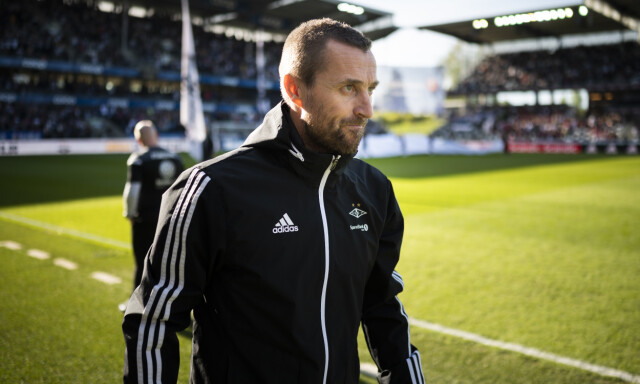
Then, there’s Eirik Horneland. He who was given the keys to the kingdom at Rosenborg Ballklub and promptly dropped them down the garbage disposal.

Horneland heads home (Dagblad.com)

I mock, but truthfully, Horneland is the other side of accountability. Things have not gone as Rosenborg wants or expects. Horneland could have done many things. He could have deflected. He could have huffed, puffed, and thrown players, management, or officials under the proverbial bus. He could have, but he didn’t.

“er det naturlig at jeg som øverste sportslig ansvarlig i RBK må ta ansvaret for manglende sportslig fremgang,”

It is natural that I , as the top sports director at RBK, must take responsibility for the lack of team progress

Eirick Horneland

That is everything. Horneland was held responsible, and he held himself responsible. He was held accountable, and he accepted it.

If the world was perfect, you boys would always be Streichs. You’d work hard, do well, and, by all accounts, deserve to be rewarded. But that is not the world. Sometimes, you will work hard, struggle, and, by all accounts, deserve to lose what you work for. You will have times when you are Hornelands. You may be full of hope, ideals, and exciting opportunities. But it may all wind up in that garbage disposal.

(Clay Bennett, Chattanooga Times Free Press)

I say this because, right now, America has a leader without accountability. A leader who sees everything he does as right, and every critique of him as cruel. A leader who insists on dividing our community as we cry out for unity. In short, we have a fool. A man who likes the authority of his office, and eschews the accountability.

So, absent that figure in our public consciousness, I bring up these two coaches, both of whom lead, both are held accountable, and both respect that they don’t just have a position of authority, they have a position of leadership.

25. Amazing Grace

25. Amazing Grace

Dear Boys,

My friend Aly once broke it down for me like this: “you’re a cis-hetero, upper middle class, educated white guy. If life were a video game, you’d be playing it on easy mode.”

That can be a little hard to hear but it’s true for me, and it may turn out to be true for you too. To be fair, at your age it’s not clear if your genders are more fluid, or your orientations are different, or where your education and careers will take you. But make no mistake, the comfort and prominence of being white has made and will make your life easier

And yet, if you’re anything like me, you will run into people who invite you to “take it easy” or cut others who look like us “some slack”.

Right now there’s a lot to do. As the protests fade into the background it’s easier and easier to let go of lofty goals and abandon your expectations. Easier still to ridicule and disparage people who take a break.

Even with all the pressure, stress, and big fights to fight, you shouldn’t take it easy. Even when someone who looks like you, sounds like you and pleads that they meant well, or were raised at a different time, and so would appreciate a little slack, be wary before you agree.

Life is easy enough already and white guys have more than our share of slack as it is.

Don’t take it easy, don’t cut people a ton of slack, but do extend yourself and others a little grace.

To some, these may sound like distinctions without a difference. Ease, slack, grace. All speak to comfort and a break from struggle. So why applaud one and avoid the others?

Taking it easy excuses yourself from the work that must be done. Cutting slack lowers expectations for some while others keep striving. Extending grace asks us to appreciate the humanity in others while holding firm expectations for what will be done and how it will be done.

(From Stream)

As a teacher, I often need to do this for students. If a kid doesn’t do an assignment, we could take it easy and cancel the assignment, we could cut some slack and grade it with the notion that this is the best they could do, or we could extend grace, offer support and sympathy, then set a plan for completing the full assignment.

C’mon Man!! (from Esquire)

There is another alternative of course: be a jerk and tell them they’re wrong. It’s a popular choice for some. It comes along with an inflated sense of righteousness and a diminished view of other people. It can feel good to tell people who fall short just how far they are from adequate. But that’s as far away from grace as you can get.

Or consider sports, players are coming back to training, but few if any are as crisp and sharp as they might have been otherwise. Now is not the time to berate or demean them as failures, nor is it the time to pat them on the head and provide a participation trophy.

Instead we can extend some grace. So if/when they miss an open netter (Rosenborg) , flub a great opportunity to cross (Freiburg), or get caught ball watching as an opponent slices up the defense (Vozdovac), we neither rage nor shrug. We remember these are people. They have families at risk for a rampant disease and their job puts them at extra risk. The world is often on fire and friends, loved ones, or neighbors, might be in harm’s way. By extending a little grace we keep things in perspective, appreciate where they are now and stay focused on where we hope to go.

Extending grace

I live my life on easy mode. I have the luxury and privilege of doing so. For a long time I’ve bemoaned every failure and loathed each short coming. While others encourage me to take it easy or cut myself some slack, I would respectfully say no. I have a lot to do. I can and should do it as well as possible. But I can extend grace and recognize that I am here now, I have done my best, and I can do better.

I’m not saying I’ve done it right, or that I’ve done it at all. But with a little grace I know I’ve done my best today, and I’ll strive to do better tomorrow.