
This has been a bloody awful year.
You kids are great. My life is great. But all around are signs that bloodshed, violence, anger, and alienation from our fellow men is increasing.

Dear Boys,
The war in Ukraine (against Russia and the man Alex has dubbed “Vladmir Poo-Poo-Putin”) has reached a stage of bloody attrition, with mounting death tolls for Russia and mounting apathy for allies of the invaded Ukranians.
An invasion of Israel to abduct civilians (including children like yourselves) has led a nation founded as a refuge to relentlessly attack civilians (including children like yourselves) in Gaza who are being used as human shields by terorrists.
There is a brutal genocide happening in Sudan, a rise in political extremism throughout Europe and Latin America, and rumblings of other invasions by other powers.
And against this backdrop, so many people have become absolutists in the inviobility of their positions. They are certain that they are right and all others are wrong. There is no room for nuance. No space for moderation. No tolerance for complexity. Any public questions or doubts are traitorous.Any silence in response to an attack is just passive warmongering.
This absolutism is maddeningly consistent for both sides of every argument. The loudest voices don’t agree on what is happening or what should be done, but they do agree that anyone who doesn’t support their point of view is awful.
This bizarre discord in our world appears everywhere. I even see it reiterated on the soccer pitch. In this case, in the presence of Roundglass Punjab.
Punjab is a beautiful corner of India. I lived and taught just to the east of it, and I count the trips I took into the state (including Chandigargh and Amritsar) to be some of the highlights of my time spent on the subcontinent.
Punjab has long stood apart from the rest of the country. The language (Punjabi) is not the same as the dominant national language (Hindi). The economy is not the same as the increasingly modernized economy (agriculture v. information processing). Most importantly of all, the religions are different.
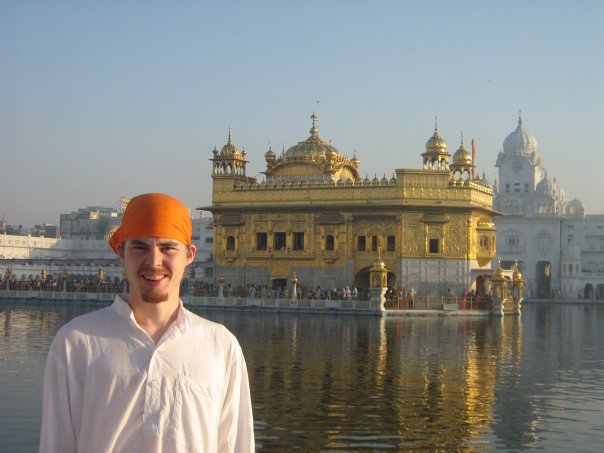
(the history of its building, destruction, and rebuilding, is directly related to this essay)
In Punjab, the primary faith is Sikhism, a faith of tolerance and peace in the spirit of founder Guru Nanak. Throughout most of the rest of India, the primary faith is Hinduism, a faith of tolerance and peace that has marked the world for about 4,000 years. Despite their shared values, there has been a long history of dispute and dissent between those who want to carve out a part of Punjab to become a Sikh nation (Khalistan) and a group that does not. These disputes led to violent attacks, terrorism and assassination back in the 1980s but largely eased by the time I was living there (my work visas were approved by the government of Sikh Prime Minister Manmohan Singh).
However, with the rise of Narendra Modi (Singh’s successor) and his political view that considers Hinduism and India to be one in the same…things get blurry. Advocates for Sikhism get some dubious looks. And doubly so if they happen to advocate for Punjab to separate from India and become its own nation.
So how do you handle this? The long history of rebellion and violence is scary…so should you attack and destroy the thing that scares you? Should you demonize and eliminate the dissent that could lead to danger?
Obviously, I would answer no. Unfortunately (if predictably in 2023), it looks like Modi’s government is answering yes.
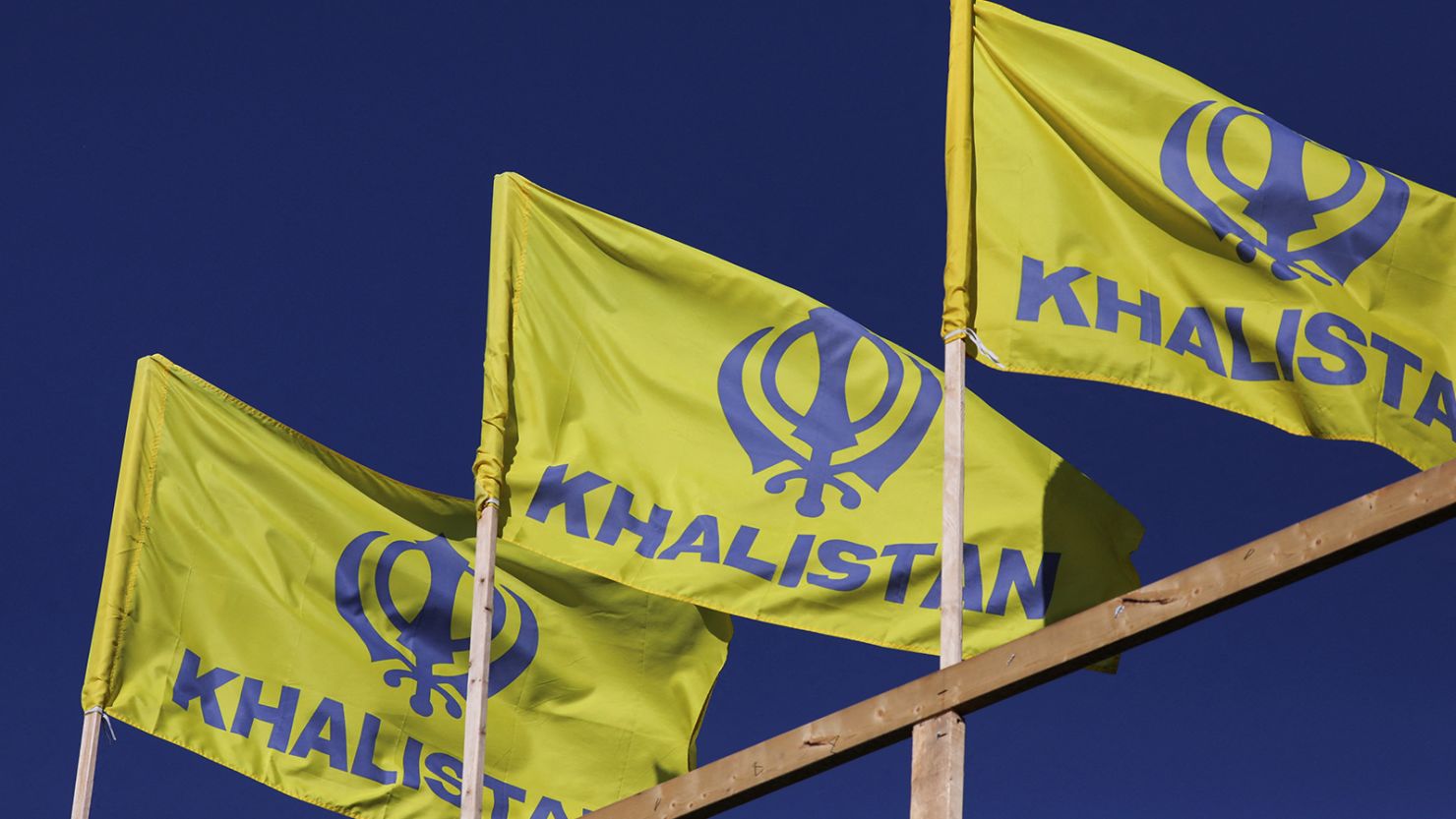
Dangers are real. Historical pain and conflict are real too. The fear of unrest, further violence, and death is undoubtedly a real feeling. I have no problem admitting that there are real things to worry about, and that worry itself is real too.
But unity is also real. Teamwork is real too. The human ability to grow and understand and collaborate is really, really real.
After all, right now, in the same city where Narendra Modi sits and stews and supervises those so afraid that they lash out in murderous rage across an ocean (I’m not saying he’s involved directly…relax Modi-stans), there’s a team playing. A team coached by a Greek, captained by a Slovenian, led in attack by a Frenchman and a Spaniard, and with a first choice defense of Matharatis, Keralans, and Nepalis. This team’s home field, under renovation in Punjab, is named for the Sikh Guru, and its instagram is chock-a-block with videos of the team’s outreach to rural villages in the state. In each one, you can see young Punjabi kids learning the game and laughing with each other.
Punjab FC may play in New Delhi (for now), but they clearly care about their community, in the same way Sikh separatists do. It seems highly likely that there are Sikh separatists who cheer the Shers every match day, and may mix discussion of their political goals with conversations about Juan Mera’s dip in production.

Since soccer clubs bind up a community and communities often have political goals (see Barcelona, Rangers/Celtic, and even Minnesota United), this could be worrying. If you look at the world with fear: fear of unrest, upheaval, unified opposition and dangerous dissent…you can see Roundglass Punjab as a revolutionary organization in the making.
But if you look at the world with appreciation and optimism, a respect for free will, and a connection between all people regardless of their politics…you can see Roundglass Punjab as revolutionary organization in the making…one that can make the whole nation better.
There are Sikh separatists who are dangerous, and there are Sikh separatists who are not. There are Modi-stans who let their fear drive them to crime, and there are those who do not. There are Palestinans and Israelis, Ukranians and Russians, Sudanese, Korean, Venezuelan, Chinese, Taiwanese, and Hungarian people who abhor war and authoritarianism and strive to create peace each and every day. They do so by remembering the opportunity of each day and the truth that disagreement is not diabolical.









 MacKenzie's Boot Room