

10 weeks ago I wrote about loyalty in the midst of losing. I did it after the Minnesota Twins lost–for the umpteenth time in a row–in heart breaking fashion. And now, shortly after Minnesota United Football Club managed to win a game for 75 minutes and lose it all in just under 15, it feels a little hard to hold on to that same “it’s okay to lose because it proves our loyalty” sentiment.
Dear Boys,
The hardest part of losing is the dread sensation that it’s going to happen again, and again, and again. That any moment of happiness or optimism you might feel now ought to be tempered because a mind numbing, heart-crushing debacle might be just around the corner.
When confronted with an often repeated, almost inescapable dread of opportunities, you might well become cynical, aloof, or generally dismissive of hope.
To be honest, it’s a fair response. One I’ve succumbed to my own share of times. (I may be an adoptive Minnesotan, but, by gum, it only takes so many soul crushing defeats by your teams to feel like: “maybe, if I don’t let myself feel hopeful, it won’t hurt again.”)
If you don’t hope that it can turn out well, you can remain dispassionate about it all. You can critique your own team freely and openly. They’re going to hurt you in the end anyway. Why not curse their failures and bemoan their mistakes? What better way to prove that the outcome can’t hurt you than by affixing responsibility for the hurt with every stumble and error?
If you’re not going to be critical, you can be fatalistic. “They were always doomed, they’re from Minnesota.” “Of course it was heart breaking, it’s always heart breaking.” If it’s your identity to be cursed to lose in painful ways, it’s easier to anticipate the pain before it lands.
But the problem with both of these is that it doesn’t fundamentally change the pain. You’re not above caring if you’re critical, you care enough to criticize. You aren’t beyond caring if you’re fatalistic, you care so much you’ve made defeat your identity.
All of these attitudes allow you to worry about the outcome before it happens. And there’s a Roman philosopher who captured the problem with that rather well.
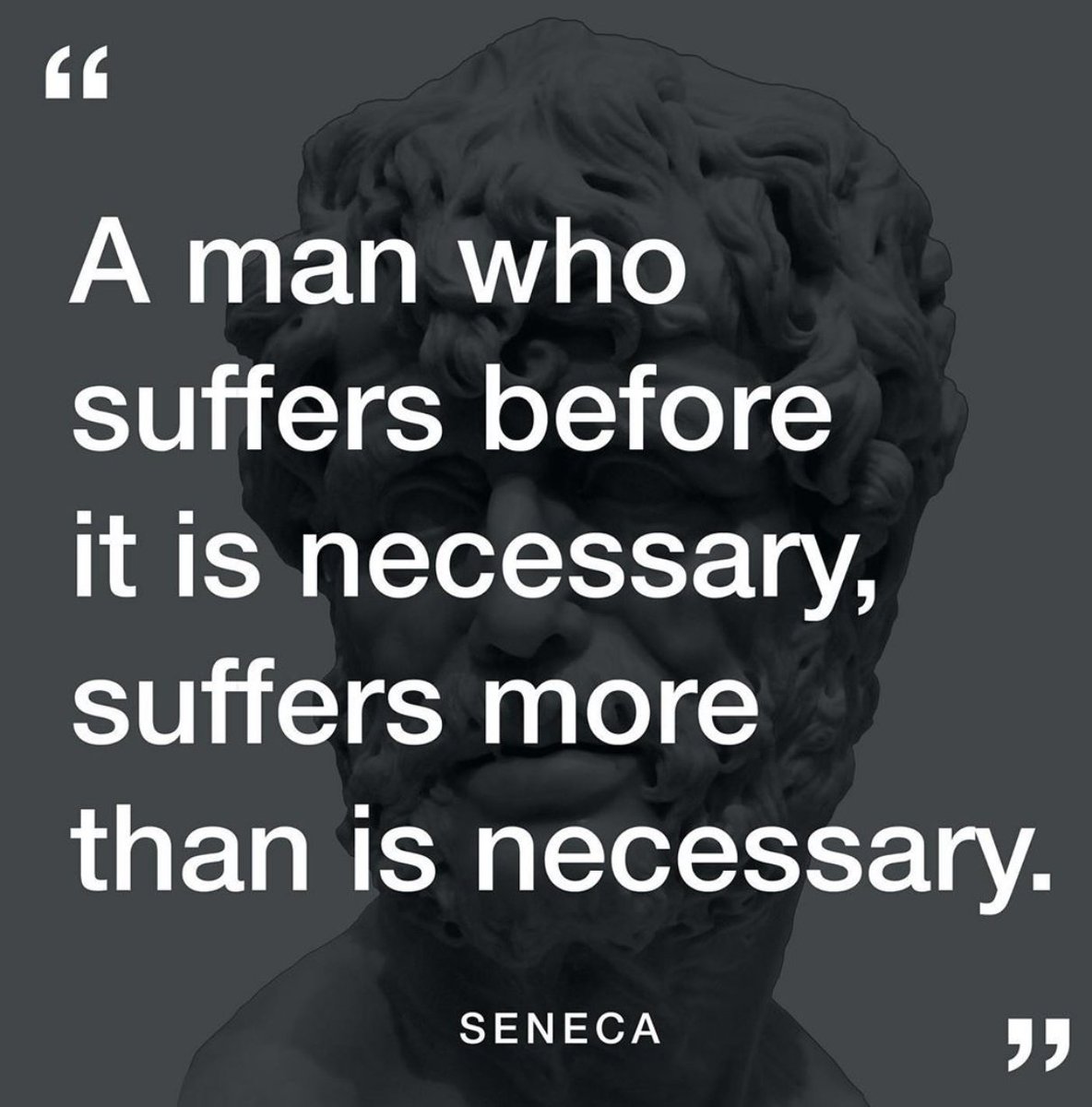
We don’t need to adopt a defensive attitude before our defenses are needed. We don’t need to critique before there is something to criticize. We don’t need to foretell our own inevitable doom if we’re going to feel it anyway.
Instead of critiquing, bemoaning, or anticipating the worst. You can take a deep breath, look back on where you came from and utter a few words of appreciation. Or, as a fellow Loons fan put it this week after the Suffering in Seattle.
I realize that I’m writing this for two boys, and I’m trying to temper my own swearing around you. But goddamn it, Jake is right. The Loons weren’t doomed. They weren’t star-crossed. They don’t stink because they lost this particular game.
They played extremely well in nearly impossible circumstances. They made a run with a dynamic attack that can come back and try it again next year. You don’t have to imagine that all of that was meaningless because it ended painfully. You don’t have to imagine that all hope is null and void if it doesn’t end with a rainbow and a smile.
You don’t need to worry about losing, especially when you can just enjoy living.
 MacKenzie's Boot Room